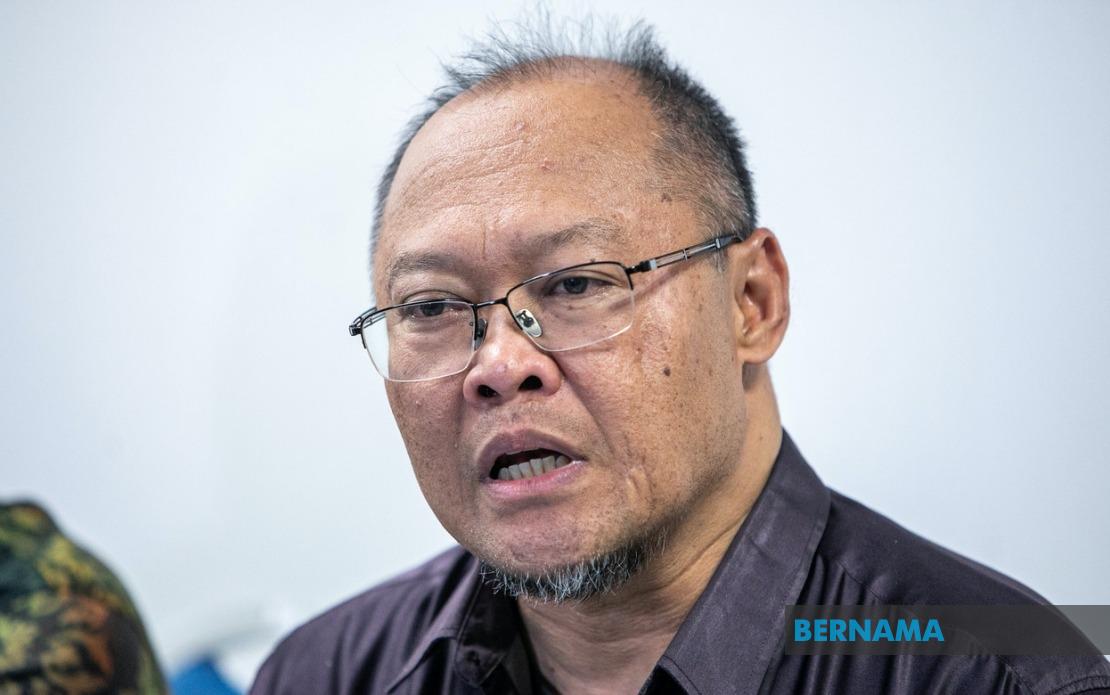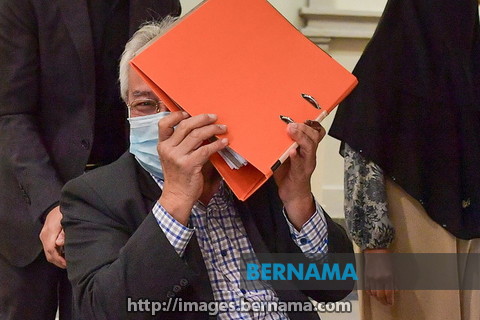
PUTRAJAYA: A former senior deputy director of Kuala Lumpur City Hall (DBKL), Sabudin Mohd Salleh, began serving a four-year jail sentence after the Court of Appeal on Thursday (Apr 23) upheld his conviction for obtaining RM200,000 in bribes linked to the issuance of work permits for a subcontractor.
Sabudin, 64, was taken into custody after a three-member bench unanimously dismissed his appeal against both his conviction and sentence.
The bench, led by Justice Datuk Noorin Badaruddin and comprising Justices Datuk Hayatul Akmal Abdul Aziz and Datuk Meor Hashimi Abdul Hamid, also upheld the RM1-million fine imposed by the High Court
However, the court reduced the default jail term for non-payment of the fine from four years to two years following a concession by the prosecution.
Noorin ordered a warrant of committal to be issued for Sabudin to begin his prison sentence immediately. He had previously been out on bail and granted a stay of execution of the sentence pending the appeal.
Delivering the decision, Noorin said the prosecution had established evidence of corrupt payments made to the appellant in connection with his official functions.
She said the overall effect of the prosecution’s evidence established beyond a reasonable doubt that there was a meeting between the complainant and the appellant, and that the appellant was expecting her at his residence.
Noorin said the sum of RM200,000 was paid to and received by Sabudin, and that the payment was made as an inducement in connection with the award of contract works that was subsequently granted.
“We agree that such evidence irresistibly points towards the guilt of the accused and effectively negates the conclusions reached by the Sessions Court judge,” she said.
She also said the High Court judge had undertaken a proper re-evaluation of the evidence and that the appellate court found no fault in that exercise.
On the other hand, she said the Sessions Court judge, in acquitting Sabudin, had failed to properly evaluate the totality of the evidence and had misdirected herself on the applicable legal principles.
Noorin said the appellant had failed to establish any plausible nexus between himself, the complainant and the alleged “cartel” said to exist within DBKL.
In contrast, she said the complainant’s evidence, as the giver of the gratification, was consistent, credible and supported by surrounding circumstances.
She said the evidence demonstrated that the complainant knew the accused, as shown by her attendance at his son’s wedding, an important fact that remained unchallenged throughout the trial.
She said this in rejecting Sabudin’s contention that the complainant was a stranger to him.
Sabudin was charged with two counts of obtaining bribes amounting to RM200,000 from Wong May Kuan, a subcontractor for Dusari Niaga, while he was senior deputy director of DBKL’s civil engineering and urban transport department, with the bribes as an inducement to issue work permits for the company, which was carrying out road resurfacing works in Kuala Lumpur from 2018 to 2020.
The first offence was committed at a convenience store at a petrol station in MRR2, Bukit Antarabangsa, Ampang, on June 9, 2018, and the second offence occurred at his house in Ampang on January 17, 2019.
Sabudin was initially acquitted and discharged by the Sessions Court at the close of the prosecution’s case on December 18, 2020, without being called to enter his defence, but on March 24, 2022, the High Court allowed the prosecution’s appeal and ordered him to enter his defence before the same Sessions Court judge.
On September 15 of the same year, Sabudin was again acquitted and discharged by the Sessions Court at the close of the defence case, but on July 26, 2023, the High Court overturned his acquittal and found him guilty of both corruption charges.
On August 15 the same year, the High Court sentenced him to four years’ jail for each charge, to run concurrently, and fined him RM1 million, with a default of four years’ imprisonment. – BERNAMA