THERE was a time when a trip to town meant hours on the river, when knowledge was sought in the pages of library books, and many families depended on farming to make a living.
Today, highways stretch into once-remote areas, mobile phones connect longhouses to the outside world, and technology has transformed the way people learn, work, and communicate.
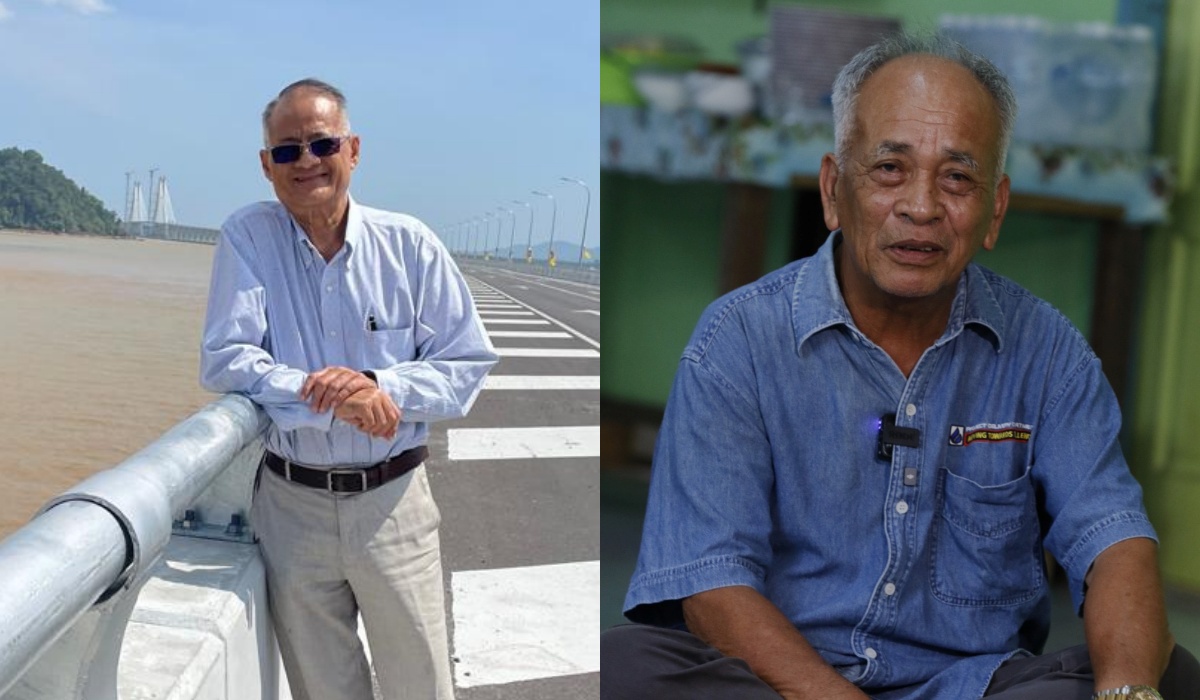
For Datuk Safri Zainudin and Tuai Rumah Melinggang Pilai, Sarawak’s transformation is more than a story of development. It is the story of their lives.
While one spent decades helping to build the infrastructure that connected communities, the other experienced firsthand how those changes reshaped life in the Baleh interior.
Growing up in Kampung Bandarsah No. 2, Kuching, Safri remembers a childhood where curiosity meant making a trip to the public library.
“Our generation had no smartphones, tablets, or Wi-Fi. If we wanted to learn beyond our textbooks, we went to the public library. Our search engine was the librarian,” said the 68-year-old retired civil servant and former Permanent Secretary of the Ministry of Infrastructure and Port Development.
He also remembers a very different Kuching.
Before the Kuching Waterfront became one of the city’s best-known attractions, the old Chekor Market stood along the Sarawak River, where traders and families gathered as part of everyday life.
As a civil engineer, Safri later witnessed Sarawak’s transformation from behind the scenes, contributing to infrastructure projects that improved connectivity across the state.
Despite the scale of those developments, he remains modest about his role.
“I often describe myself as just one tiny bolt in a very large bridge. You may not notice the bolt, but without enough of them, the bridge would not stand,” he said.
The roads he helped develop would eventually change the lives of people living far beyond the cities.
One of them is Tuai Rumah Melinggang Pilai, 73.
From his longhouse in the Baleh interior, Melinggang has watched life change dramatically over the decades.
“Back then, everyone farmed. That was how we lived,” he recalled.
In those days, travelling to Kapit meant a four-hour journey by boat through the Rajang River, where strong currents and changing river conditions often made every trip uncertain.
“There was always the risk of the boat capsizing,” he said.
Today, the same journey takes about two hours by road, although part of the route still follows logging roads.
For Melinggang, roads have brought more than convenience.
“The roads have changed our lives,” he said.
Improved access has made it easier for children to attend school, residents to travel to Kapit, and families to stay connected with essential services.
The changes have also reshaped livelihoods.
Where farming once sustained almost every household, many younger residents now work in towns, reflecting new opportunities that previous generations never had.
Technology has brought another transformation.
For years, there was no mobile phone coverage in the area. Residents later gained internet access through the CONNECTme satellite broadband service before a telecommunications tower was built, finally allowing mobile phones to become part of everyday life.
“Now we have phone lines and better communication. It is much easier to stay in touch with our children and relatives and to access information,” he said.
Despite embracing change, both men believe progress should never come at the expense of values.
Safri hopes his grandchildren will inherit a Sarawak that continues to innovate while remaining compassionate.
“Study hard. Dream big. Embrace Artificial Intelligence (AI), the Internet of Things (IoT), and whatever remarkable technology tomorrow brings. But never forget those climbing the hill behind you. Success is sweetest when it lifts others along the way.”
He also hopes they will remember the journey that brought Sarawak to where it is today.
“As a boy from Kuching, I cherish the day when my future generations can also reflect on what Kuching was like when I was a young, innocent boy from Kampung Bandarsah.”
Melinggang shares a similar wish.
While welcoming better roads and stronger communications, he hopes the younger generation will continue to cherish the traditions, customs, and close-knit spirit that have long defined longhouse life.
As the state celebrates another Sarawak Day, the stories of Safri and Melinggang remind us that the state’s greatest achievements are not found only in the bridges that span its rivers or the roads that cut through its forests. They are found in the lives transformed, the communities connected, and the generations who have witnessed Sarawak’s remarkable journey and now entrust its future to those who will carry it forward.