KUCHING: The success of the High Impact Community Projects (HICP) implemented in Sarawak, which have increased participants’ average income by more than 25 per cent, proves that investments in research, innovation and knowledge transfer can create meaningful changes in the lives of rural communities.
Works Minister and Upper Rajang Development Agency (URDA) Chairman, Datuk Seri Alexander Nanta Linggi, said the HICP approach demonstrated that rural development must go beyond basic assistance by empowering communities with the capabilities to generate sustainable income.
“The future of the rural economy can no longer depend solely on raw commodities. We need to build value chains that enable communities to produce high-value products, master technology, and access wider markets,” he said in his Facebook post today.
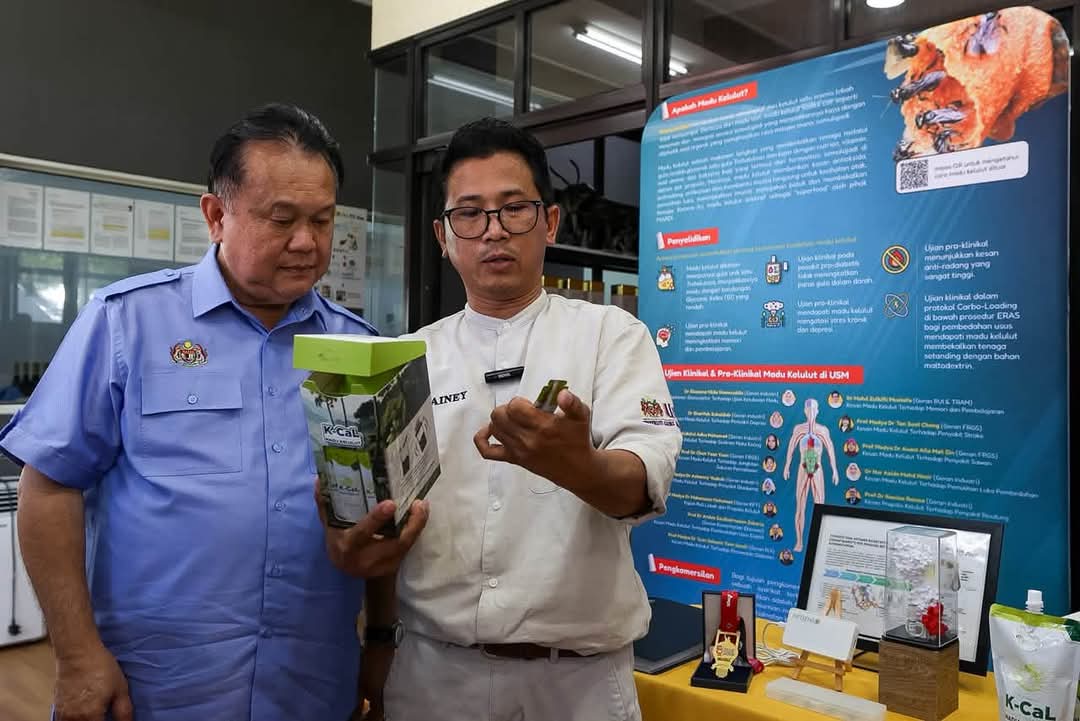
Nanta said this after leading a URDA and Regional Corridor Development Authority (RECODA) delegation to the Advance National Honey Landmark (AnNaHL) Translational Centre at Universiti Sains Malaysia (USM) Kubang Kerian, Kelantan, to study a community development model with potential for implementation in Sarawak.
He said the AnNaHL model further reinforced the importance of universities as strategic partners in developing community-based economies.
“What I saw at AnNaHL strengthened my belief that universities are not merely centres of research, but strategic partners in building community economies.
“When research is aligned with the needs of the people and supported by the government and implementing agencies, the outcome is not just innovation in the laboratory, but real economic opportunities that can transform lives,” he said.
Nanta, who is also Kapit Member of Parliament, said rural development must focus on building community capacity by equipping people with knowledge, skills, technology and market access to enable them to become self-reliant.
He said several areas in Kapit had been selected for the implementation of high-impact projects, including sting-less bee honey projects in Melatai Selirik and Kampung Tatai Mas Raweng, an integrated livestock farming project in Nanga Yong, and the Upper Rajang Honey Processing & Marketing Centre in Song.
The centre, he said, would serve as a hub for honey-processing, marketing, training and the development of the sting-less bee honey industry in Kapit.
Nanta added that through the RM7-million allocation from the Bumiputera Agenda Steering Unit (TERAJU) to USM under the HICP Sarawak Bumiputera Entrepreneur Development Fund, 100 Bumiputera participants from the B40 group in Sarawak had benefited directly from the programme.
“The participants’ income has increased to between RM3,000 and RM7,000 per month, while the programme has also produced 10 innovation elements and eight downstream products supported by certifications such as Halal, MeSTI, HACCP and GMP, opening greater opportunities to penetrate local and international markets,” he said.
Nanta stressed that the true impact of government investment was not merely about completing projects, but about building the capacity of communities to succeed.
“Our goal is not simply to produce more sting-less bee honey, but to create more rural entrepreneurs who can generate sustainable income through innovation and technology,” he said, adding that URDA would continue to serve as a facilitator and strategic partner in strengthening collaboration between the government, higher learning institutions, development agencies and communities.