They could hear her — but could not see her. On Mount Santubong, a rescue through darkness and uncertainty reveals the risks, challenges and quiet responsibility firefighters carry beyond the call.
Mount Santubong: Where the Trail Disappears
When a distress call comes from a mountain, time behaves differently. What lies ahead is rarely clear — only terrain, distance, and the uncertainty of what cannot yet be seen.
For those on the outside, a rescue may sound straightforward: a call is made, a team is dispatched, a life is saved.
But in the mountains, nothing unfolds in straight lines. Distance stretches and silence lingers. And sometimes, even when help is close, it still feels impossibly far.
For Pegawai Bomba Kanan (PBK) I Mohamad Nizam Bujang, these are the calls that demand more than urgency.
“When we receive an emergency call, we must mobilise in under a minute.
“We identify key details — the location, caller and condition of the victim — through the NG MERS 999 system, even as we are already on the way,” he began.
It is a system built for speed. But what comes after often depends on something else entirely.
A call that carried into the night
On April 23, at 8.20 pm, one such call came in. It led to Mount Santubong — a familiar landmark near Kuching, known not just for its views, but for its difficulty.
For the Petra Jaya Fire and Rescue Station, Nizam noted, it remains one of the most challenging mountains to operate on.
That night, a woman was missing.
By the time the team arrived at 9.43 pm, early information suggested that the victim — an Australian national — had slipped somewhere near the F7 trail while descending.
Forest rangers had already attempted to locate her. They called out and, at one point, heard her voice. But they could not find her.
“They were able to narrow down the area, but they could not determine her exact location,” said Nizam, who led the search and rescue (SAR) operation.
It is a reality in mountain rescue — to be close enough to hear someone, yet unable to reach them.
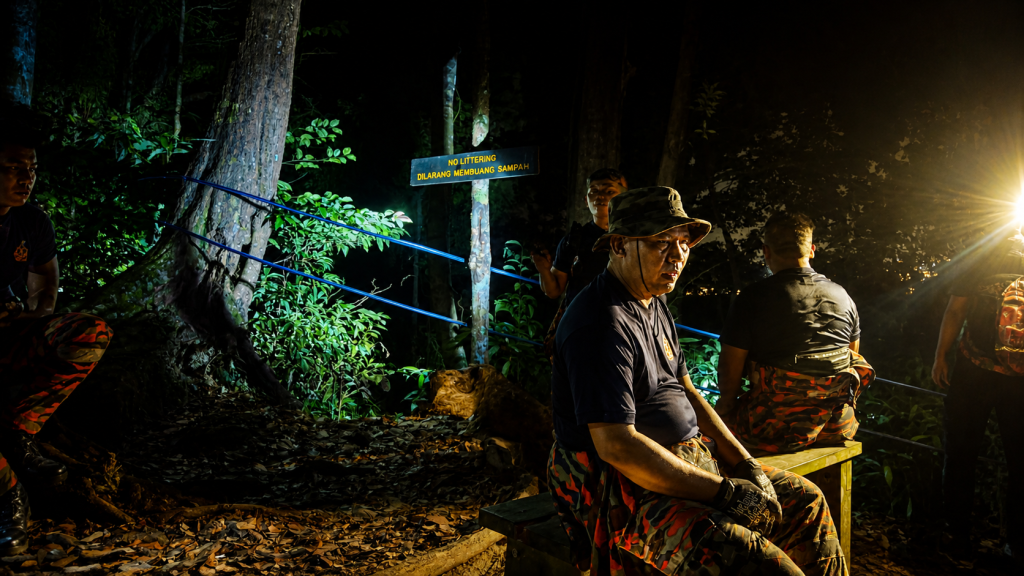
Searching without sight
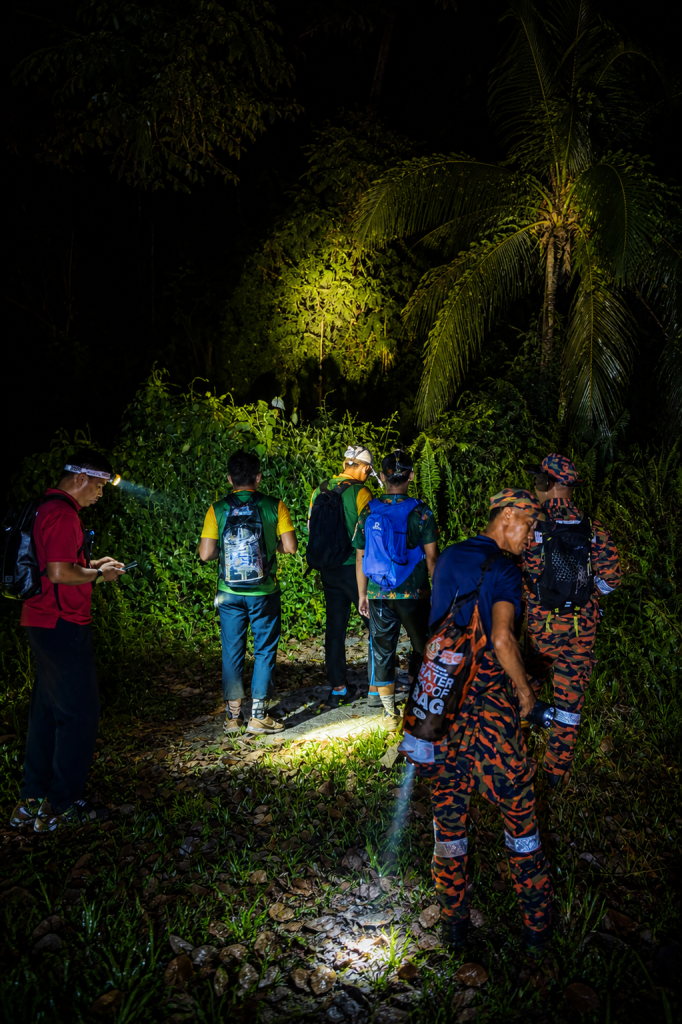
The first hours of the search were marked by uncertainty. Just after midnight, the team pushed further into the mountain, retracing the victim’s last known position.
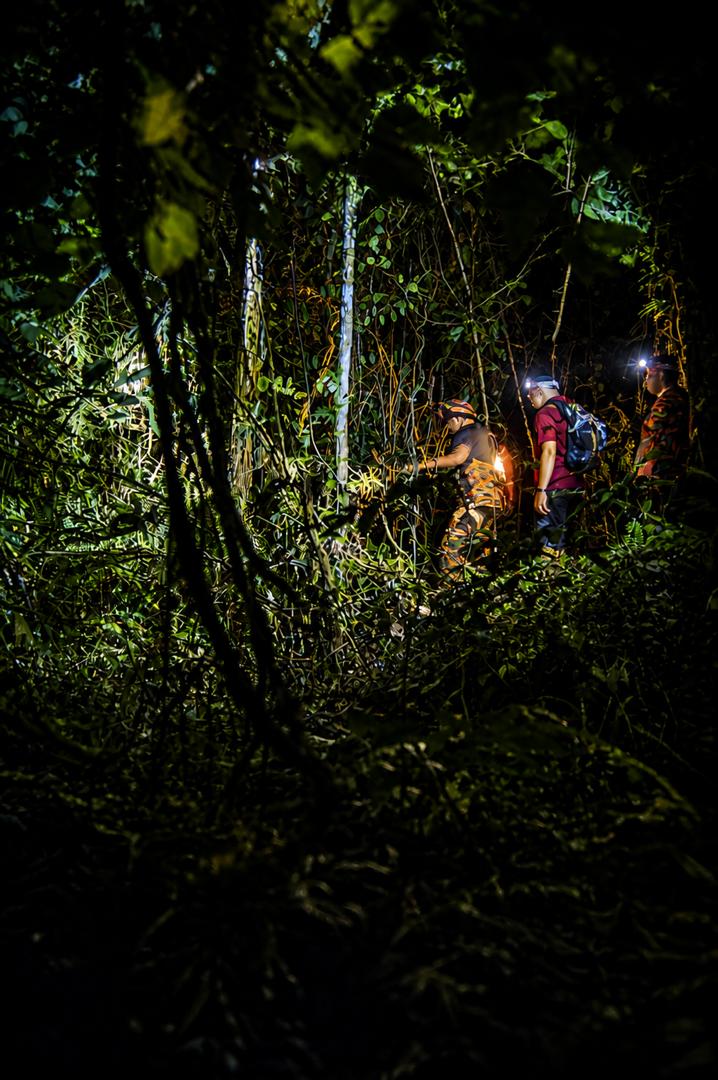
The darkness was no longer just a condition — it became a presence. Something that narrowed vision, distorted distance, and forced every step to be deliberate.
Then, at 12.48 am, contact was re-established.
“She was able to communicate her location, but she had moved off the main trail,” Nizam added.
A small team moved towards her position, accompanied by forest rangers and police personnel. There were no clear routes now — only instinct, experience, and careful movement through uneven ground.
By 2 am, they were close enough to hear her again but still could not reach her.
“There were too many obstacles — large rocks, fallen trees, steep sections. We could communicate, but access was extremely difficult,” Nizam said.
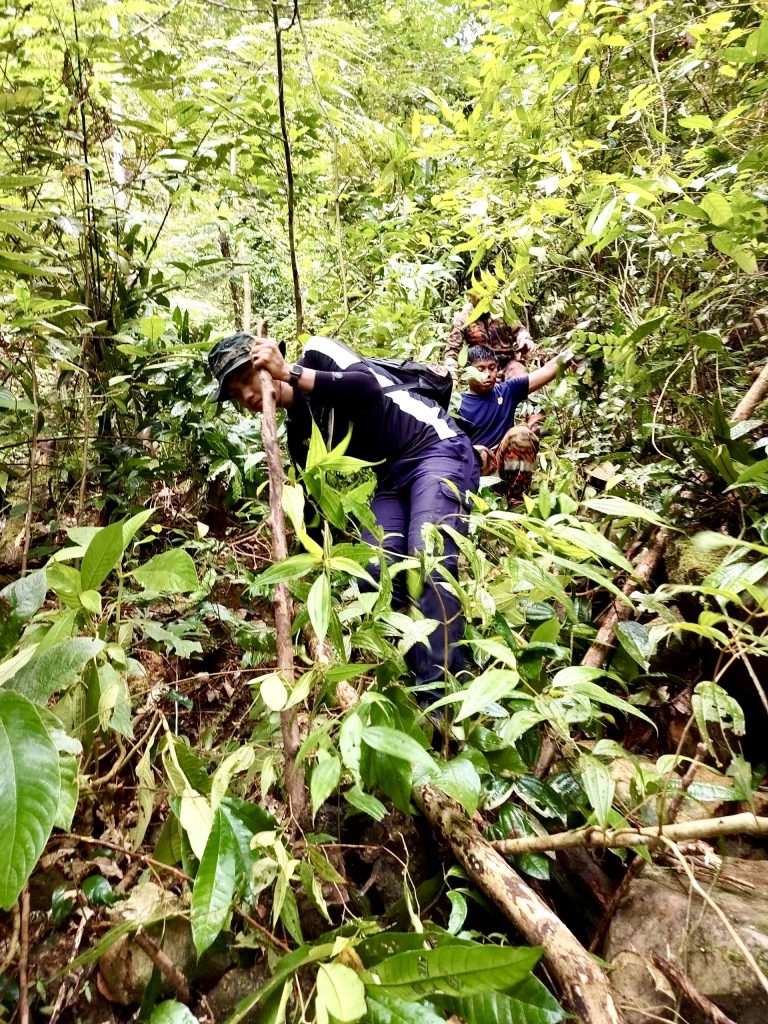
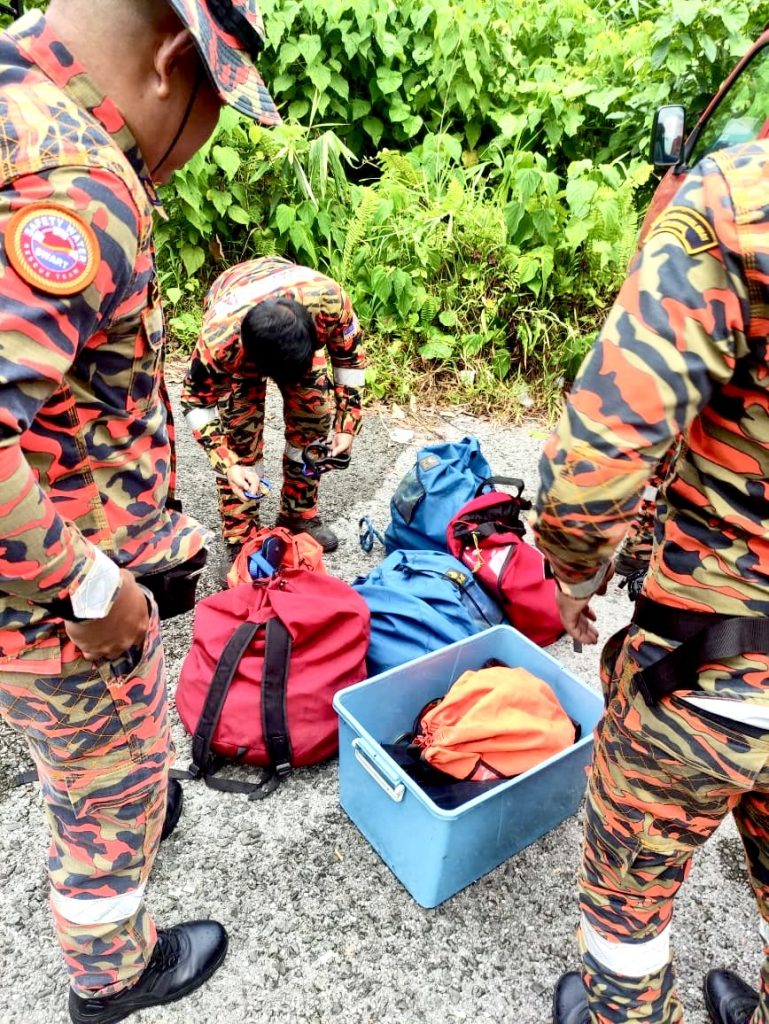
When the mountain pushes back
Rescue work in the mountains is as much about restraint as it is about action.
“Visibility is very limited at night. You can only see what is directly in front of you,” he said.
Beyond that narrow beam of light lies uncertainty — and risk. The ground may shift, the slope may give way, and unseen dangers remain. Venomous creatures such as snakes and scorpions are always a possibility, but more often it is the terrain itself that proves most unforgiving.
“The most difficult situations are when the victim is already weak and the path is steep. It becomes very hard to assist them safely,” he stressed.
Even reaching the victim is often a challenge in itself. Firefighters carry rope rescue equipment up the mountain, navigating routes that are often blocked or unstable.
By 3.30am, the team had to make a decision — not to stop searching, but to pause.
Pushing forward in the dark would only increase the risk. So they turned back, knowing the search would continue at first light.
Returning with the light
At first light, the mountain changed again. What had been hidden in darkness began to reveal itself.
The search resumed with renewed coordination. More personnel joined the operation, and the team was divided into two groups to cover different approaches.
The original route near F7 proved too steep, forcing rescuers to find an alternative path. Even technology had its limits.
“The forest canopy was too dense. The drone could not get a clear image,” Nizam said.
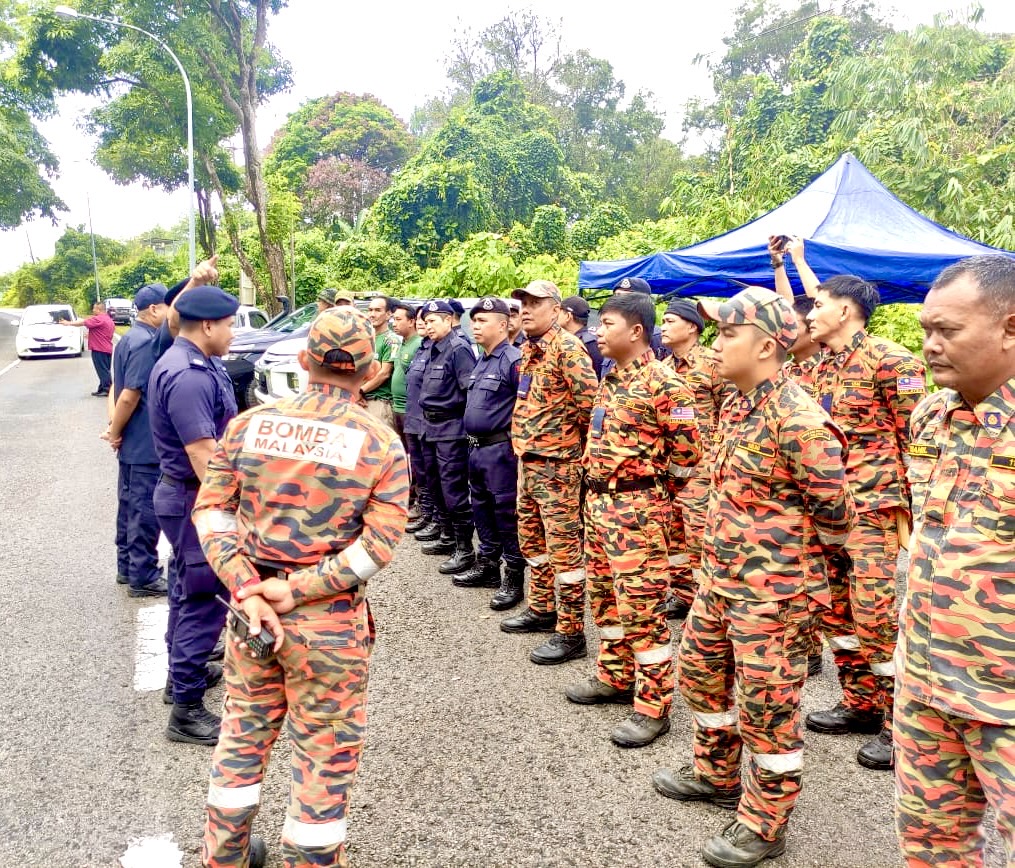
So they relied on ground search methods — moving in formation based on the victim’s last known position.
It was slower, more physically demanding — but often the only way.
And then, just before noon, the moment came. At 11.59 am, the team found her — alive.
“She was safe, with only minor injuries,” Nizam said, adding that the victim had strayed from the F10 trail while descending and become disoriented in unfamiliar terrain.
The long way back
Finding her was not the end. Getting her out was another journey entirely.
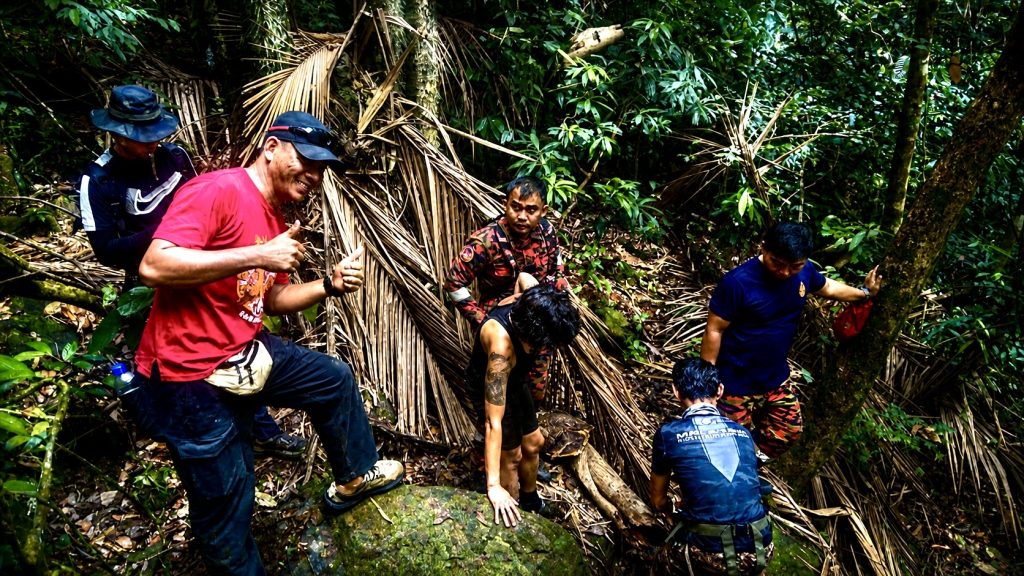
“The terrain was still difficult — hilly and steep. It slowed down our movement,” Nizam said.
The team carefully guided her down, navigating the same terrain that had concealed her hours earlier.
Slowly and carefully, they made their way back. By 2.25 pm, she was brought to the control post, assessed by medical personnel, and later taken to hospital for further treatment.
At 3 pm, the operation came to a close. But for those involved, the experience lingers longer than the timeline suggests.
What remains after
There is a moment in every rescue that stays.
“When we find victims, they are usually weak and exhausted. We give them water, food and treatment if needed,” Nizam said.
And then, almost always, comes the same response: gratitude.
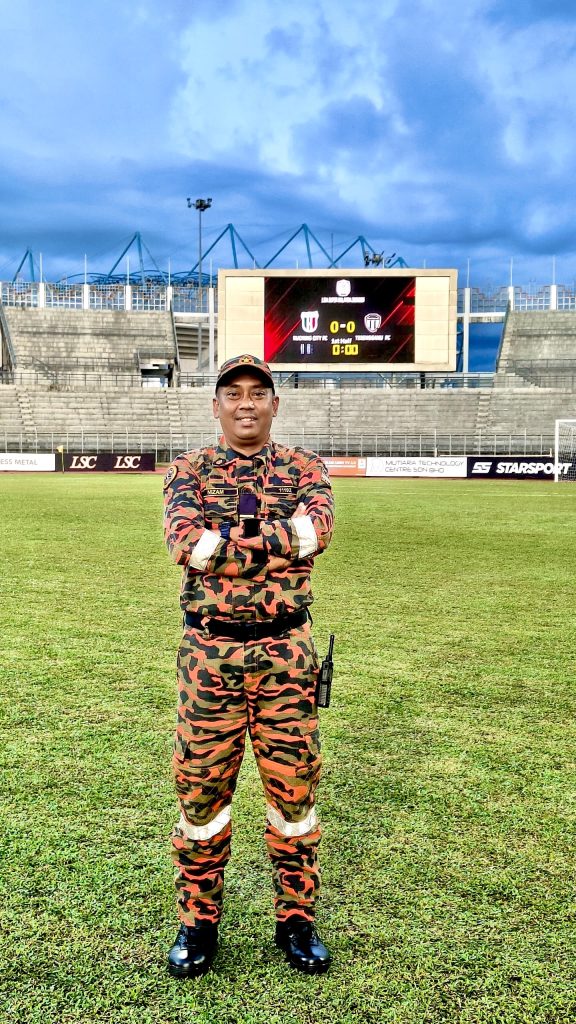
It is often quiet. Sometimes emotional. Occasionally just a few words. But for rescuers, it is enough.
Behind that moment lies preparation that few ever see. Firefighters undergo regular fitness tests, monthly endurance runs, and continuous training — including rope rescue techniques that become critical in terrains. Because in the mountains, readiness is everything.
Female personnel also play key roles, particularly in coordinating information at the operations control centre, ensuring communication remains clear.
Over time, patterns begin to emerge.
“Fitness level is important, but many cases involve people who are not familiar with the terrain,” he said.
Some recent victims, he noted, were foreign hikers who had not consulted forest rangers before their climb. The mountain does not discriminate — but it demands respect.
“We cannot dismiss the possibility of unseen elements. When we are in the forest or mountains, we maintain proper conduct — in our words and behaviour,” he added.
It is not something that can be measured — but it is understood.
A duty that continues
For Nizam and his team, the work is never defined by a single operation.
“The safety of the public is our responsibility, no matter where they are. We will continue to provide our service whenever it is needed,” he said.
For those venturing into the mountains, his advice is clear: be prepared. Ensure you are physically fit. Bring essential equipment, including a torchlight, basic tools, and sufficient food and water to sustain you if conditions change.
Most importantly, inform forest rangers before beginning your climb. Because in the mountains, preparation is not just a precaution — it can mean the difference between a safe return and a search that begins in the dark.
As International Firefighters’ Day is observed, stories like this offer a quieter reminder of what that responsibility looks like — far from sirens and city streets.
Sometimes, it is carried out in darkness. Sometimes, in silence. And sometimes, on a mountain where the trail disappears — but the search does not.