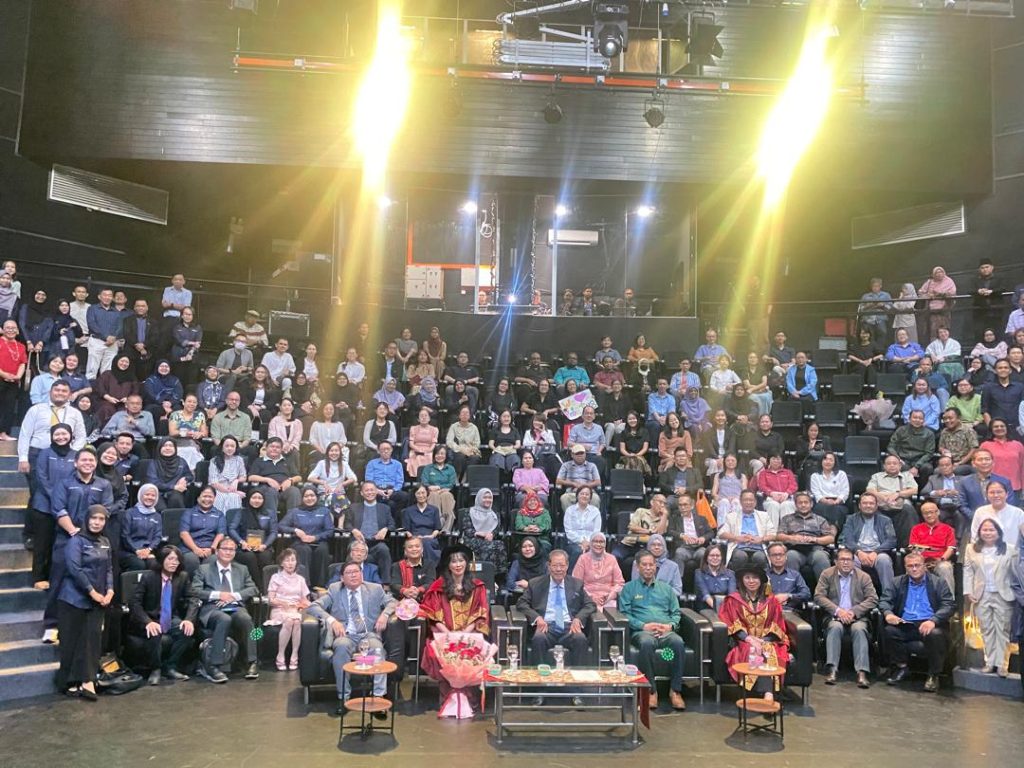
KOTA SAMARAHAN: Feelings of shame about speaking one’s mother tongue could be a key factor behind the decline of minority languages, according to Professor Dr Ting Sui Hie.
The Universiti Malaysia Sarawak (UNIMAS) Faculty of Education, Language and Communication (FELC) lecturer introduced her “Language Shame Hypothesis”, which argues that embarrassment or reluctance to use one’s ethnic language can gradually erode its use within families and communities until it eventually disappears.
“A language, for it to be strong, must be used in all domains.
“If people are ashamed of it, it will shrink until it is possibly used among family and friends only,” she said while presenting her inaugural lecture titled Language Choice and Power at the UNIMAS FACA Experimental Theatre here today (July 29).
Ting said language vitality depends not only on its use across different social settings such as families, schools, workplaces and public institutions, but also on whether it is passed from one generation to the next.
She noted that once parents stop speaking their native language to their children, the chain of transmission is broken, putting the language at risk of decline.
Drawing on research involving Hakka-speaking communities, she observed that language transmission had largely stopped with Generation X, preventing the language from being passed on to younger generations.
Ting also stressed that community leaders could play an important role in strengthening respect for ethnic languages.
“If politicians and other community leaders can be seen and heard speaking their ethnic language to their children and grandchildren, maybe the rest of the community will follow because they see more respect accorded to their language,” she said.
Ting urged parents and communities to take personal responsibility for preserving their languages.
“Just speak your language to the young. The children are the ones who carry the language into the future. They are the voices through which our stories will continue to be told and our identities will continue to live.
“The future of a language does not depend on policies, classrooms or cultural activities. The power to sustain our languages lies with us,” she added.