The rebuild begins: Part 2
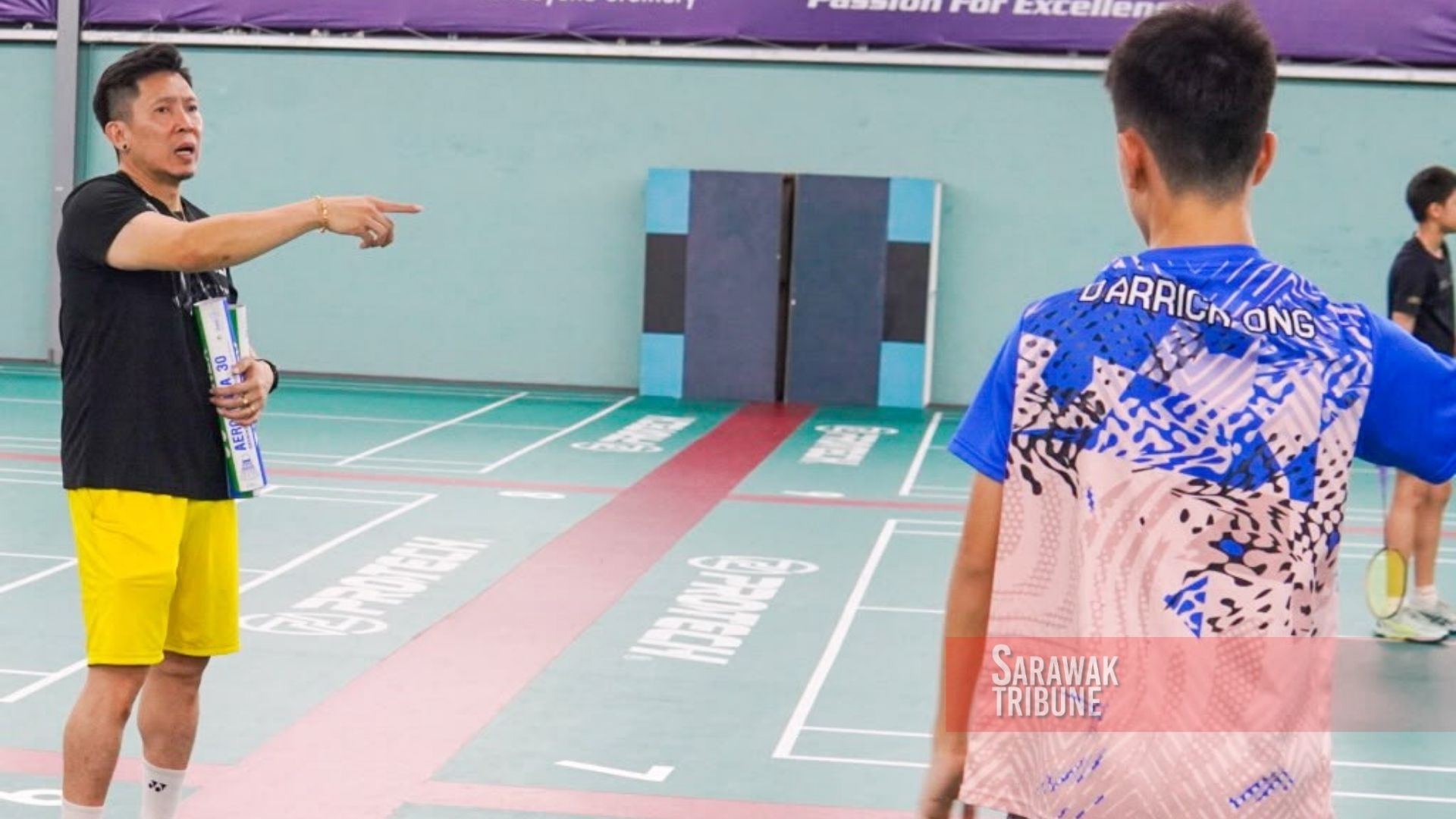
FORMER Malaysia Open champion James Chua has returned to Sarawak with a mission that stretches far beyond winning medals.
The new Sarawak Badminton Association (SBA) head coach believes the state’s next generation of champions will not emerge through quick fixes or individual brilliance. Instead, success must be built on stronger foundations – better coaching, greater discipline and a clear pathway from grassroots to the elite level.
After years coaching with the national setup and the Czech Republic, Chua officially took charge of SBA on June 1. His first weeks, however, have been less about changing techniques and more about understanding the system he has inherited.
“When I first arrived, I felt the system could be more systematic, so I believe there are areas that I can help restructure,” he told Sarawak Tribune during a recent interview at the SBA Hall.
Fix the system first
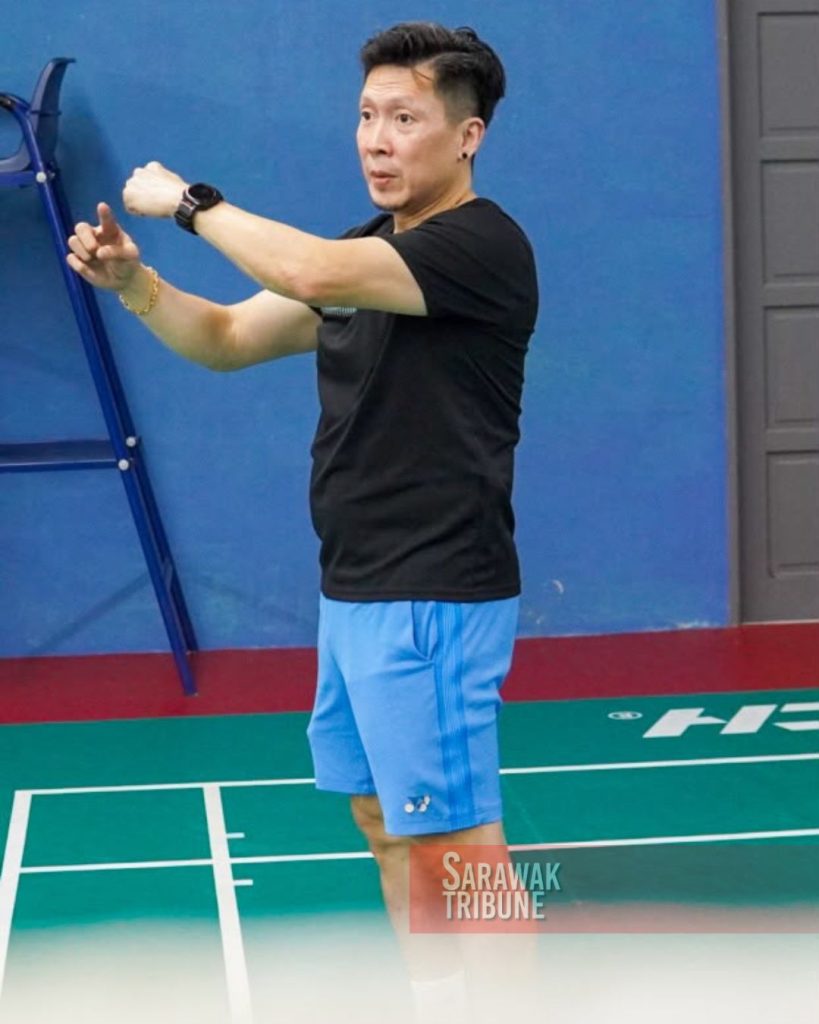
One of Chua’s earliest observations was that Sarawak’s talent pool remains scattered across Kuching, Sibu, Miri and Bintulu, making it difficult to accurately assess the state’s depth.
“I haven’t had the chance to see all the players of their respective age groups at their level yet. Hopefully, I can get the opportunity to watch them, understand them better and then work on developing the system further,” he said.
For Chua, rebuilding begins with the youngest players.
“Grassroots is very important. We have to develop from young, especially those under 12 and under 14,” he said.
If the system is strengthened, he believes Sarawak can become far more competitive nationally within two years.
His plans also extend beyond junior badminton. Chua hopes players who miss out on the Badminton Association of Malaysia (BAM) programme after turning 18 will still have a pathway to compete internationally.
“This is my target,” he said.
Better coaches, better players
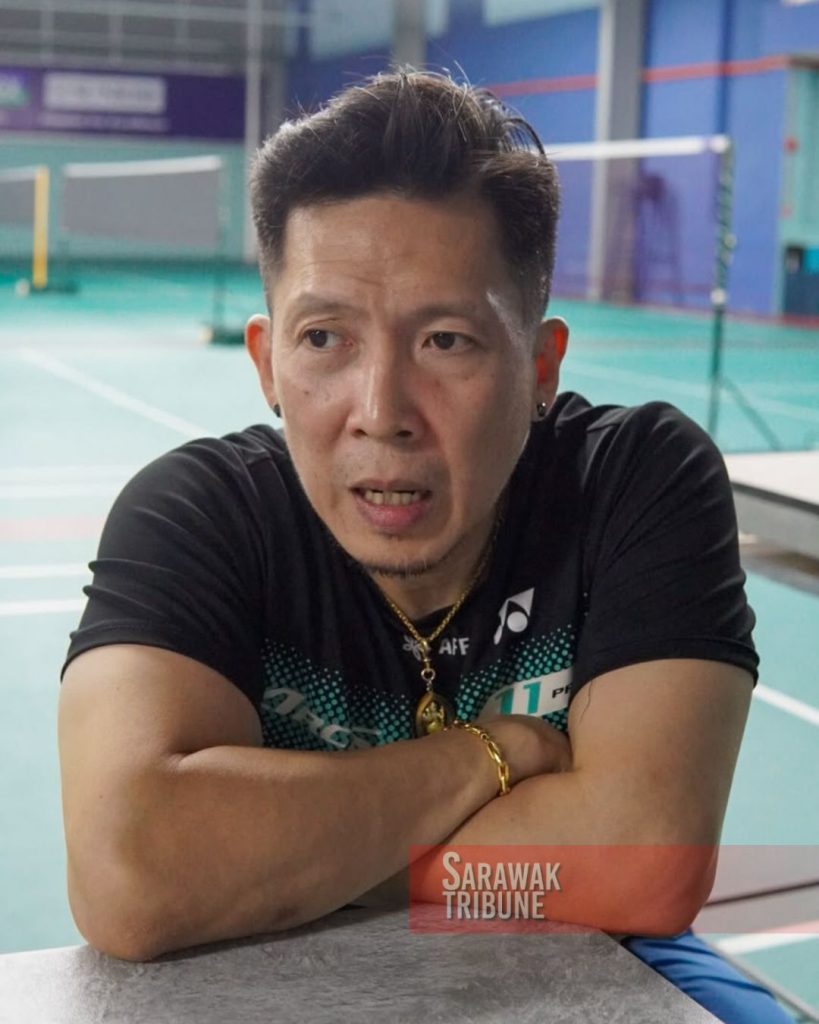
While attention often falls on athletes, Chua believes meaningful change starts with those guiding them.
He questioned why Sarawak continues to struggle for consistent results despite having a sizeable coaching pool.
“If we have many coaches, how come our results are not achievable?” he asked.
His priority is to strengthen the coaching structure alongside the Sarawak State Sports Council (MSNS) and Sarawak Sports Corporation (SSC), particularly at grassroots level.
“Without good coaches, we cannot produce good grassroots and junior players,” he said.
Rather than introducing a fixed coaching philosophy, Chua prefers a practical approach.
“I don’t have any particular philosophy. I see what problems and issues we are having now, and then we work from there,” he said.
Talent needs commitment
Technical ability alone, however, is not enough.
Chua admitted attendance had become one of the first issues he addressed after returning, with some players regularly arriving late or missing training sessions.
“I see the players here are not 100 per cent committed. This is a very big problem,” he said.
Training has since increased from 10 to 11 sessions a week.
Recognising that state players juggle school, tuition and other commitments, Chua expects those in the SBA programme to attend at least nine sessions weekly.
“If they can attend all 11, that is the best,” he said.
The improvement has already been noticeable.
“I would say the biggest improvement is attendance,” he added.
Lessons from Europe
Coaching overseas also shaped Chua’s expectations of what separates good players from great ones.
He believes Sarawakian players possess comparable ability to those elsewhere in Malaysia.
The biggest difference lies in professionalism.
“When they come for training, they give more than 100 per cent,” he said, reflecting on his experience in Europe.
He recalled how Czech players willingly took responsibility for their own strength and conditioning, even when sessions were self-managed outside normal training hours.
That self-discipline is something he hopes to cultivate in Sarawak.
Returning home for a cause

Returning to Sarawak was never just another coaching appointment.
Having left home at 13, Chua spent 34 years away from his parents while pursuing his badminton career.
“This is my hometown. Of course, I want to do something for my hometown, Sarawak,” he said.
He said SBA secretary Datuk Dr Wan Khalik Wan Muhammad approached him about returning, and the timing finally felt right.
“For me, this is the best time to come back – first to contribute to Sarawak badminton and at the same time I can be with my family,” he said.
Wan Khalik believes Chua’s greatest strength lies not only in his credentials, but in his vision.
“We have someone who is eager and has a strong passion to make Sarawak badminton better, to produce Olympians and world champions,” he said.
No shortcuts, no empty promises
Chua has already helped shape players such as Alwyn Chua, Jeremy Juan and national singles player Leong Jun Hao, whom he coached from the age of 10 before his move into the BAM setup.
Could Sarawak one day produce another Lee Chong Wei?
Chua refuses to make promises he cannot guarantee.
“If you say Lee Chong Wei, I think it is quite hard. Nobody will say they can do that. I also don’t dare to say that. But if you say to build players to become one of the top players, like another Leong Jun Hao, I will try my best to build them.”
That measured approach perhaps best defines the man now tasked with reviving Sarawak badminton.
He is not selling overnight success or making bold predictions.
Instead, he is asking for patience while the foundations are rebuilt – through better coaches, more committed players and a system designed to produce talent consistently.
For Chua, the rebuild has already begun. The medals can wait.