MIRI: Sarawak is seeking to convert political stability and rising state revenues into a more inclusive phase of development, with infrastructure expansion emerging as a key delivery mechanism, Deputy Premier Daruk Amar Awang Tengah Ali Hasan has said.
His remarks point to a broader policy shift in the resource-rich state, where stronger fiscal capacity is increasingly being deployed to address long-standing gaps between urban centres and outlying areas.
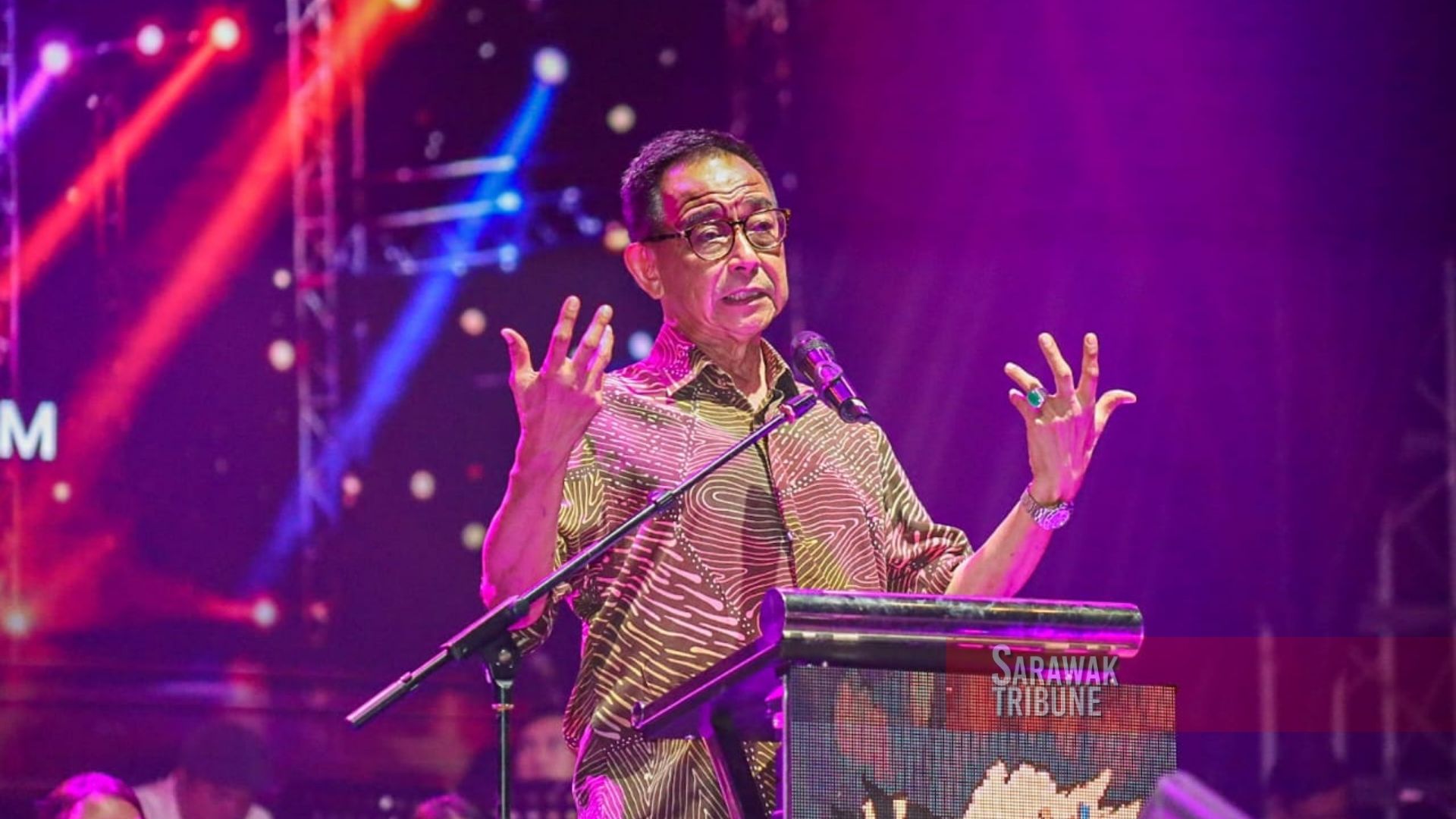
Speaking at a combined Chinese New Year and Hari Raya celebration in the Lambir constituency on Sunday, Awang Tengah underscored unity as a functional enabler of governance rather than a symbolic ideal.

“We may differ in race, religion and culture, but we are able to live in peace and work together. This is Sarawak’s strength, and it has allowed us to maintain stability and continue progressing,” he said.
Sarawak’s revenues have strengthened in recent years, giving the state greater latitude to accelerate development spending.
The administration is now under increasing pressure to translate that fiscal strength into visible, ground-level improvements, particularly in semi-urban and rural districts.
Awang Tengah indicated that infrastructure rollout would remain central to that effort, with connectivity projects prioritised to ease congestion and unlock new economic activity.
Among the initiatives under consideration is a proposed secondary link road in Lambir, an area experiencing mounting traffic strain as residential expansion intensifies.
The project has been incorporated into state development planning, with feasibility studies currently underway.
While no firm timeline has been announced, the deputy premier signalled that implementation could be expedited once assessments are completed.
Earlier, Lambir assemblyman Datuk Dr Ripin Lamat called for the project to be fast-tracked, pointing to persistent congestion affecting key residential zones including Taman Tunku and Taman Jelita.
The proposed 6.79km road, estimated to cost RM14 million, is designed to reduce dependence on existing routes that have become increasingly overstretched.
But beyond traffic management, the proposal reflects a wider structural issue: the lag between population growth and infrastructure capacity in emerging suburban corridors.
Dr Ripin argued that improved connectivity would not only ease daily commuting pressures but also stimulate economic activity in surrounding areas such as Sungai Rait and Tukau.
“Current reliance on a single route is no longer sustainable. This project would improve mobility and support local economic expansion,” he said.
Sarawak’s leadership has consistently positioned inclusivity as a cornerstone of its development model, with a focus on extending infrastructure and services beyond core urban hubs.
However, as more projects move from planning to pipeline, the emphasis is shifting towards execution — where delivery timelines, cost control and project prioritisation will come under closer scrutiny.
Awang Tengah’s remarks suggest that the state is confident in its current trajectory, but the test will lie in whether accelerated spending can be translated into tangible outcomes without delays.
The “Gongxi Raya” event itself — blending festive traditions across communities — served as a symbolic backdrop to that narrative of cohesion underpinning growth.
Also present were Transport Minister Datuk Seri Lee Kim Shin, Deputy Foreign Minister Datuk Lukanisman Awang Sauni, Deputy Minister for Women, Children and Community Wellbeing Datuk Rosey Yunus, and Deputy Minister for Infrastructure and Port Development Datuk Aidel Lariwoo.