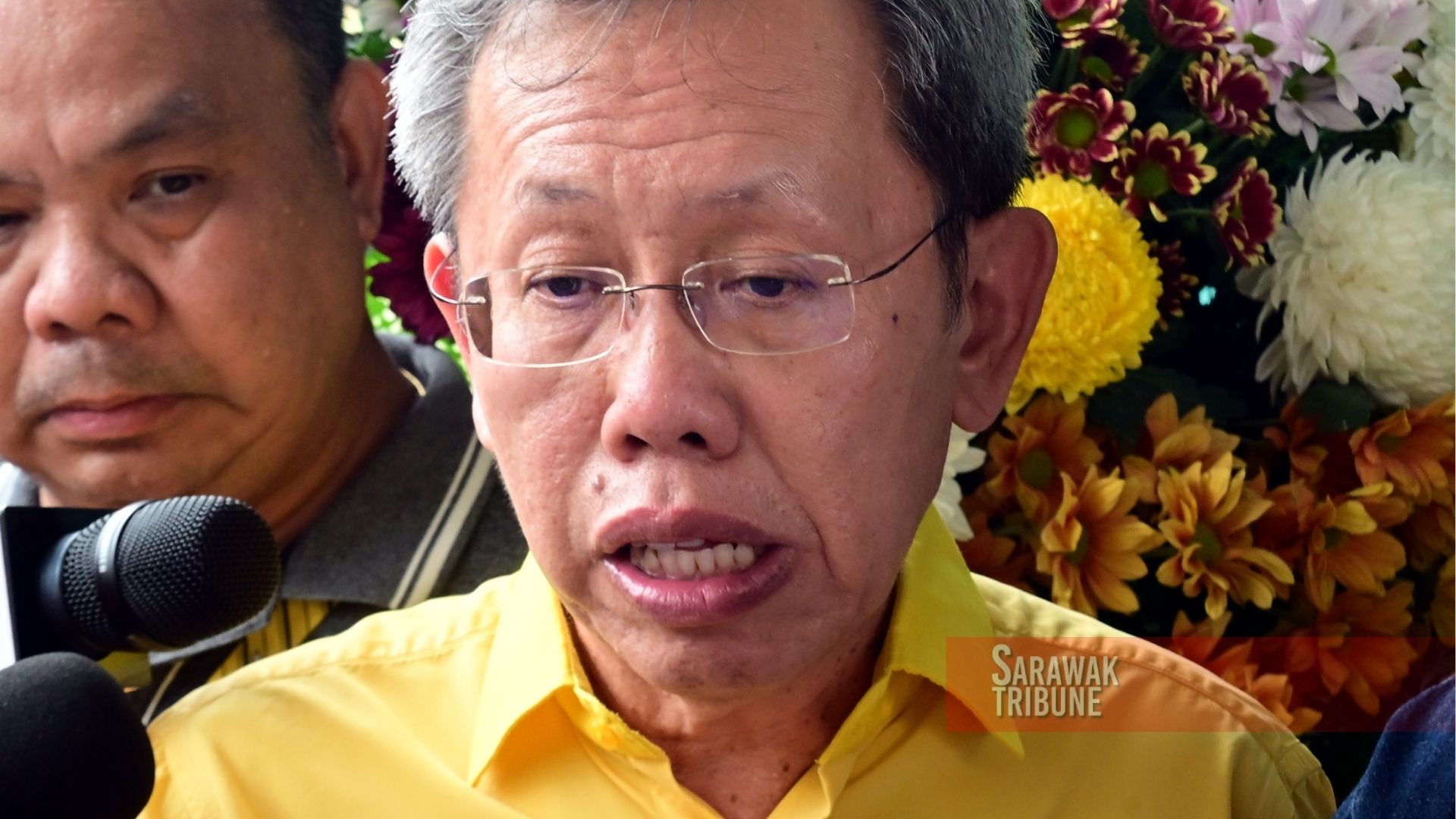
KUCHING: Legally, Putrajaya cannot compel Sarawak to synchronise State and Parliamentary elections, according to practising lawyer Wejok Tomik.
He said any attempt by the Federal Government to compel Sarawak to hold its State Election simultaneously with a Parliamentary General Election would contradict constitutional principles and longstanding historical practice.
Commenting on recent speculation that Prime Minister Datuk Seri Anwar Ibrahim may call for a snap Parliamentary General Election, Wejok stressed that Sarawak possesses its own constitutional authority over the dissolution of the State Legislative Assembly (DUN) and the timing of its State Election.
He said the matter must be viewed carefully through the lens of both the Federal Constitution and the Constitution of the State of Sarawak.
“Legally and constitutionally, Parliament and the Sarawak DUN are separate constitutional institutions with distinct constitutional lifespans and dissolution mechanisms,” he said.
Wejok pointed out that Article 55 of the Federal Constitution governs the summoning, prorogation and dissolution of Parliament, while Article 21(1) of the Constitution of the State of Sarawak provides that the State Legislative Assembly continues for five years unless sooner dissolved.
He further explained that Article 71(1) of the Federal Constitution safeguards the constitutional position of the states by recognising and protecting State Constitutions, while the Eighth Schedule outlines the constitutional framework governing State Legislative Assemblies, including their duration and dissolution.
Importantly, he stressed that there is no provision under the Federal Constitution requiring Sarawak to conduct its State Election concurrently with the Parliamentary General Election.
“The constitutional process relating to the dissolution of the Sarawak DUN rests with the Yang di-Pertua Negeri acting pursuant to the State Constitution and constitutional convention, including advice tendered by the Premier of Sarawak,” he said.
While the Election Commission of Malaysia is empowered under Article 113 of the Federal Constitution to conduct elections, Wejok noted that the commission has no constitutional authority to dissolve the Sarawak DUN or force the synchronisation of elections.
He also highlighted that Sarawak has historically exercised its constitutional prerogative to hold separate State Elections since the formation of Malaysia in 1963.
Among the elections conducted independently from Parliamentary General Elections were those held in 2001, 2006, 2011, 2016 and 2021.
According to Wejok, this longstanding practice reflects Sarawak’s unique constitutional position within the Federation and is consistent with the spirit and safeguards embodied in the Malaysia Agreement 1963 (MA63) and the Inter-Governmental Committee Report.
He said separate State Elections allow Sarawak voters to focus on state-centric issues directly affecting the state, including the implementation of the Malaysia Agreement 1963 (MA63), oil and gas rights, rural infrastructure development, and native customary rights land matters.
“They also allow voters to assess the broader development agenda of Sarawak without national political issues overshadowing state concerns,” he added.
Wejok cautioned that any suggestion that Putrajaya could unilaterally compel Sarawak to synchronise elections would raise serious constitutional questions and undermine the established constitutional structure practised since Malaysia’s formation.
“Sarawak’s constitutional autonomy must continue to be respected in accordance with the Federal Constitution, the Sarawak State Constitution, and the foundational principles upon which Malaysia was formed,” he said.