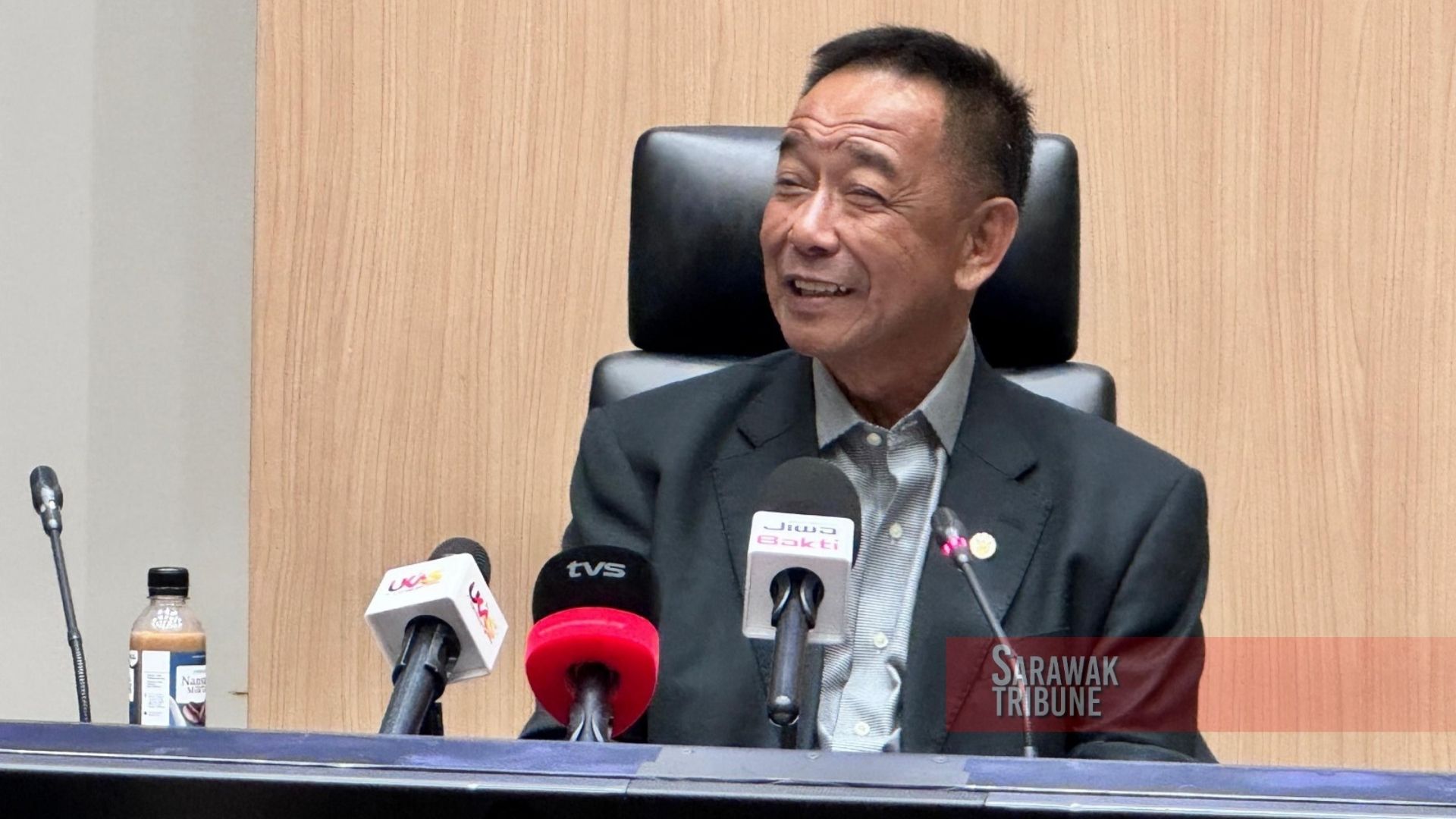
KUCHING: Prime Minister Datuk Seri Anwar Ibrahim’s recognition of the allocation of one-third of parliamentary seats as a national agenda has been described as an important step towards restoring the constitutional vision behind the formation of Malaysia.
Tourism, Creative Industry and Performing Arts Minister, Datuk Seri Abdul Karim Rahman Hamzah, welcomed the Prime Minister’s position, expressing hope that all leaders would view the matter from the perspective of preserving the original constitutional balance.
“The Prime Minister informed us last night (Wednesday) that this matter should be viewed as a national agenda, rather than something concerning only Members of Parliament or a demand from Sabah and Sarawak.
“Instead, this matter needs to be viewed as something bigger. This is what our forefathers wanted, and this is how it should be viewed by the heirs and succeeding generations of all our predecessors, including today’s leaders.
“Therefore, there is no room for further negotiations on efforts to restore the allocation of one-third of parliamentary seats as agreed upon during the formation of Malaysia in 1963,” he said.
He said this at a media conference after launching the Borneo Jazz Festival 2026 at the Baitulmakmur II Building here today.
He said the composition of parliamentary seats had been determined during the formation of the country through the Inter-Governmental Committee (IGC) Report and the Federal Constitution.
Under the original agreement, two-thirds of the parliamentary seats were allocated to Malaya, while the remaining one-third was shared among Singapore, Sabah and Sarawak.
“That was what was agreed upon by our forefathers and those who negotiated the formation of Malaysia. It may not have been documented or codified in a specific document, but that was how it was.
“However, the political balance changed significantly in 1965 when Singapore left Malaysia, resulting in 15 parliamentary seats becoming vacant,” he said.
He explained that the 15 seats were subsequently allocated entirely to Peninsular Malaysia and were not redistributed to Sabah and Sarawak.
“That was where the gap began after 1965,” he said, adding that the change altered the original structure of representation.
Elaborating on the importance of the allocation, he stressed that several important provisions in the Constitution, including rights relating to indigenous communities and regional interests, require a two-thirds parliamentary majority to be amended.
“Without maintaining the one-third representation, Peninsular Malaysia would have more than two-thirds of the parliamentary seats.
“This would create a situation where constitutional amendments could be passed without support from Borneo.
“Hypothetically, they could take away the rights of Sabah and Sarawak enshrined in the Federal Constitution. That is why we want the one-third allocation to continue to be maintained,” he stressed.