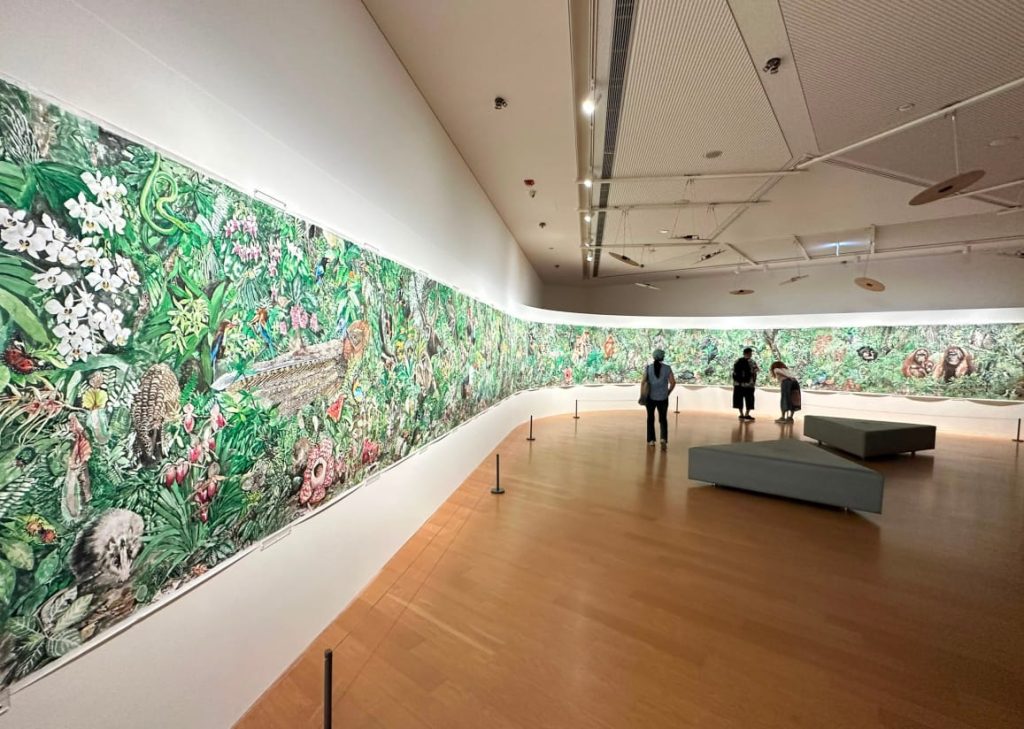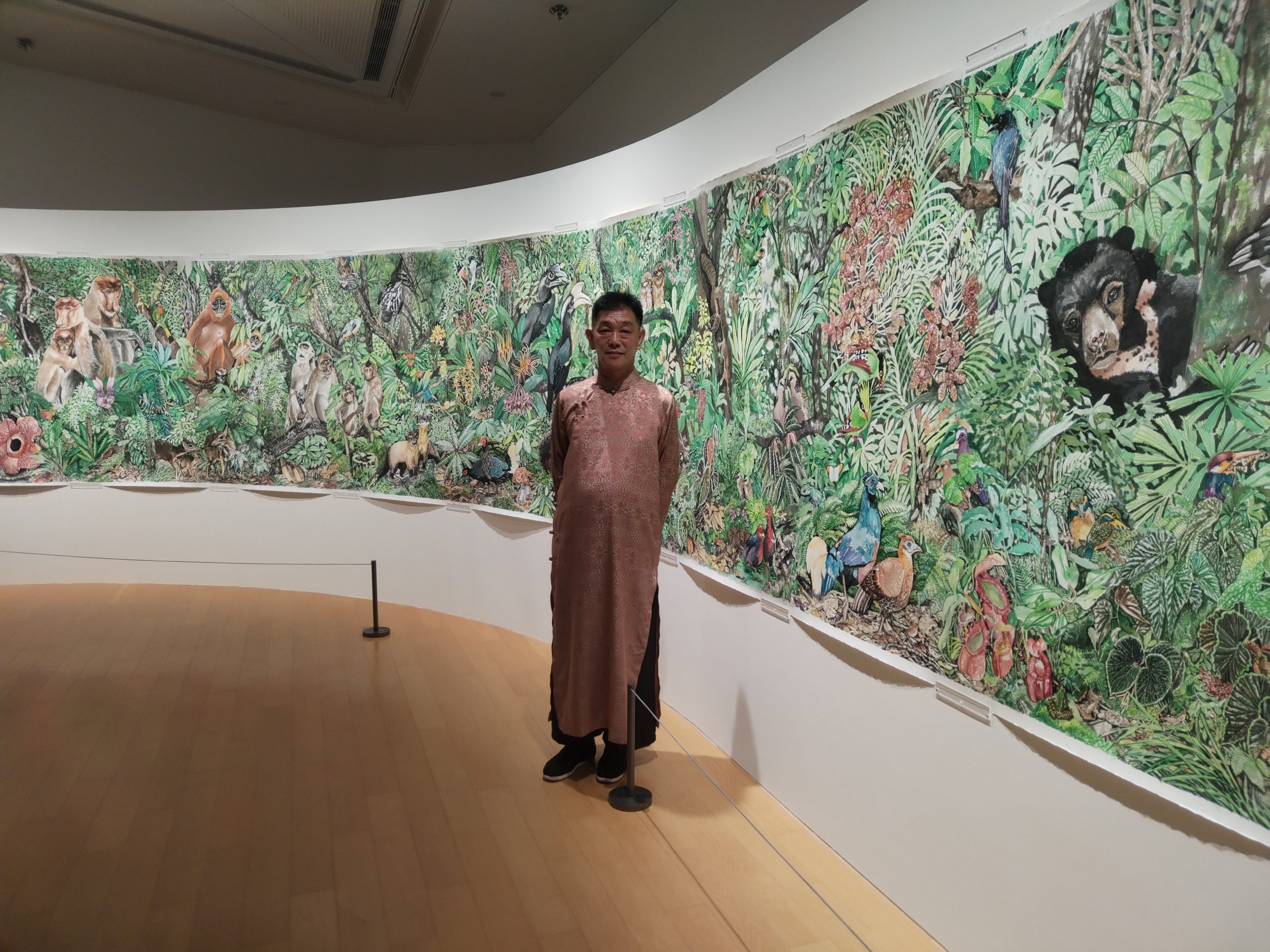
WATERCOLOUR artist Bong Shin Shiong has brought Borneo’s rich biodiversity to the international stage with a monumental 20-metre painting currently exhibited at Taiwan’s Museum of Modern Art, a milestone he describes as both a personal journey of passion and a platform for environmental awareness.
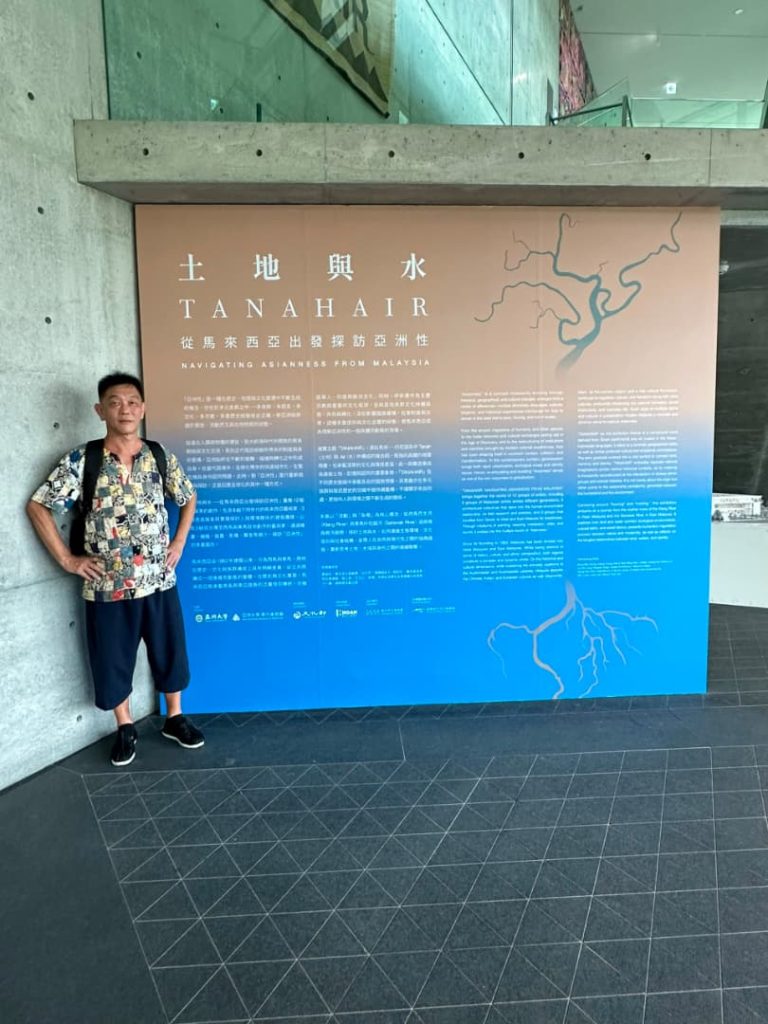
The Lundu-born artist’s work, Borneo’s Flora and Fauna II, is one of the highlights of the Tanahair – Navigating Asianness exhibition at the Asia University Museum of Modern Art in Taichung, Taiwan.The artwork, measuring approximately 20 metres in length and five feet in width, took nearly a year to complete and is regarded as one of the largest watercolour paintings ever created in Malaysia.
Currently on display at the museum, the artwork will be exhibited until Nov 1 this year.
The masterpiece features 128 species of Borneo’s native flora and fauna, comprising 18 mammals, 58 bird species, 19 amphibians and reptiles, and 33 insects and other small creatures.
Rendered in meticulous realism, the work celebrates the extraordinary biodiversity of Borneo’s tropical rainforest while reinforcing Bong’s message of conservation and environmental appreciation through art.
Speaking during a recent Zoom interview with members of the press, Bong said the opportunity to participate in the international exhibition was made possible through a series of introductions and support from individuals and institutions.
The exhibition is also a significant personal moment—the first time his full 20-metre painting has been displayed in its entirety.
“This exhibition also marks the first public presentation of my 20-metre-long watercolour painting. It features the flora and fauna of Borneo, including native plants, wildlife, birds, orchids, fungi, and many rare species,” he said.
Bong said his deep appreciation for nature was shaped early in life.
“I have loved plants and animals since I was young. My father loved orchids and grew many of them at home, so I grew up surrounded by orchids and naturally became interested in them.
“As my understanding deepened, I also became friends with many wildlife photographers. Through their photographs, I was introduced to many of Borneo’s unique animals and plants, which later became subjects in my paintings,” he said.
However, he noted that the inspiration behind the work also comes with a sense of urgency about conservation.
“I realised that many of these species are losing their natural habitats and are becoming increasingly endangered. Through this artwork, I hope more people will appreciate the richness of Borneo’s biodiversity and understand the importance of protecting our natural environment,” he said.
He added that the painting also serves an educational purpose, allowing viewers to discover and learn about the region’s biodiversity, from birds and mammals to orchids, fungi and native plants.
Reflecting on the scale of his work, Bong said painting is not his profession but his lifelong passion, and that each large-scale project represents a new stage of personal and artistic growth.
“Painting has never been my profession—it has always been my passion.
“This is the first time I have seen my 20-metre painting displayed in its entirety because I simply do not have enough space at home to view it as a complete work. When I saw it installed at the museum yesterday, it was an unforgettable experience,” he said.
He added that the response from friends in China and Taiwan was equally encouraging.
“I immediately took photographs and shared them with friends in China and Taiwan. Their response was simply, ‘Wow, it’s spectacular.’”
Bong added that his artistic journey has progressed steadily from smaller works to increasingly ambitious scales.
“I began with smaller paintings, then moved to 10 metres, followed by this 20-metre work. I am now halfway through my next 30-metre painting,” he said, adding that each project pushes him to expand not only his artistic skills but also his knowledge of biology, ecology, and species behaviour.
On his creative process, Bong said collaboration with wildlife photographers plays an important role, as their field images serve as references for his compositions.
“The greatest challenge is not finding the subjects—it is composing them into a balanced and harmonious artwork.
“My earlier works were influenced by traditional Chinese painting, where elements across the painting often echo one another. I applied the same thinking here, carefully arranging birds, plants, butterflies, and animals so that they relate visually across the entire composition,” he said.
He added that while sourcing material is not difficult, completing such a large and detailed work requires patience and consistency.
“The biggest challenge was simply completing such a large piece. It required patience, consistency, and perseverance over a long period of time,” he said.
Among the species featured in Borneo’s Flora and Fauna II are the Peacock Pheasant, Helmeted Hornbill, gibbons, and the orchid Anoectochilus roxburghii, also known as the “golden orchid,” all of which highlight the fragility of Borneo’s ecosystems.
Bong said he hopes to eventually bring his large-scale works, including the 20-metre painting and an upcoming 30-metre piece, back to Sarawak for exhibition.
“Yes, that is something I hope to do. I would like to exhibit these works in my hometown because many local people have never seen this side of my artistic practice.
“I am also planning a new gallery space in my hometown where these paintings can eventually be displayed. Hopefully, both the 20-metre and the future 30-metre paintings can be exhibited in Kuching within the next few years,” he said.
Asked about the significance of his international recognition, Bong said he prefers to let the work speak for itself.
“Rather than answering that myself, I believe it is something audiences should decide.
“For me, the painting serves as an educational work. It introduces viewers to the unique flora and fauna of Borneo, including many rare plants, insects, birds, and animals that exist nowhere else.
“I hope international audiences will come away with a greater appreciation of Sarawak’s extraordinary biodiversity. Through this painting, I want to share the beauty of our forests and inspire people to value and protect the natural heritage we have here,” he said.
Bong also expressed his gratitude to those who have supported his journey, including Hoan Gallery, exhibition curators, and collaborators who helped make his participation in the international exhibition possible.