SIBU: Sarawakians have proven their ability to adapt to technological and policy changes over time, from digital payments to renewable energy transitions, said Premier Datuk Patinggi Tan Sri Abang Johari Tun Openg.
He said this resilience is crucial as Sarawak moves away from dependence on the old economy and embraces new energy and digital-driven development.
Reflecting on recent geopolitical conflicts such as those in Iran and Ukraine, he said that the energy sector remains the hardest hit during global crises.
He said that if the state had not been forward-looking, local villages and longhouses would today be facing severe electricity disruptions due to rising diesel prices and supply chain vulnerabilities.
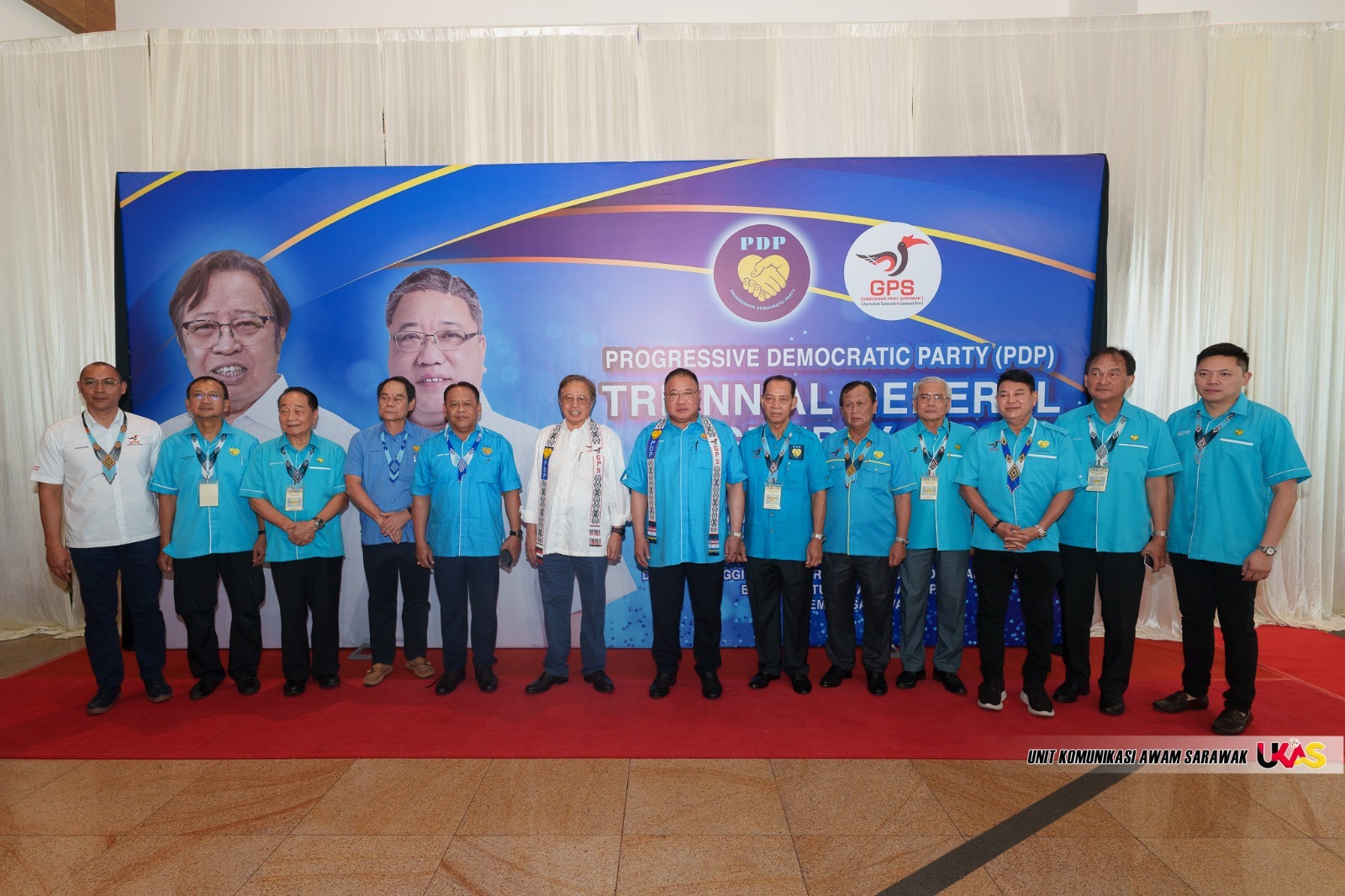
“We cannot depend on the old economy. We must move forward. If you look at the Iran and Ukraine conflicts, the most affected sector is energy. If we are not forward looking, we will face problems in our longhouses,” he said in his speech at the Progressive Democratic Party (PDP) Triennial General Assembly 2026 (TGA 2026) at Kingwood Hotel here today.
Abang Johari said reliance on diesel for rural electricity supply had previously exposed communities to rising costs and uncertain fuel supply, particularly when global supply chains are disrupted.
“Previously, our longhouses depended on diesel generators. When diesel prices go up, costs increase. Even if you can afford it, you are not sure about supply,” he said.
He added that Sarawak’s early shift to solar energy under the Sarawak Alternative Rural Electrification Scheme (SARES) six years ago has ensured stable electricity supply for rural communities, particularly in interior areas.
“Today, longhouses in the interior have no problem with electricity. That is why we must always look ahead,” he said.
The Premier also pointed to Sarawak’s early adoption of digital initiatives, including e-wallet systems such as S Pay Global introduced during the COVID-19 pandemic, which helped maintain economic activity during movement restrictions.
“When COVID-19 came, people could not move, could not meet, could not even shop easily. Luckily, we had S Pay. We were the first in Malaysia to introduce cashless payment. Meetings also moved to Zoom,” he said.
He said that despite initial scepticism, Sarawakians have now fully embraced digital technology, pointing to an elderly man he met during his visit to Siburan on Friday for the launch of the second Sarawakku Sayang Special Assistance distribution, who was seen confidently using digital payment systems.
“An 81-year-old man in Siburan was paying bills using digital payment. He was entering passwords and transferring money. That shows Sarawakians can handle change,” he said.
Abang Johari also defended Sarawak’s investment in hydrogen energy, saying although it was initially criticised for being costly, technological advancements would eventually reduce production costs.
“When I introduced hydrogen, people said it was expensive. But I believe costs will come down, just like computers. Before, computers were the size of a room and used punch cards. Now everything is in your handphone,” he said.
He explained that hydrogen production through electrolysis is expected to become more cost-competitive as technology improves, making it comparable or even cheaper than fossil fuels depending on global oil prices.
“If oil is around USD100 per barrel, hydrogen is already comparable to diesel. If oil goes to US$D110, hydrogen becomes cheaper,” he said.
Abang Johari stressed that Sarawak’s economic strength lies in its willingness to embrace change, particularly in energy transition and digital transformation, while continuing to safeguard long-term sustainability.
“Our economy is strong, but we must look at the future,” he added.