KUCHING: Sarawak’s ambition to become the ‘Annecy of Southeast Asia’ will require an ecosystem to retain creative talent and support the growth of the industry.
Sarawak Digital Economy Corporation’s (SDEC) Chief Executive Officer (CEO), Datuk Sudarnoto Osman, said the ambition was about creating a wider creative industry ecosystem rather than replicating the annual festival in Annecy, France.
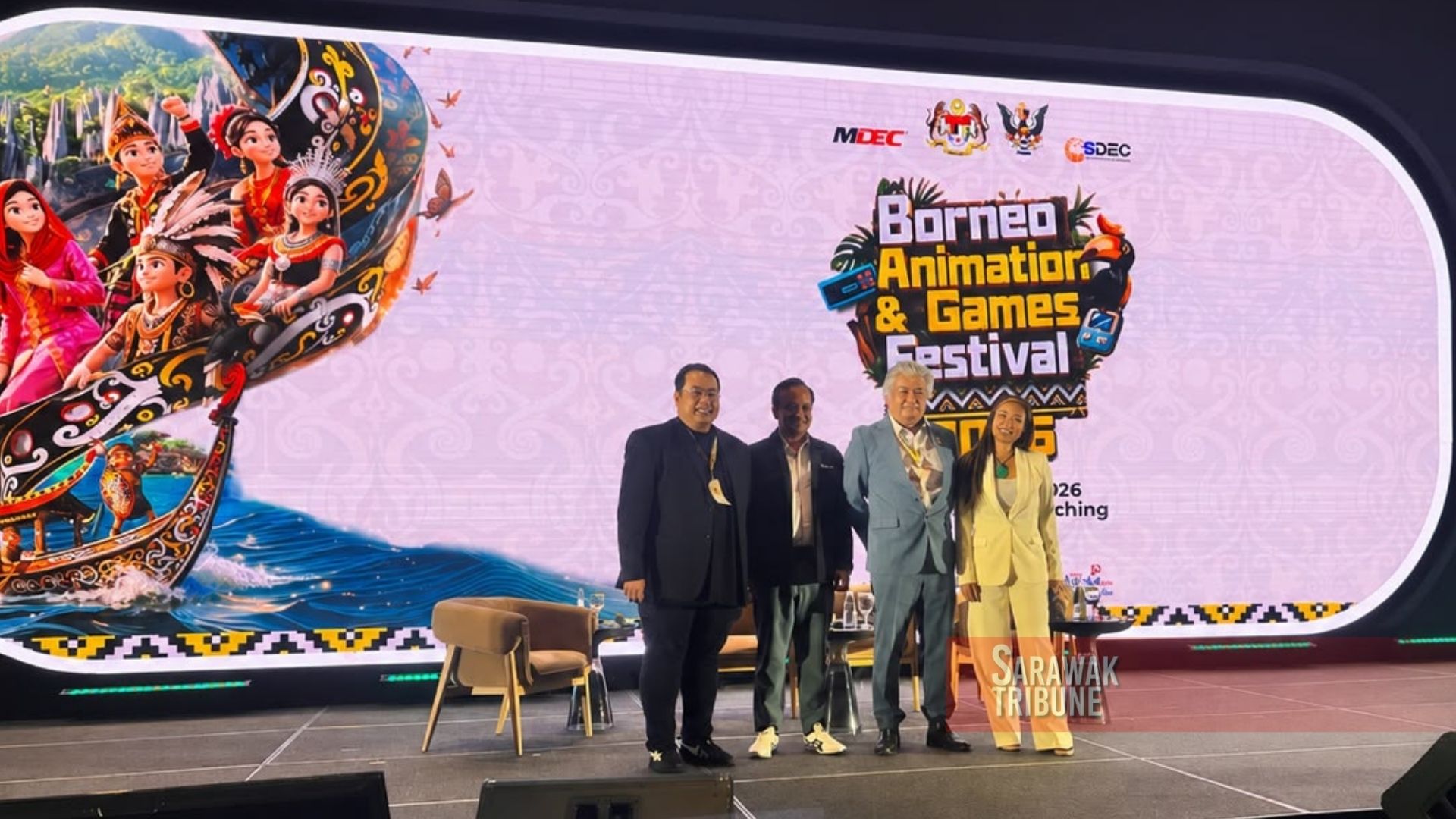
“It’s not about one festival,” he said during the ‘Building a Sustainable Ecosystem for the Digital Content Revolution’ CEO panel at the Borneo Animation & Games Festival (BAGFest) at Pullman here today.
Annecy is home to the Annecy International Animation Film Festival, one of the major international events for the animation industry.
Moderated by Norman Goh of Nikkei Inc, the panel also featured Malaysia Digital Economy Corporation (MDEC) CEO Anuar Fariz Fadzil and Enfiniti Group CEO Puan Sri Tiara Jacquelina.
Sudarnoto said the ecosystem needed to cover the journey from schools and universities to production houses, entrepreneurship, intellectual property creation and commercialisation.
“Graduates stay when there is economy,” he added.
He said Sarawak now had talent coming from its universities but retaining them depended on having enough production houses and opportunities.
“If you don’t have enough production house within Sarawak itself, where do they go? Definitely, they will move out from Kuching,” he added.
Kuching’s standard of living and lower cost of living were among the factors he cited in encouraging people to build businesses there.
“If you fail, there’s a chance for you to come back easily because it’s not that very expensive to fail,” he said, comparing Kuching with cities such as Singapore and Kuala Lumpur.
Sudarnoto also stressed that production companies should come to Kuching for its intellectual property and investment opportunities rather than simply for BAGFest.
“The big production comes to Kuching not because of BAGFest,” he said.
He also highlighted Sarawak and Borneo’s mythology and stories as material that needed to be told.
“If you look at the mythology, I mean the things in Sarawak and Borneo, right? They need to be told. Somebody has to do it,” he added.
Meanwhile, Anuar said Malaysia could no longer compete with regional countries based on cost.
“We cannot compete on costs anymore,” he said, citing Vietnam as a country that was catching up rapidly.
Malaysia needed to focus on quality and talent while developing its own intellectual property, he added.
Tiara said Malaysia already had talented writers, designers, animators, producers, technologists and storytellers.
She said the gap was often between creation, commercialisation and ownership, with creators needing to think beyond completing a single project.
Citing ‘Puteri Gunung Ledang’, which began as a film before becoming a musical, Tiara said the story demonstrated how intellectual property could continue beyond its original production.
“Don’t just learn the tools but learn to build worlds,” she concluded.