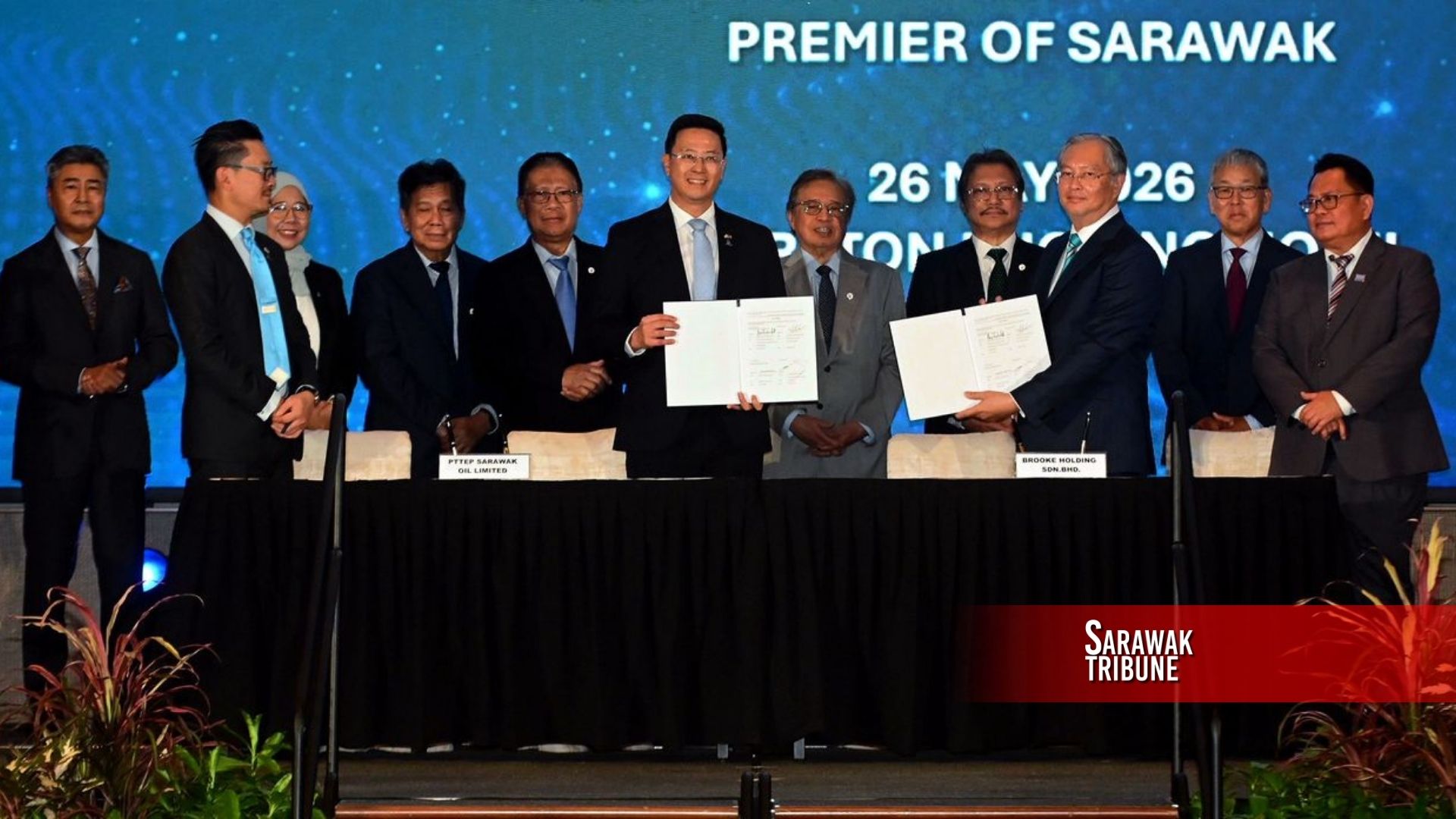
KUCHING: The state government sees strong potential to explore more oil and gas reserves in western Sarawak following advancements in new technologies within the industry, says Premier Datuk Patinggi Tan Sri Abang Johari Tun Openg.
He said areas along the western coastal belt of Sarawak, particularly near Lundu and close to the Natuna region, could hold untapped reserves that were previously considered uneconomical due to high operational costs and the presence of sour gas.
“Based on geological studies, there appears to be oil and gas reserves that can be explored along the coastal areas, stretching from Kimanis in Sabah down to Brunei Bay, Baram, Mukah and Balingian.
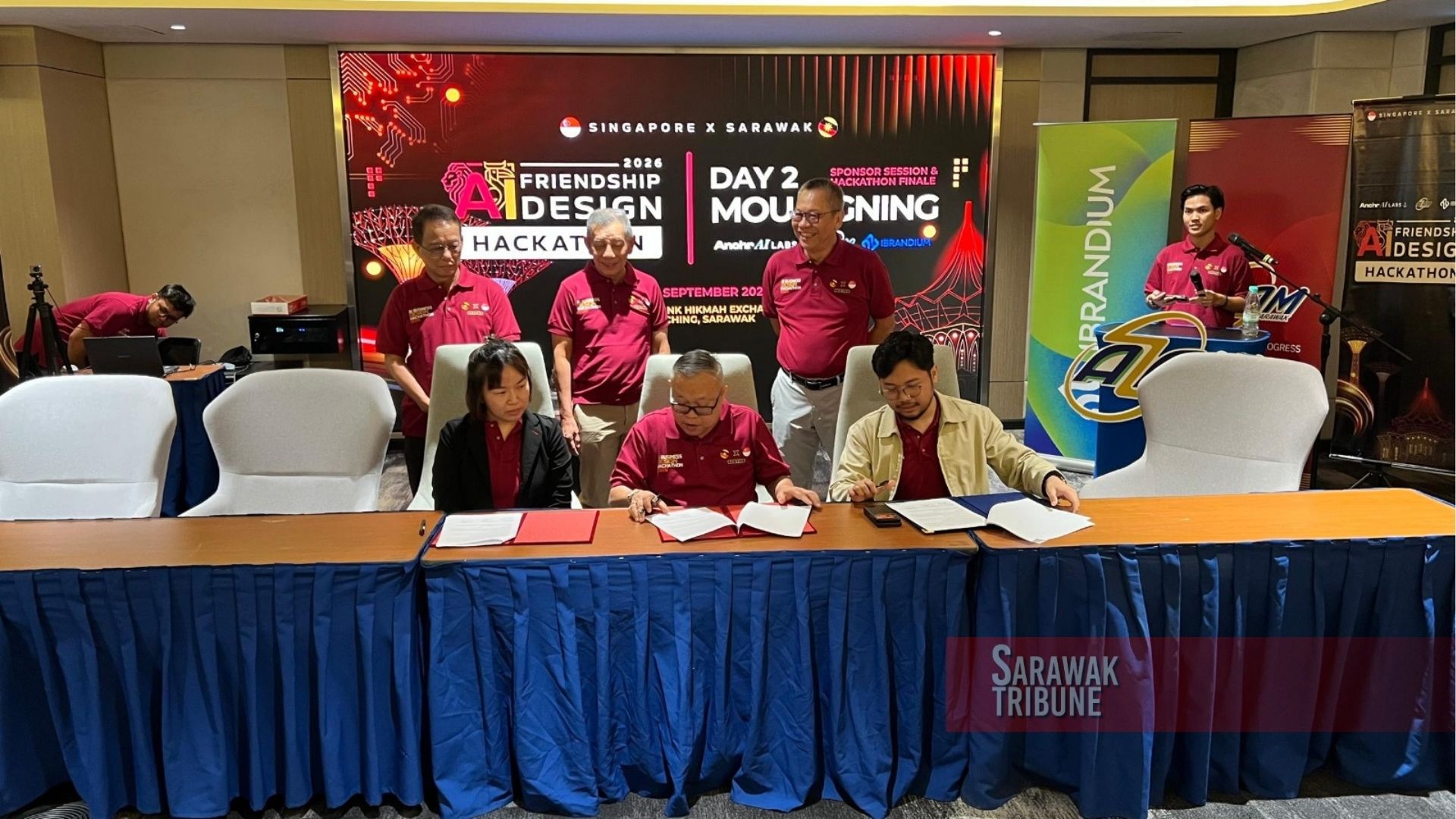
“These areas have not been fully explored yet, including western Sarawak. With new technologies introduced by PTTEP, we may be able to discover more reserves in western Sarawak,” he told reporters after witnessing the contract signing ceremony between PTTEP Sarawak Oil Limited and Brooke Holding Sdn Bhd today.
Abang Johari said although global geopolitical uncertainties have negatively impacted the energy market, producing states such as Sarawak could benefit from rising energy prices.
“That is why I mentioned earlier that although geopolitical uncertainties have negative impacts, the global situation has caused energy prices to increase. As a producing state, Sarawak stands to gain positively from the increase,” he said.
He added that Sarawak must continue collaborating with international oil and gas companies to strengthen its role as an energy producer beyond the Gulf states.
“We want to continue exploring. PTTEP and its partners are using their technologies to determine whether there are oil and gas deposits in these locations, and there are already promising signs,” he said.
According to him, development work in the identified areas is progressing ahead of schedule, with Brooke Holding playing an important role in deploying the necessary equipment.
Abang Johari added that technological advancements now allow sour gas to be processed more efficiently by separating and storing carbon, transforming sour gas into sweet gas that is commercially viable.
“In the past, there was less interest in these areas because the costs were high and the gas was sour. But now, with new technology, carbon can be separated and stored, while sour gas can be converted into sweet gas,” he said.
In his speech earlier, Abang Johari said continued growth in the oil and gas sector would strengthen Sarawak’s revenue generation and enhance the state government’s capacity to invest in public development projects.
He said stronger revenues would enable the government to expand roads, bridges, water supply systems, electricity infrastructure, schools, clinics, digital connectivity and social assistance programmes, especially in rural areas.
“It also means we can continue strengthening education, healthcare and public service delivery with greater confidence and continuity,” he said.
Abang Johari added that through the Free Tertiary Education Scheme (FTES), Sarawak would continue producing skilled talent capable of supporting strategic industries such as oil and gas, energy, engineering and advanced technology sectors.
“This is important in creating more high-income employment opportunities for Sarawakians.
“When I say projects such as Sirung benefit Sarawak, I do not mean only in terms of petroleum economics. I mean roads being built, villages connected, students supported, services improved and opportunities created,” he added.