FROM binge-watching Japanese dramas to building a global freelance career, subtitle translator Najah Wajihah Zaman Huri proves that hobbies can evolve into sustainable sources of income in today’s digital economy.
What began as frustration over an episode without subtitles eventually led the young freelancer into a career that now allows her to work with international clients from anywhere in the world, even while studying in Japan.
This 36-year-old lady said that her journey into subtitle translation started from a deep interest in Japanese dramas during her school days.
“One day, there was an episode without subtitles. I felt stressed because I could not understand it, and that made me curious about how subtitles were actually produced and what the career scope looked like,” she told Sarawak Tribune.
The curiosity later developed into a serious career ambition after she discussed her future plans with her Form Five English teacher following the Sijil Pelajaran Malaysia (SPM) examination.
Although she was interested in English, Najah admitted she had little desire to pursue teaching, which was the more common route through Teaching English as a Second Language (TESL) courses.
Her teacher then suggested translation as an alternative career path.
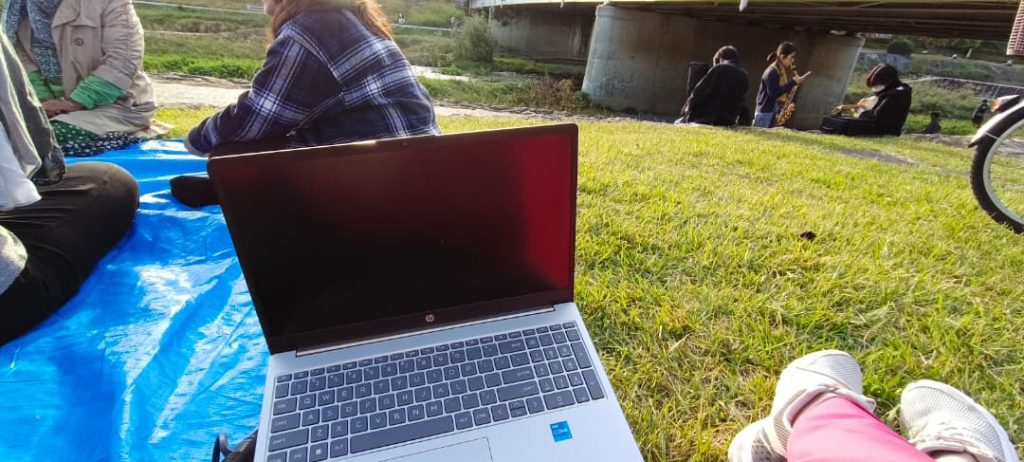
“The teacher told me about a friend who worked as a subtitle translator from home while taking care of children.
“That really caught my attention because it showed me that this was actually a real career,” she shared.
Motivated by the possibility, Najah began researching the field and eventually enrolled in an intensive translation course conducted by the Malaysian Institute of Translation & Books (ITBM).
Initially, she had no plans to further her studies at university as she wanted to begin working immediately as a translator.
However, one of the instructors at the institute advised her to continue her education so she would possess a specialised field of knowledge that could later complement translation work.
Taking the advice seriously, Najah pursued a degree in Computer Science.
Her big break came during her final semester internship at Elite Animation.
Before completing her internship, her employer asked about her future aspirations, and Najah openly shared her dream of becoming a translator.
Not long after, she was entrusted with translating the script for the company’s animation project titled Sebendang (Mboo).
“That was my first opportunity to work on a real translation project,” she recalled.
Soon after the project ended, Najah came across a job advertisement from Iyuno on JobStreet and decided to apply.
She was successfully hired and spent about one and a half years working in the office environment, managing schedules for freelance translators.
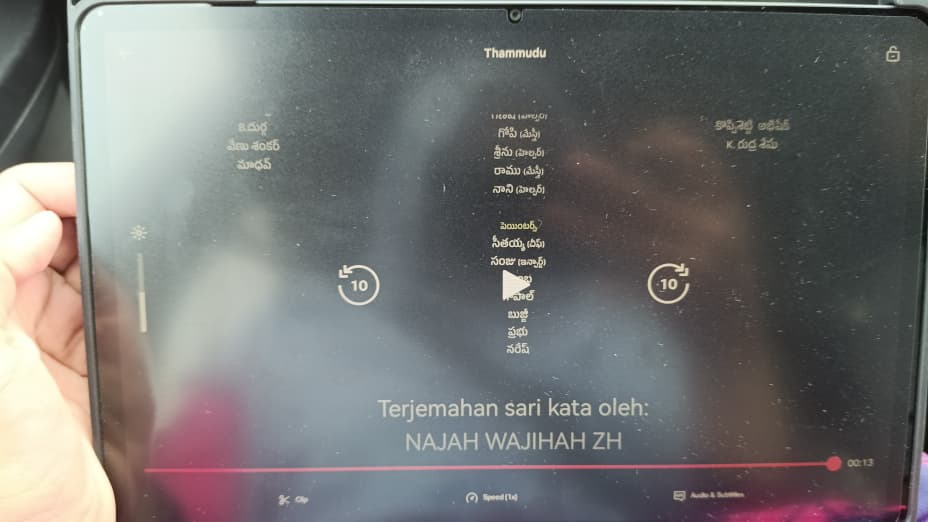
Ironically, that experience convinced her that becoming a freelancer herself would offer greater flexibility and freedom.
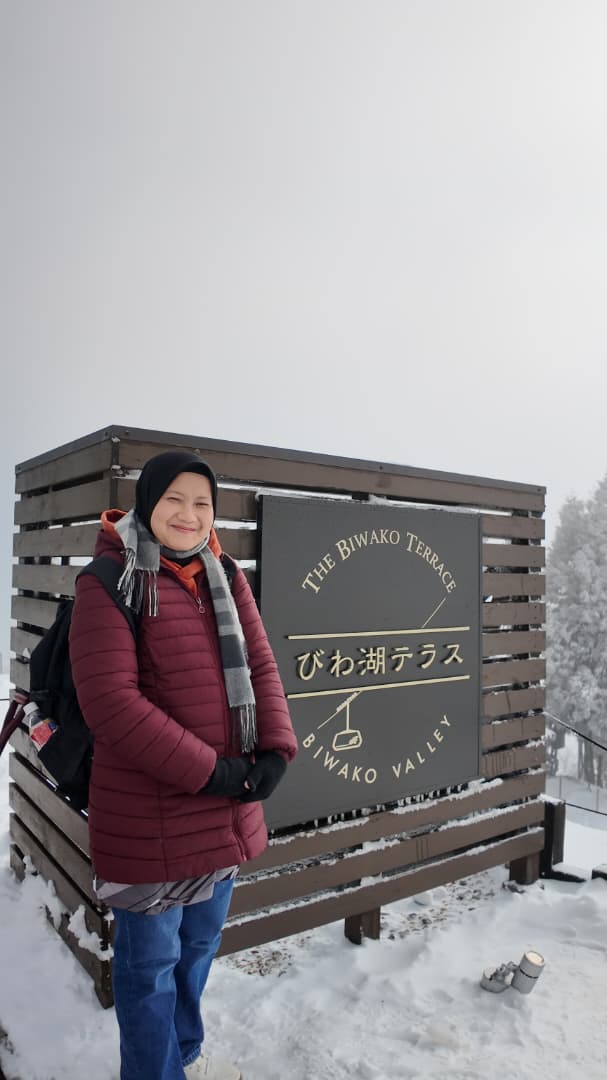
After resigning from the company, Najah travelled to Japan to study the Japanese language.
Before leaving, she informed the management that she remained interested in accepting subtitle translation assignments remotely.
“That was how I got my first paid freelance project,” she said.
While living in Japan, Najah attended language classes in the mornings and spent her afternoons translating scripts from home.
Today, freelance subtitle translation has become not only a profession, but also a lifestyle that allows her to work across borders.
Despite the flexibility, Najah stressed that the career is far from easy and requires a combination of language mastery, technical ability and extensive research skills.
According to her, translators frequently deal with specialised subjects such as medical or legal dramas, which require careful fact-checking and understanding of technical terminology.
She explained that one of the most important skills is the ability to adapt sentences naturally rather than translating them word-for-word.
As an example, she said the English sentence “What are you talking about?” should not be translated literally into awkward Malay phrasing, but instead adapted into conversational language that sounds natural to viewers.
“A subtitle translator needs strong command of Bahasa Melayu, including grammar and spelling.
“At the same time, we also need to understand different software and online platforms because every client may use different systems,” she said.
She added that translators must also pay close attention to cultural references, slang and social context to avoid factual or contextual mistakes.
Working from home, however, comes with its own sacrifices.
Najah admitted that tight deadlines often force her to work during public holidays and festive seasons, particularly for fast-track drama projects.
“People assume that because we work from home, we are always free.
“In reality, there are times during Hari Raya when relatives come over and I have to hide in my room just to finish urgent work,” she said.
The nature of freelance work has also affected her personal lifestyle over the years.
Najah described herself as once being sociable and outgoing, but now considers herself more introverted due to spending long hours indoors working alone.
She also prefers solo travelling because her work schedule can be unpredictable and difficult to coordinate with others.
Financially, however, the career has brought encouraging rewards.
After years of building her reputation, Najah now works with numerous overseas clients and receives most payments in United States dollars (USD), making her more aware of foreign exchange movements.
Still, what she appreciates most about the profession is the flexibility it offers.
Among the experiences she treasures are being able to work while travelling overseas, caring for her father during hospital stays and spending more quality time with family members.
“When you do something you genuinely enjoy, the stress becomes much easier to manage,” she said.
At the same time, Najah noted that stable internet access remains one of the most important requirements for anyone interested in entering the field.
She explained that most agencies clearly state the need for reliable internet connectivity in their job advertisements, as subtitle translation work heavily depends on online platforms and cloud-based systems.
Without realising it, it has been more than 10 years since she turned her hobby into a source of income—and in fact, a full-fledged career.
To those hoping to turn their interests into careers, Najah offered a simple piece of advice:
“Just do it. You will never know what you are capable of until you take the first step.”