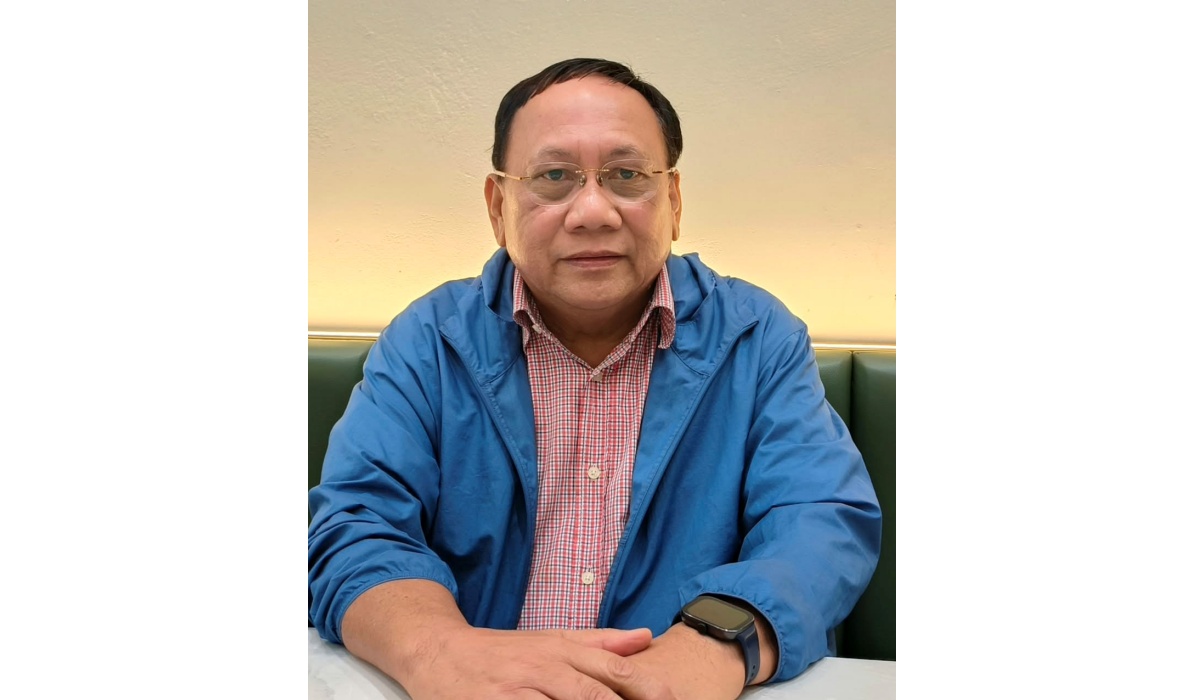
KUCHING: Long before Wong Hung Chang began turning belian roots and everyday objects into sculptures, there was simply a boy who could not stop making things.
His fascination began with a woodworking class in secondary school, an experience that stayed with him long after he moved into architecture and, eventually, into art.
Now in his 60s, Wong has spent more than 15 years immersed in sculpture and the arts, developing a practice driven less by conventional ideas of beauty or technique than by questions of form, thought, feeling and possibility.
“I just can’t stop making things, and the making of things is fundamental in learning,” Wong told Sarawak Tribune in a recent interview.
His journey from architecture to sculpture is not necessarily a conscious rejection of one discipline for another.
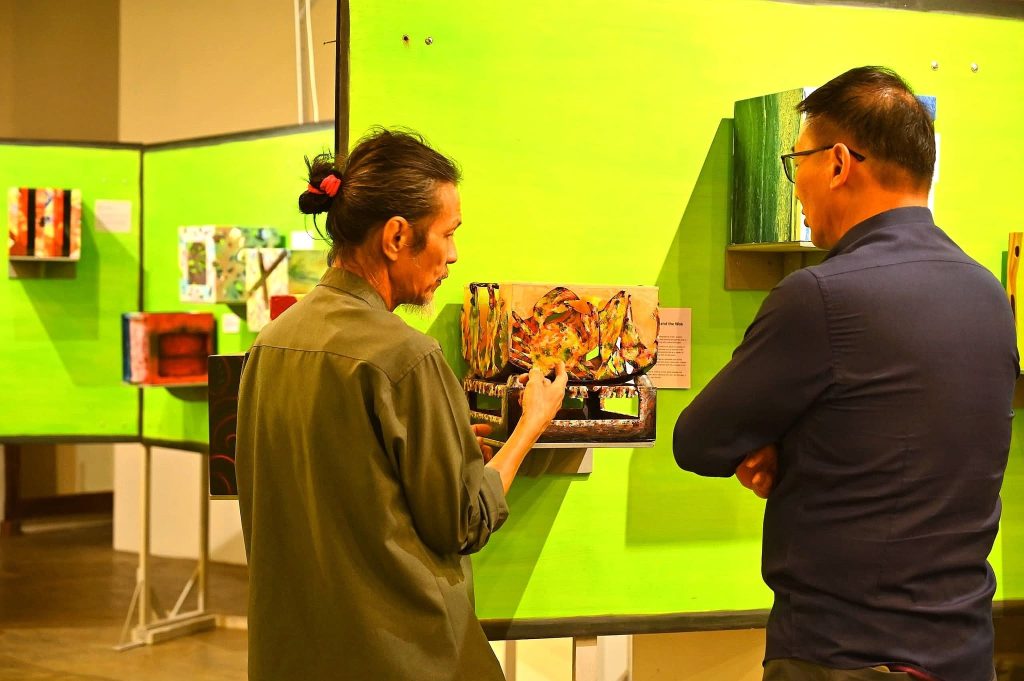
Rather, he carried with him what he valued most from architecture, from ideas and concepts and applied them to art.
“It’s not the technical part or practice of architecture that interests me, but the ideas and concepts, and I am applying it in art,” he said.
Wong, who is based in Kuching, estimates that roughly a quarter of his life was spent in architecture and another quarter in art.
“Basically, one quarter of my life is in architecture, one quarter in art, and I can’t explain what the rest went to,” he quipped.
His approach to sculpture is equally difficult to define.
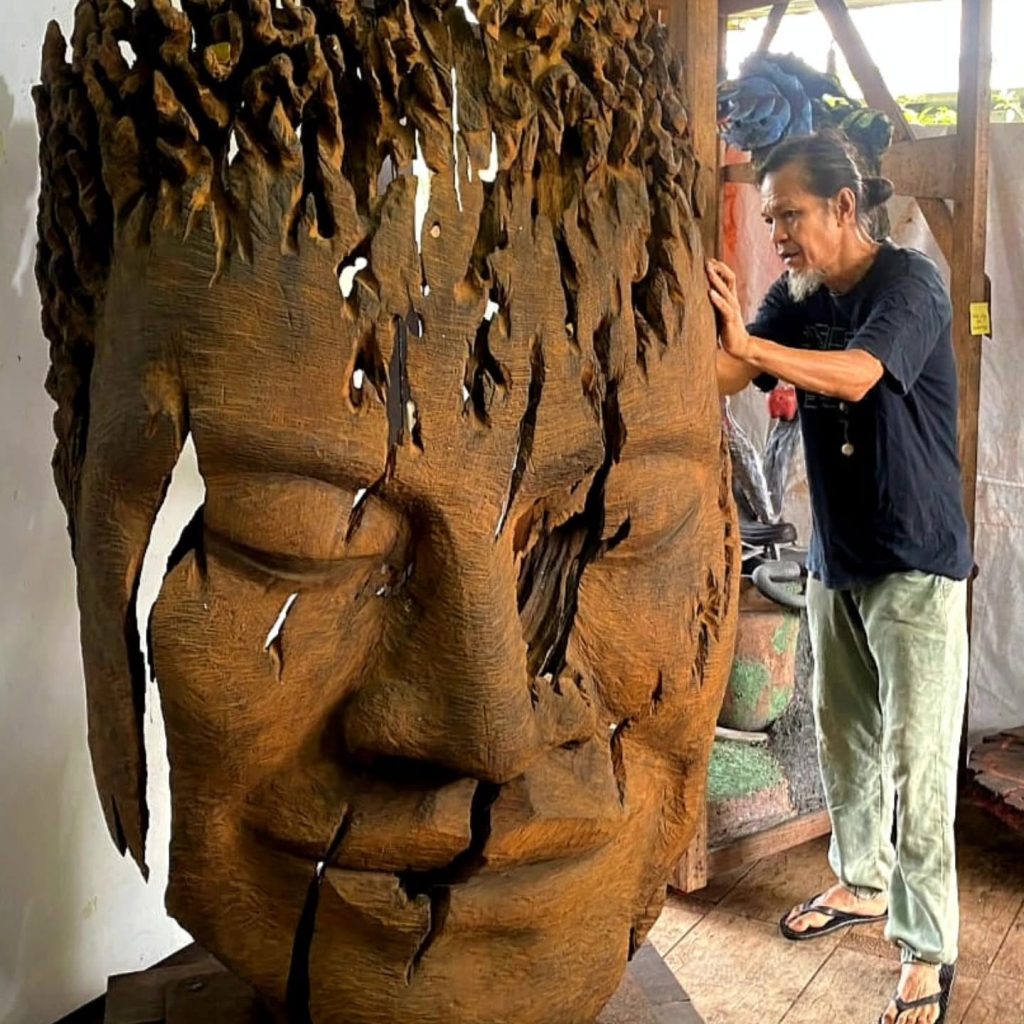
When faced with aged belian roots and buttresses, Wong is drawn to their unusual natural forms, particularly those that appear to suggest fragments of figures or other forms.
He does not necessarily begin with a fixed idea of what the wood should become.
Instead, he emphasises something within its natural form until an idea or concept begins to emerge.
From that point, however, he often works against the material rather than simply following it.
“It would now mean I work against the natural given forms or extend it to create an artificial form for the idea,” he said.
The process, he admits, can be “very hellish”.
As the work develops, the form can become increasingly alien to the natural character of the wood, while the artist himself may even move away from the concept with which he started.
Yet Wong remains stubbornly committed until something clicks.
“Unless I get to the point when it strikes my psyche, I won’t let go,” he said.
Some works eventually reach a stage where he feels they are finished, only to be left sitting for years.
When he encounters them again, time may have changed the way he sees them.
He may no longer remember what he originally intended, or discover something in the work that was not apparent when he first created it.
“They make me think of their being,” he said.
That sense of discovery is central to Wong’s practice, which does not neatly divide itself between the traditional and the contemporary.
“I am aware of traditional or modern as you put it, but I don’t work in that way,” he said.
For Wong, it is more about the nature of things — their forms, thoughts, feelings and the sense they evoke.
His sculptures therefore often begin with things that are familiar, only to be transformed into something that makes the viewer reconsider them.
One example is a work created in his current project, HeadBox Art and/or Mask Exhibition from a frying wok, which Wong cut and reshaped into configurations resembling seafood, including fish, octopus, crab and prawns.
He cut an opening for his head and turned the object into something that could be worn. He called it Tom Yum Seafood With My Brain.
The seemingly humorous work also carries a reflection on time and decay.
Wong imagines his brain, the wok and the seafood cooking together, with time itself acting as the fire.
“The process of cooking is like time. Gradually everything disintegrates as time goes by. Time is a substance I made of time. In this case, time is like the fire,” he said.
His willingness to transform ordinary objects also extends to collaborations with other artists.
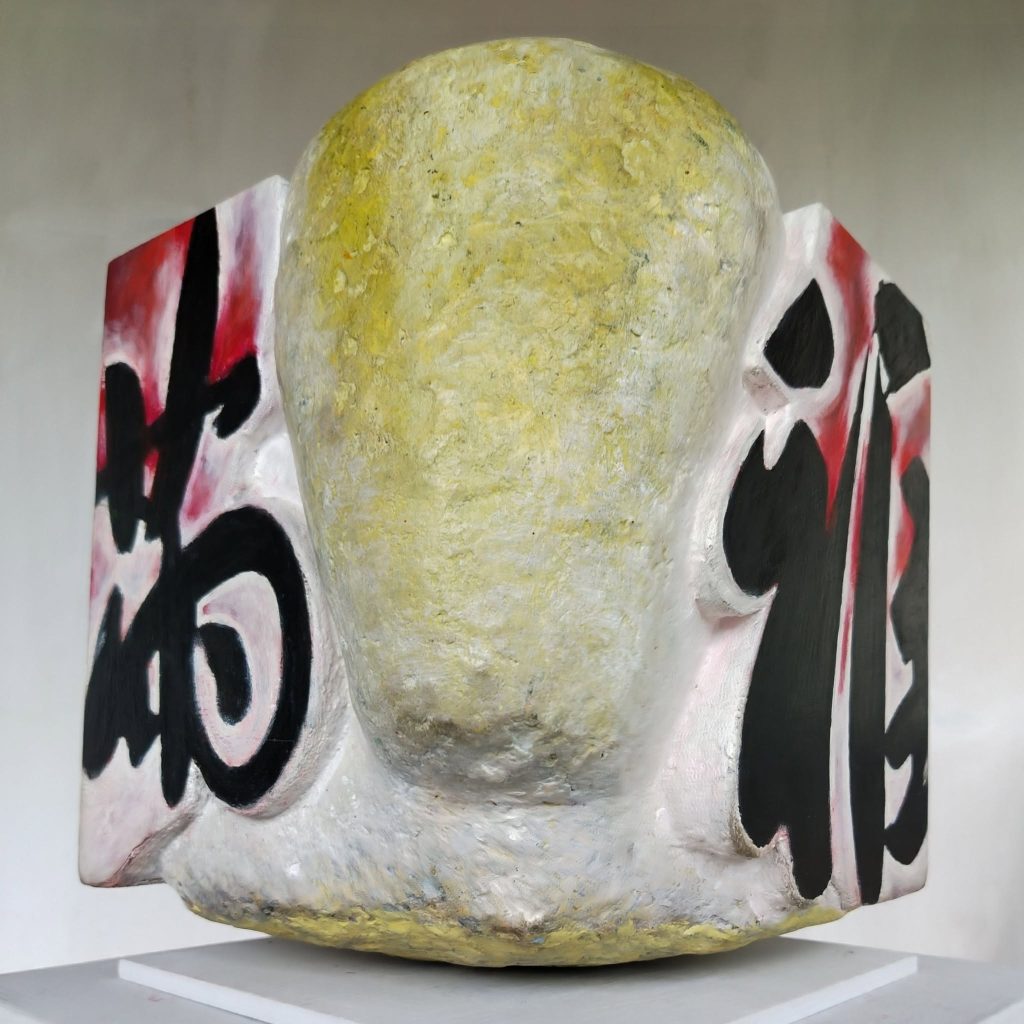
In one collaboration with acclaimed calligrapher Chai Chin Lee, Wong incorporated Chai’s calligraphy into a sculptural box before constructing a pot-like human head around it.
The calligraphy refers to the fullness of the energy and fortune of life, which Wong interpreted through the idea of a vessel containing that fullness.
Inside, upside-down trees emerge from the form, representing life contained within.
For Wong, such collaborations demonstrate how an established artistic practice can be pushed into another dimension.
Traditional calligraphy, for example, can be taken from a two-dimensional surface and incorporated into a three-dimensional sculptural object.
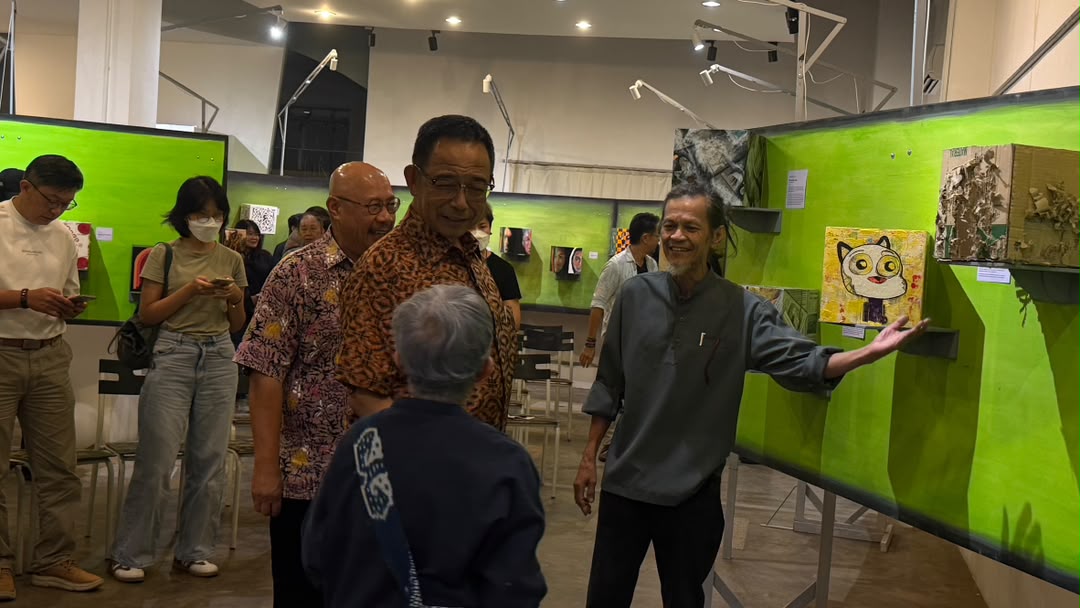
The HeadBox Art and/or Mask Exhibition, which runs until September 27 at Westberly Galleria here, brings together 40 artists and practitioners from different backgrounds.
The exhibition features 72 head boxes, including works involving painting, photography, tattoo, textiles, weaving and sculpture.
The idea itself grew from Wong’s own sculptural practice.
After nearly 15 years of working largely alone in his backyard, his sculptures began becoming increasingly large.
“They became so big and started running away,” he said.
He considered cutting them up and putting them into boxes, and was reminded of Kobo Abe’s novel The Box Man.
That thought eventually evolved into a much larger experiment — one that required Wong to move from working primarily as a sculptor to bringing together other artists.
“I am an artist but I am more of a sculptor. However, I approach this project as an artist more than an organiser or a curator,” he said.
He discussed the concept with several friends, whose encouragement gave him confidence to proceed.
Wong wanted the project to bring together academia, professional artists, fresh graduates and practitioners from different disciplines.
Among the participants are academicians from Universiti Malaysia Sarawak (UNIMAS) and Universiti Teknologi MARA (UiTM), graduates, established Kuching artists and practitioners working in fields such as photography, fabric and tattoo.
At the centre of the project is the cube.
For Wong, the cube represents a perfect geometric form — one of Plato’s five Platonic solids, with equal sides and angles.
But once handed to an artist, that perfection is no longer necessarily preserved.
It can be painted, sculpted, woven, altered or transformed. It can also be worn. That is where the title Art and/or Mask comes in.
When displayed on a gallery wall, the cube can function as an art object. When placed over the head, it becomes a mask — a functioning object connected directly to the body.
“It’s questioning what art is,” Wong said.
The concept also forces artists accustomed to two-dimensional practices to reconsider how they work.
A painting on a flat surface requires one kind of thinking. A cube requires the artist to consider its different sides, angles and even its interior.
For Wong, that difficulty is precisely the point. “It opens up possibilities,” he said.
Those possibilities include bringing traditional practices into an unfamiliar setting. One participant applied tattoo patterns to a cube, while others incorporated weaving into the form.
Another artist used the scratchings from her cat’s litter box and reconstructed them into a cube, turning an act of destruction into a meditation on construction and reconstruction.
Wong hopes viewers will similarly be encouraged to reconsider the relationship between art, material and the body.
“I hope they can feel the possibilities of seeing the work in another medium, and being applied to three dimensions,” he said.
He is particularly interested in what happens when an artwork is worn rather than simply observed.
The head becomes part of the artwork, turning the artist’s work into an expression of their thoughts, identity and understanding of the world.
Ultimately, Wong does not expect viewers to arrive at one prescribed interpretation. He simply wants something to happen between the viewer and the work.
“I do want to spark something in people who see my work,” he said.
For Wong, such a reaction is perhaps more meaningful than having someone repeat an explanation of what the artist intended.
It is also why he sees experimentation as an important part of the future of contemporary art in Sarawak.
Wong believes contemporary art should involve a degree of transgression — moving beyond what is commonly practised through different media, forms, styles or combinations of ideas.
“I do hope that this way of working is a step towards the contemporary. We have to try other ways of working, other than the traditional,” he said.
But that does not mean traditional practices need to disappear. For Wong, tradition can still enter into conversation with modern ways of thinking, creating something neither entirely old nor entirely new.