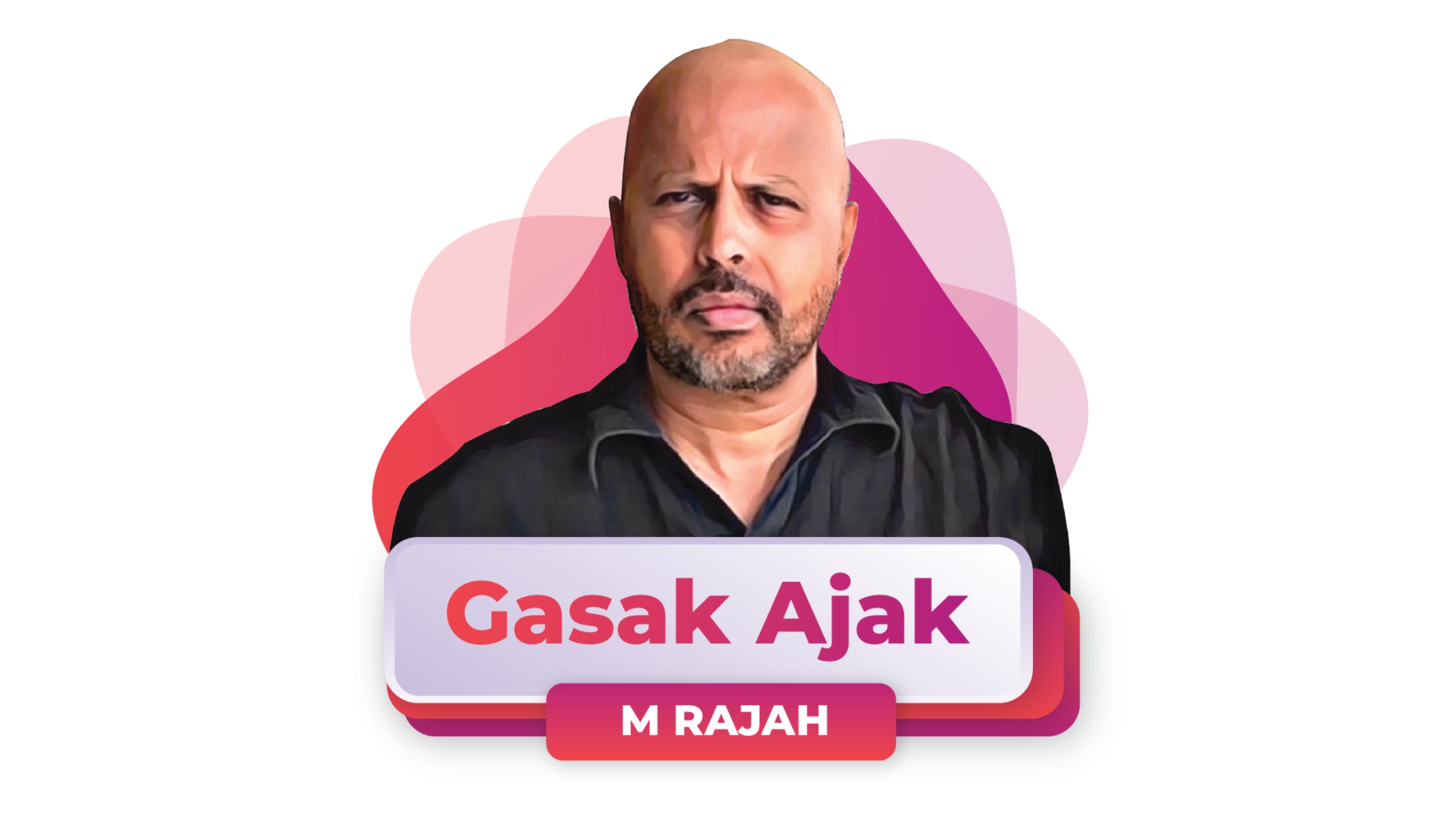
IN politics, disagreements are not unusual. In fact, they are often expected.
But what matters more is how those disagreements are managed – and whether leaders rise above them when it matters most.
The recently concluded Gabungan Parti Sarawak (GPS) Convention, themed ‘PCDS 2030: Visi Jadi Realiti’, offered a timely reminder of that.
Beyond the policy speeches, resolutions, and declarations, one message stood out clearly before more than 5,000 delegates gathered at the Borneo Convention Centre Kuching (BCCK): unity remains the coalition’s strongest currency.
GPS, comprising four component parties – Parti Pesaka Bumiputra Bersatu (PBB), Parti Rakyat Sarawak (PRS), Progressive Democratic Party (PDP), and Sarawak United People’s Party (SUPP) – showcased a level of cohesion that spoke louder than any single speech.
Perhaps nothing illustrated this better than the dynamic between two of Sarawak’s most prominent Chinese political leaders – PDP president Datuk Seri Tiong King Sing and SUPP president Datuk Amar Dr Sim Kui Hian – often described as “tigers” in their own right.
In the weeks leading up to the convention, there was no shortage of tension.
Tiong, the federal Minister of Tourism and Member of Parliament for Bintulu, and Dr Sim, a Deputy Premier and Batu Kawah assemblyman, had publicly taken differing positions.
Statements were made. Positions were defended.
And, at times, exchanges suggested possible cracks within the coalition – particularly between their respective parties.
The issue of community leader appointments, especially in areas represented by PDP elected representatives, became a focal point.
It was not merely administrative. It touched on deeper questions of influence, representation, and political space.
When such matters surface publicly, they draw attention quickly. Observers begin to speculate. Narratives begin to form.
Is unity under strain?
Are fault lines beginning to show?
These are natural questions. Yet, when the convention unfolded, a different picture emerged.
Leaders stood on the same stage. Messages were aligned.
The tone, while firm on certain issues, remained anchored in a shared commitment.
Even when reiterating earlier concerns, there was a noticeable shift – from confrontation to measured expression.
And perhaps most telling of all was what followed.
The very leaders who had been at the centre of recent exchanges chose to stand together. They even shook hands after delivering their speeches – a simple gesture, but one rich in meaning.
Not in denial of their differences, but in recognition of a larger responsibility.
This is where political maturity comes into play. Maturity is not the absence of disagreement.
It is the ability to disagree without destabilising the whole.
It is knowing when to press a point, and when to pull back for the greater good.
Within GPS, this maturity appears to be taking root across its component parties – PBB, PRS, PDP and SUPP.
Each has its own base. Each has its own priorities. Each has its own strong personalities.
Yet the convention showed that these differences can coexist within a broader framework of unity.
Sarawak today is navigating a complex landscape – from economic transformation and infrastructure expansion to energy ambitions, alongside an evolving relationship within the federation.
In such a context, internal stability is not merely a political advantage – it is a necessity.
A divided leadership weakens direction.
A united front strengthens confidence – both within and beyond the state.
That is why moments like this convention matter.
They send a signal – not just to party members, but to the public – that leadership remains steady.
There is also a subtle lesson here.
Strength in politics is often associated with how loudly one speaks, or how firmly one stands their ground.
But sometimes, real strength lies in restraint:
• In choosing not to escalate.
• In choosing dialogue over division.
• In choosing unity, even when it is not the easiest path.
For seasoned leaders – those often likened to “tigers” – this balance is especially important.
Because when strong personalities clash, the impact can be amplified.
But when they align, the effect is just as powerful – if not more.
Of course, unity demonstrated on stage must be sustained beyond it.
The real test lies in what happens after the applause fades.
Can differences continue to be managed constructively?
Can communication remain open?
Can mutual respect endure even when disagreements arise again?
These are the questions that will define the coalition moving forward.
For now, the convention has offered a quiet assurance.
That beneath the occasional noise, there remains a foundation strong enough to hold.
That within diversity, there is discipline.
And within strong leadership, there is still space for compromise.
In the end, politics is not just about who speaks the loudest.
It is about who understands the moment.
And sometimes, the most important statements are not made through words – but through actions that signal unity.
Because when tigers choose to walk together, they do not just command attention – they command stability.
The views expressed here are those of the writer and do not necessarily represent the views of Sarawak Tribune. The writer can be reached at drnagrace@gmail.com.