In the Sarawak Kayan community, death is not seen as an immediate departure from the world of the living.
Instead, the passing of a Maren, a member of the traditional aristocratic class, begins a sixteen-day vigil known as ‘duak sayak do’, during which the deceased is believed to remain spiritually present among family members in the longhouse.
These observances are rooted in ‘adet Bungan’, the traditional Kayan religious belief system centred on spiritual guardians such as Tenangan and Pui Bungan Malan, and today often take place alongside Christian prayers rather than replacing earlier customs.
The place of the Maren
In traditional Kayan social structure, Maren refers to the aristocratic class that historically held authority over territory, community life and customary order.
Members of this lineage were custodians of harmony within the longhouse, ensuring that acts such as theft or other forms of misconduct, which were believed to disturb social balance, were addressed through customary compensation to restore order.
Within a longhouse, the Maren Uma refers to the head or chief of the longhouse, and only one person holds this position at a time. However, members of the same lineage remain part of the wider Maren class through bloodlines.
Close relatives of the ruling line are known as ‘Hipuy Ayak’, while more distant relatives or those connected through marriage are recognised as ‘Hipuy Auk’.
In earlier times, aristocratic status was also marked through distinctive tattoo patterns for the women and by the number of hornbill feathers worn by men on the ‘lavong tepo’, the Orang Ulu traditional hat, with eight feathers indicating Maren rank.
Within Kayan tradition, the Maren class is understood to trace its origins to Lakek Dian, a revered ancestral figure regarded as both divine and human.
Oral histories recount that before departing from the human world, Lakek Dian instructed those around him to cover his body and keep whatever remained for his family. When the covering was later removed, only his teeth were found. These were preserved and eventually distributed among his descendants, becoming markers of aristocratic lineage.
This ancestral connection helps explain why certain funeral rites were reserved specifically for members of the Maren class.
Kayan society also recognised related social groupings including the ‘panyin’, or commoners, and in earlier periods the ‘dipen’, a dependent class consisting largely of captives taken during inter-tribal warfare. This status gradually disappeared during the Brooke period as warfare and slave-taking practices were restricted.
Sixteen days of vigil
The mourning period begins with ‘duak sayak do’, meaning “two times eight days”, referring to the sixteen-day wake observed following the passing of a Maren.
During this time, the body remains inside the longhouse in a casket while relatives, neighbours and members of the wider community gather continuously to accompany the deceased.
The number eight, or ‘sayak’, carries ceremonial significance within Kayan aristocratic ritual life and reflects the status of the deceased.
Throughout these sixteen days, the departed is believed to remain spiritually present among the living.
Families gather nightly and continue daily routines within the longhouse, reinforcing the understanding that the spirit has not yet completed its journey.
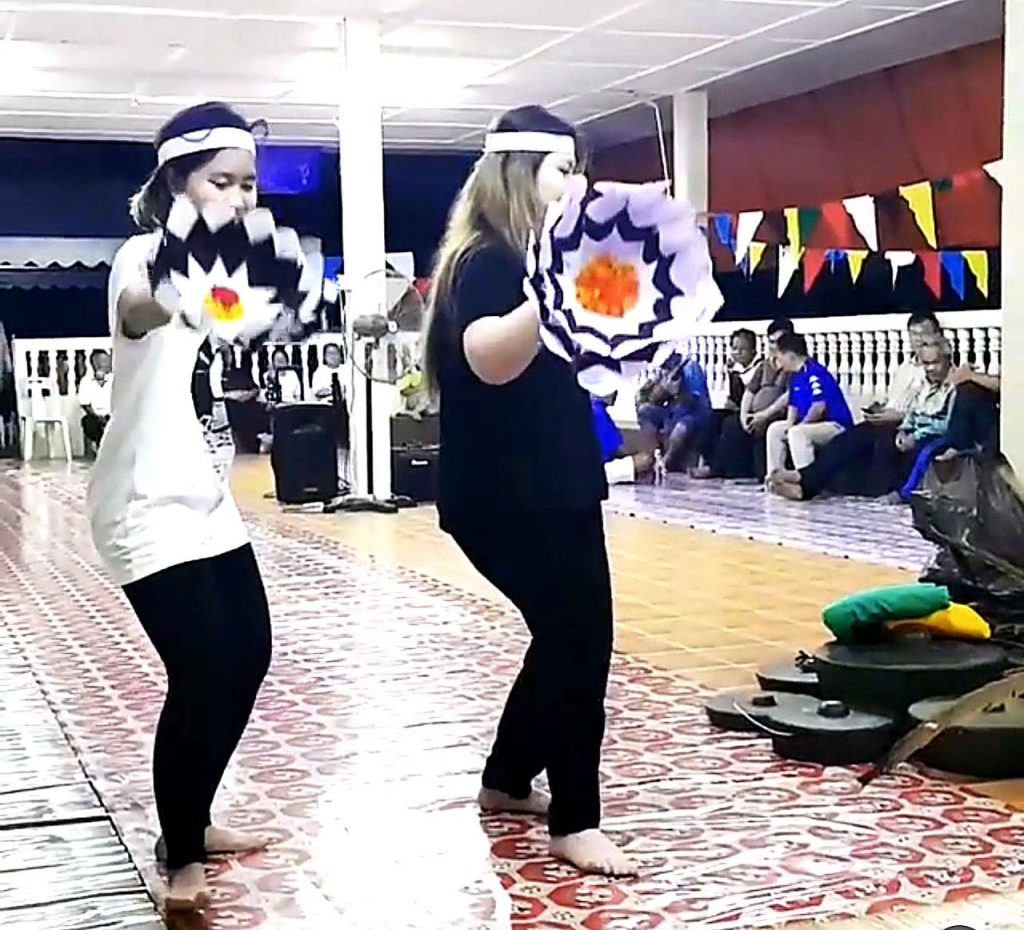
Family members often eat beside the casket as part of daily life during the mourning period, reflecting the belief that the deceased remains part of the household before the final transition to the ancestral realm.
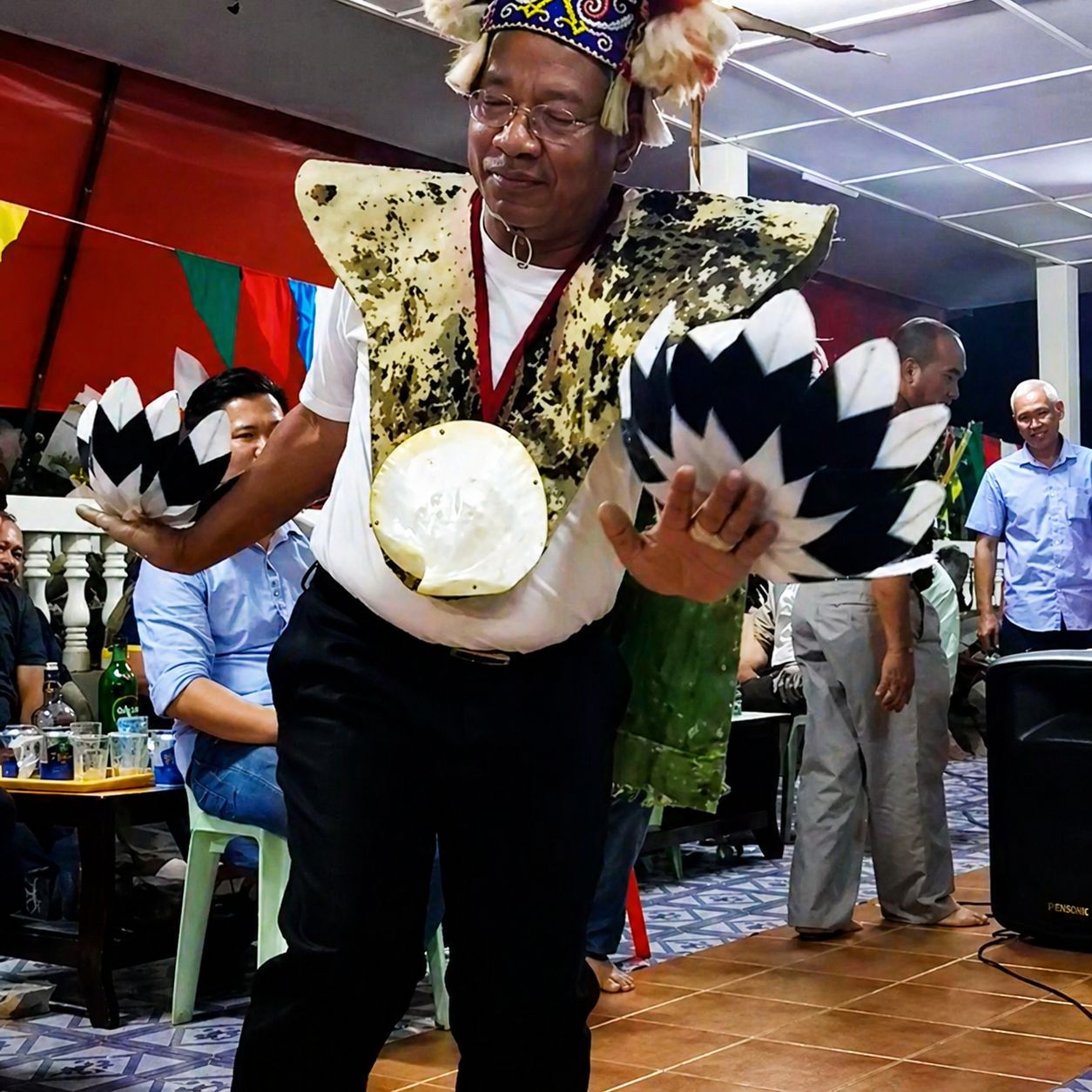
Family members also perform traditional Orang Ulu dances in front of the casket during the vigil, a final gesture of farewell expressing remembrance before the spirit begins its journey onward.
Wearing white as a sign of mourning
Another visible expression of grief is the wearing of white cloth, usually tied as a headband or worn as a sash by close relatives.
Among Orang Ulu communities including the Kayan, Kenyah and Kelabit, white symbolises sorrow, purity and transition.
It marks a sacred period during which the family observes mourning obligations and temporary separation from ordinary social activity, and is also understood to provide symbolic protection during the vulnerable period following death.
Chanting through the nights
Throughout the wake, nightly chanting accompanies the deceased. These chants, known as ‘parap’ or ‘nekenak’, resemble singing and are performed by those skilled in the tradition to honour the spirit during its transition.
The language used is an older form of Kayan that many younger generations today may no longer fully understand. The chants often recount the achievements of the deceased while bidding the spirit a safe journey to the afterlife.
Older members of the community may also perform ‘neero’, a mourning lament sung during the wake to describe the character of the deceased and the sense of loss felt by the family.
The melody is often slow and haunting, and those who listen to it are frequently moved to tears as it expresses both remembrance and grief shared within the longhouse.
On the final night before the body is placed in its resting structure, a more significant ritual known as ‘pelekak’ is performed.
This ceremony is led by a Lakek Dayung, a male ritual priest who sends off the soul through ceremonial chanting. During the chant, he speaks as the voice of the deceased, delivering final advice to the family before describing the spirit’s journey to the Kayan afterlife and the point beyond which it cannot return.
For those present, the night of ‘pelekak’ marks the moment when the spirit finally leaves the longhouse.
The sacred bead of the aristocratic lineage
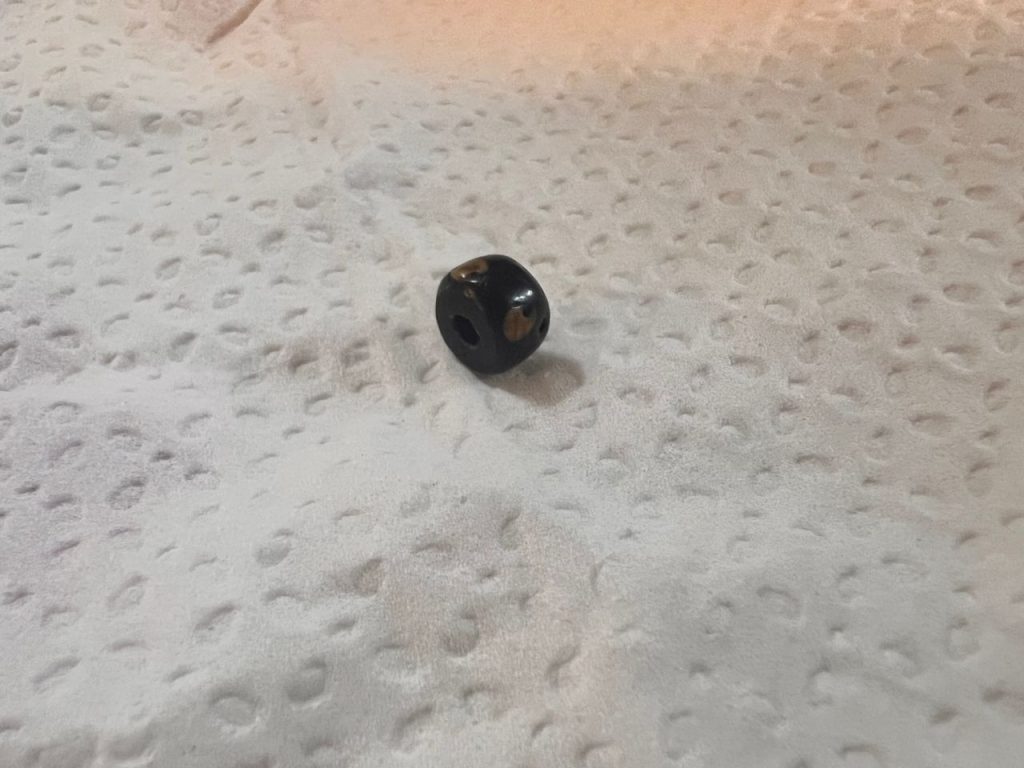
One of the most significant rites associated with the funeral of a Maren is the placing of a bead known as the ‘lukut bela’ in the mouth of the deceased.
This honour is reserved only for individuals of the aristocratic lineage. The bead must first be blessed by a ‘dayung’, a female ritual specialist, making authentic ‘lukut bela’ rare heirlooms preserved within certain families.
Within Kayan belief, the bead symbolically replaces the eyes so the spirit may see and the tongue so the spirit may speak in the afterlife. Through it, the deceased is believed to communicate with the ancestors and convey news of relatives who remain on earth.
Building the salong
Throughout the sixteen days of the wake, preparations are also underway to construct the final resting structure for the deceased. Only after it is completed is the body placed inside.
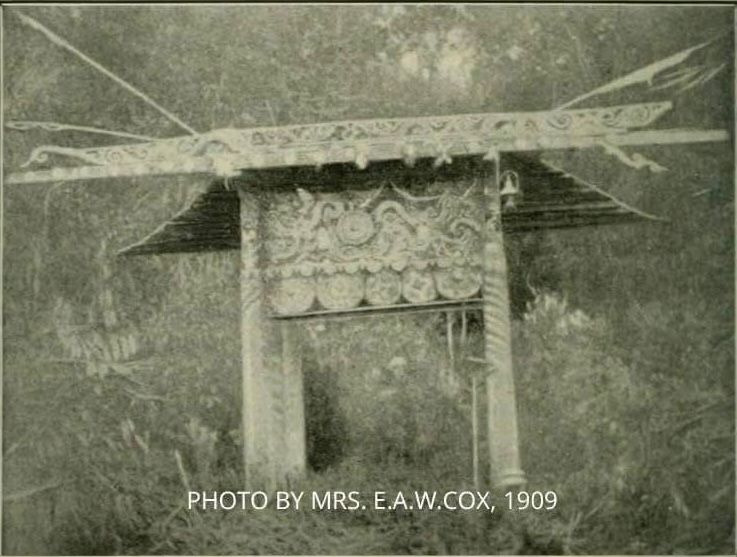
For a Maren, the body is not placed in the ground but laid to rest in a specially constructed above-ground burial structure known as a ‘salong’. Raised on tall posts and sometimes elaborately carved, the ‘salong’ reflects the social standing of the deceased and serves as a visible marker of lineage and remembrance.
Because the Kayan traditionally believed that life continued in the afterlife, personal possessions such as clothing, plates, fishing nets and favourite belongings were often placed inside the ‘salong’.
In earlier times, within the framework of ‘adet Bungan’, one or two attendants might also be placed in simple coffins beside high-ranking Maren, based on the belief that they would continue to serve the aristocrat in the afterlife.
Such practices gradually ended during the Brooke period as slavery and related customary practices were restricted across Sarawak.
If the ‘salong’ is not yet completed at the end of sixteen days, the body may remain in the longhouse until preparations are finished. In such cases, the mourning period continues in additional cycles counted in multiples of eight.
The day after the body is placed in the ‘salong’, the longhouse observes a period known as ‘Doe Lahieng’.
On this day, family members and villagers remain inside the longhouse and avoid ordinary work, while visitors from outside the community do not enter.
It is believed that what a person does on this day may shape the course of their future. Those who spend the day resting and sharing meals are thought to invite ease and well-being, while quarrels are believed to carry forward into later life.
Mourning for the whole longhouse
Although the wake lasts sixteen days, mourning does not end with the placement of the body in the ‘salong’. Traditionally, the entire longhouse observes restrictions that may continue for up to one year following the passing of a Maren.
If the community wishes to resume normal activities earlier, they may perform a customary settlement known as ‘adet buling’.
Today this is most often fulfilled through payment in cash to the bereaved family, allowing members of the longhouse—especially those of ‘panyin’ status—to return to their farms and resume daily responsibilities.
In earlier times, the settlement could also involve the construction of a ceremonial longboat or the presentation of ‘barang tembaga’, traditional copper or brass heirloom items such as gongs and jars with recognised ceremonial value.
Such settlements formally mark the lifting of mourning obligations and the restoration of ordinary communal life.
Tradition and Christianity side by side
Today, many Kayan families incorporate church prayers and Christian services alongside customary rites such as ‘parap’, ‘nekenak’ and ‘pelekak’.
These practices continue to exist together, reflecting how communities preserve inherited customs while adapting to changing beliefs.
Through sixteen days of vigil, nightly chants and shared presence in the longhouse, the passing of a Maren is understood not as a solitary departure, but as a journey accompanied by the living until the spirit finally takes its place among the ancestors.