IN an era where theatre is constantly experimenting and seeking new ways to engage audiences, “Mak Yong Shakespeare: The Comedy of Errors – An Adaptation” stands out as a bold production that seamlessly fuses two distinct theatrical traditions into a fresh and entertaining stage experience.
Staged recently at Dewan Filharmonik Petronas (DFP) in Kuala Lumpur, the over two-hour performance demonstrated how makyung, a traditional Malay performing art from Kelantan, can be reimagined alongside William Shakespeare’s classic comedy without compromising the former’s identity or essence.
Its director, Associate Prof Dr Norzizi Zulkifli, adopted an innovative approach by using “The Comedy of Errors” as a platform to expand makyung’s storytelling repertoire, which has long been associated with traditional tales such as “Dewa Muda” and “Raja Tangkai Hati”.
The result is a production that not only entertains but also invites audiences to appreciate Malaysia’s cultural heritage from a fresh perspective, proving that tradition can evolve without being confined to the same story or form.
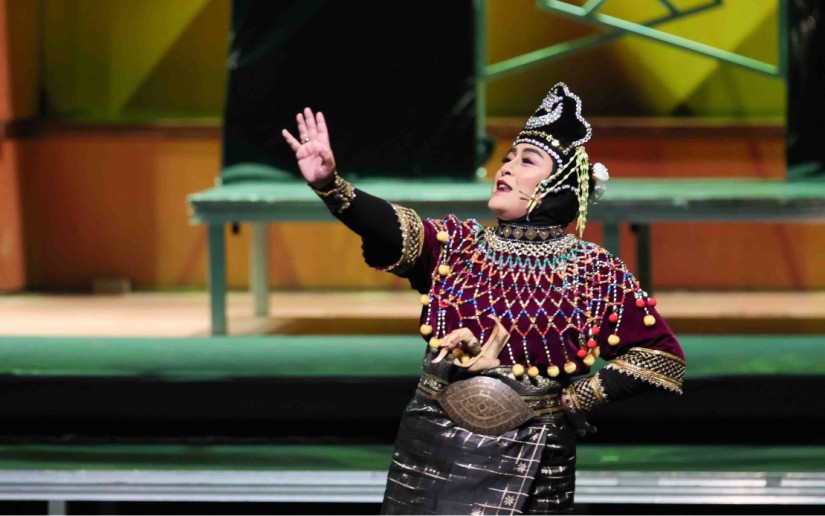
Although inspired by Shakespeare’s work, the theatre production remains unmistakably makyung through its distinctive acting style, dance movements, traditional music, and the improvisational element in the dialogue, which are among the important features of this heritage performing art.
The bilingual presentation, performed in Malay and English, also made the production more accessible to audiences from diverse backgrounds, including younger theatre-goers and international visitors.
Within this hybrid theatrical framework, Shakespeare’s characters retained their original names while being brought to life through the spirit, performance style, and aesthetics of traditional Malay theatre.
The story centres on the mistaken identities of a pair of twins who were separated in childhood during a violent sea storm before fate reunites them in the city of Ephesus, setting off a chain of misunderstandings and comic chaos.
However, the production’s greatest strength lies not only in its storyline but also in the lively interaction among the actors, which made the performance feel alive.
One of the standout performances came from Ain Sufia as Che Puan Adriana. Her witty delivery consistently drew laughter from the audience, while her expressive facial gestures and body language added depth and vibrancy to the character.
Equally memorable were the Peran (caretaker) characters portrayed by Asrulfaizal Kamaruzaman, Shahkimin, Issey, and Rosdeen Suboh, who served as the production’s principal comic drivers.
The four actors skilfully incorporated contemporary issues and snippets of viral songs into their dialogue, making the performance more relatable to today’s audiences.
The twins were portrayed by Mhia Farhana Firdaus as Antipholus of Syracuse and Salsabila Mohd Sofian as Antipholus of Ephesus. The supporting cast included Vanidah Imran as the merchant Egeon, Juhara Ayub as Mak Wan Emilia, and Norzizi herself as Raja Besar Solinus.
Also appearing in key roles were Ismadian Ismail as Queen Solinus, JZ Jasli as Nik Luciana, Mohamad Yusmar Afeendi Yusof as the Merchant, Muhammad Nur Iman Hawari as the goldsmith Angelo, and Muhamad Shahreen Kamaruzaman as Tok Temenggung.
Muhammad Syawal Mohd Faizal and Shaik Aqil Mukhriz Shaik Monsoor portrayed the palace guards.
At the end of the performance, the cast received a standing ovation and thunderous applause from the audience.
The ovation was more than a show of appreciation for an entertaining performance — it was also a recognition of the production team’s courage to elevate a traditional art to a more contemporary space.
Ultimately, “Mak Yong Shakespeare: The Comedy of Errors – An Adaptation” leaves audiences with a thought-provoking question: how far can a traditional art form evolve and experiment while remaining true to its cultural identity? – BERNAMA