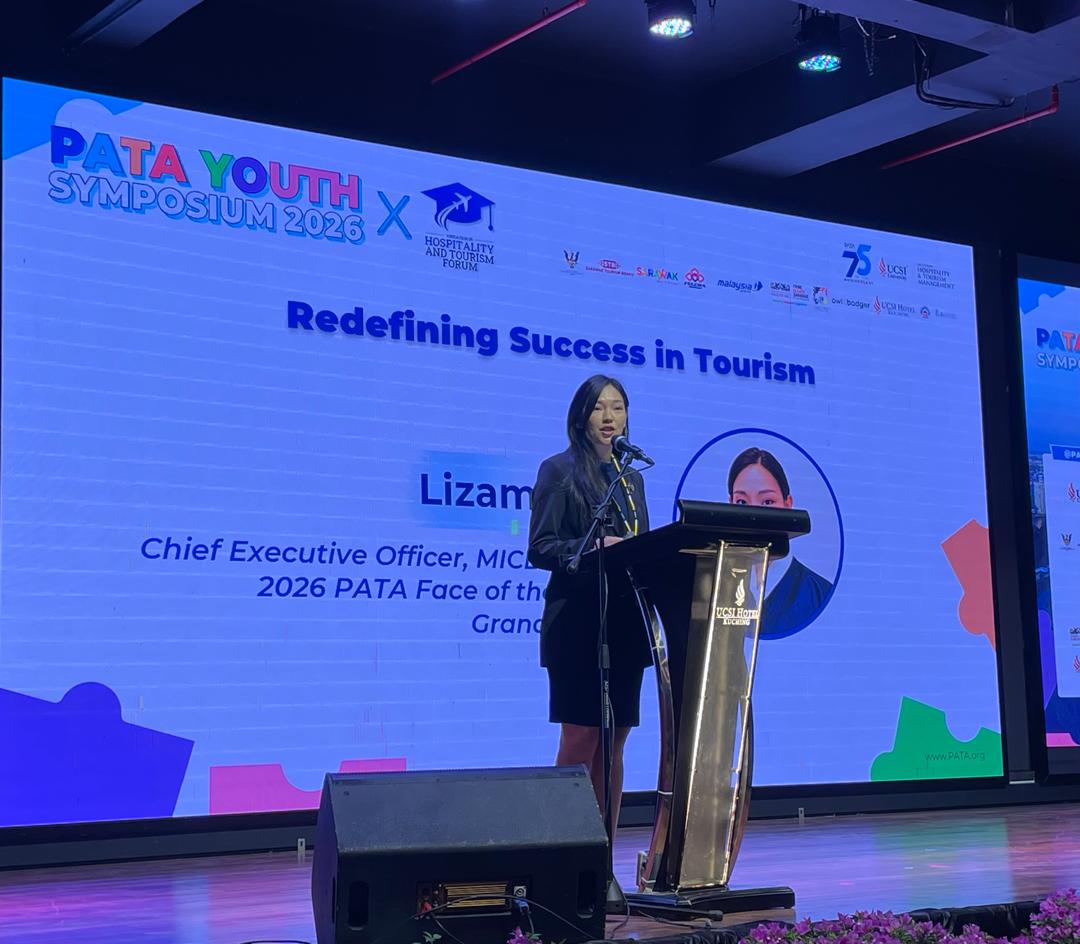
KUCHING: Tourism success should not be measured solely by visitor numbers and economic returns, but also by how the industry benefits local communities, preserves cultural heritage and protects the environment, said MICE Bhutan chief executive officer Lizam Dorji.
Speaking at the PATA Youth Symposium at UCSI Hotel here today, she said the tourism industry had traditionally focused on metrics such as arrival statistics, room occupancy and economic returns.
“But today, I want to invite us all to pause and ask a simple, fundamental question: What does success in tourism really look like when we look beyond the spreadsheet?”
Lizam said her more than five years of experience in Southeast Asia’s hospitality sector, where she managed international conventions, corporate meetings and United Nations forums involving thousands of participants, taught her that business events were more than logistics and hotel rooms.
She said such events were gatherings of human intellect, innovation and shared ideas, but questioned what positive legacy remained in the host community after delegates returned home.
“Bhutan’s emerging MICE sector provides an opportunity to develop business events that contribute to the country’s long-term well-being.
“Through a partnership with Bhutan’s Youth Development Fund, we help facilitate tree-planting initiatives, and we have currently committed to planting 2,664 trees across Bhutan,” she said.
She added efforts were also being made to support the revitalisation of Bhutan’s history through museums, while events could create opportunities for local artisans, including women weavers, tea growers, traditional painters, wood carvers and monks.
Lizam also shared an experience involving an international delegation that was introduced to a young local Thangkha painter instead of receiving a standard corporate gift.
An organiser spent time speaking with the artist about mindfulness, patience, heritage and the story behind his work.
“Tourism works best when it acts as a quiet catalyst for good,” she said.
Lizam urged young tourism professionals to look beyond immediate industry metrics and consider how their work could benefit the people and places they served.
She said challenges such as climate change, over-tourism and cultural dilution required the next generation of tourism leaders to protect the cultural authenticity and environmental integrity of their destinations.
“The future of tourism will not just be shaped by marketing campaigns or arrival figures. It will be shaped by the values we bring to our work every single day,” she said.
She added that Bhutan’s aspiration, as well as that of destinations across the region, should not be to become the biggest, but to become more “thoughtful, meaningful, and sustainable.”