KUCHING: Nature conservation efforts must go beyond policies and reports by actively involving communities and creating value that encourages them to become long-term partners in protecting the environment.
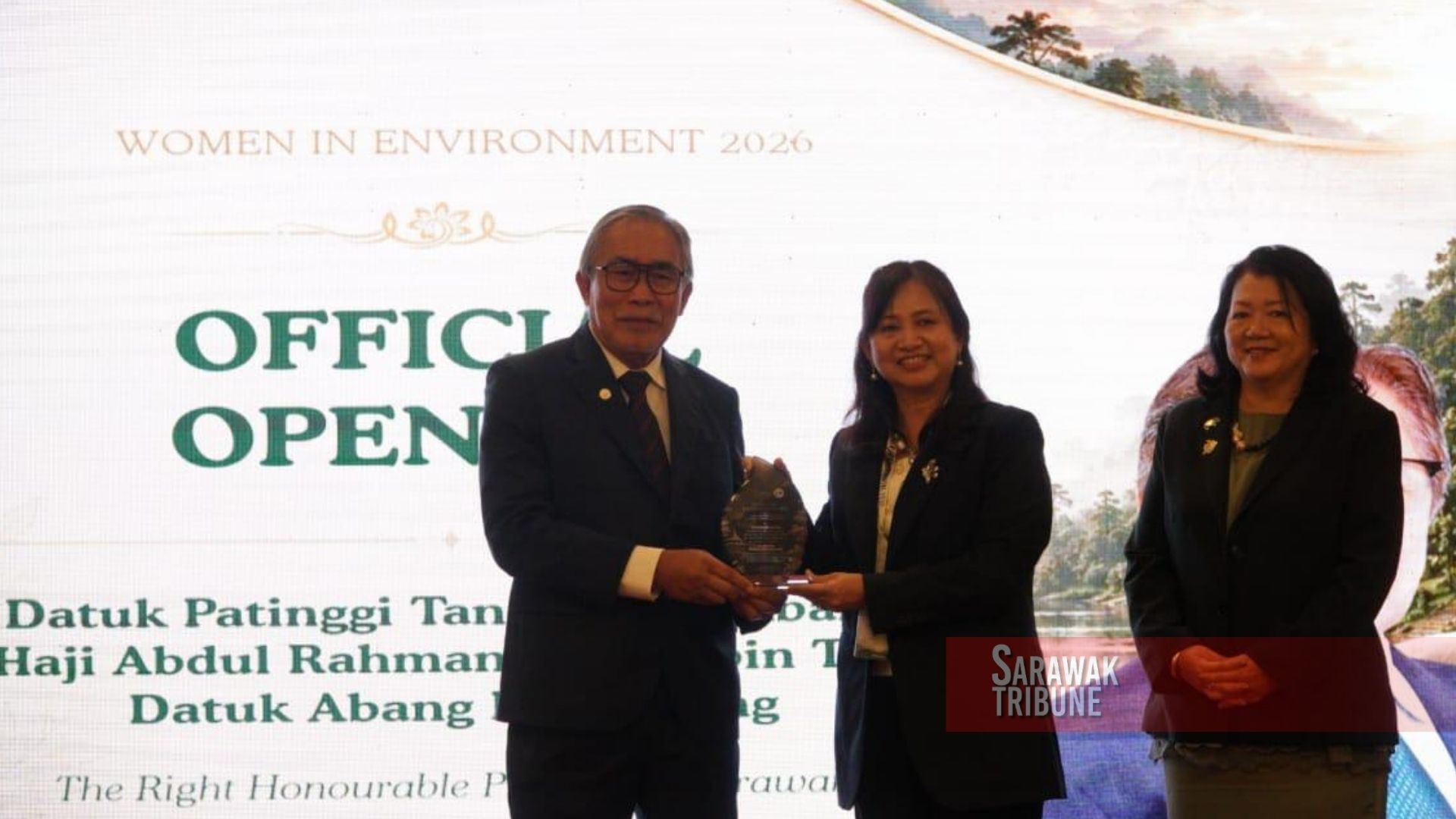
Premier Datuk Patinggi Tan Sri Abang Johari Tun Openg said communities should remain an integral part of conservation efforts, particularly as many people’s lives were closely connected to natural ecosystems.
“Nature conservation cannot exist only within policies and reports. It must also involve communities and create value that encourages people to become long-term partners in conservation,” he said.
His speech was read out by Deputy Minister for Urban Planning, Land Administration and Environment Datuk Len Talif Salleh at the Women in Environment 2026 Symposium at Grand Margherita Hotel here on Tuesday (Aug 18).
Abang Johari said Sarawak’s forests, wildlife, rivers, oceans and biodiversity must remain at the heart of the state’s environmental considerations even as it develops new industries and technologies.
He also said Sarawak was fortunate to possess extraordinary natural resources, including vast forests, rich biodiversity, significant water resources, extensive river systems and a long coastline.
“These assets are not merely natural resources, but they are also part of Sarawak’s identity and economy, as well as an inheritance that must be safeguarded for future generations.
“As we develop new industries and technologies, we must never lose sight of what we are trying to protect – our forests, wildlife, rivers, oceans, biodiversity and the communities whose lives are closely connected to these ecosystems,” he said.
Abang Johari said environmental challenges were no longer distant or theoretical, pointing to increasingly unpredictable weather, more intense rainfall and flooding, prolonged periods of heat and pressures on biodiversity, forests, rivers, coastlines and marine ecosystems.
“Addressing such challenges required cooperation across society rather than relying on a single sector. Government cannot do it alone and neither can industry, NGOs, scientists or communities; we need all of them working together,” he said.
Abang Johari said Sarawak could embrace new technologies while respecting traditional knowledge, as well as create economic opportunities while ensuring communities were not left behind.
“Climate action must also be fair, with the costs and benefits of the transition shared equitably and the voices of communities heard,” he said.
The Premier also expressed hope that discussions at the symposium would result in new partnerships, ideas and initiatives.
“The transition towards sustainability will not be achieved through one programme, one organisation or one generation. Every meaningful transition begins somewhere, perhaps some of those important beginnings will start here today,” he said.