Shangri-La — the very name sounds romantic and distinctly Western, conjures images of earthly paradise even before we arrive.
It is about 175 km from Lijiang. As we travelled deeper into the highlands of northwestern Yunnan, the journey itself heightened our sense of anticipation. Our tour bus wound its way along the mountain slopes, negotiating a succession of bends as the road climbed steadily into the highlands. With every turn, the scenery became more dramatic, building our excitement as we drew closer to Shangri-La.
Located in Diqing Tibetan Autonomous Prefecture on the Qinghai-Tibet Plateau at about 3,200 metres above sea level, the air is thin and cool, the skies clear, and the landscape of mountains, grasslands, lakes and Tibetan villages is strikingly beautiful.
We had to inhale oxygen from the canisters we had brought with us, taking a few breaths at regular intervals to ease the discomfort caused by the effects of altitude sickness.
From Zhongdian to Shangri-La
Formerly known as Zhongdian County, the area was an important stop on the Tea-Horse Road linking Yunnan and Tibet.
Its present name has a fascinating connection with literature. British writer James Hilton introduced the mythical Shangri-La in his 1933 novel “Lost Horizon”, describing a remote Himalayan paradise of peace, harmony and longevity. Zhongdian was officially renamed Shangri-La in 2002 after authorities found similarities between Hilton’s fictional paradise and the region’s snow mountains, grasslands, lakes and Tibetan culture.
Napa Lake — A Highland Landscape
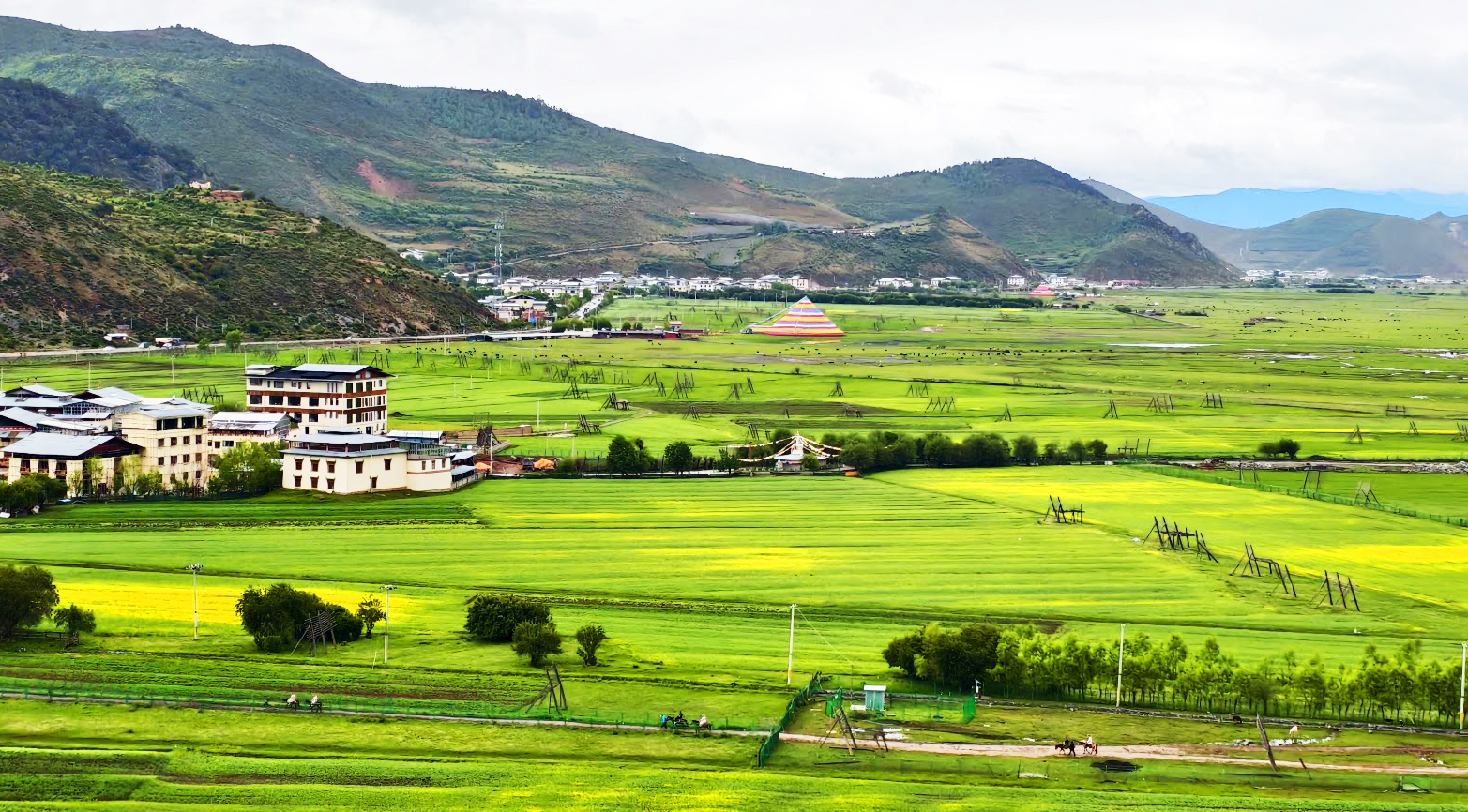
Napa Lake is a high-altitude wetland surrounded by mountains and grasslands. It was early summer, and the grassland was carpeted in fresh green, dotted with colourful wildflowers.
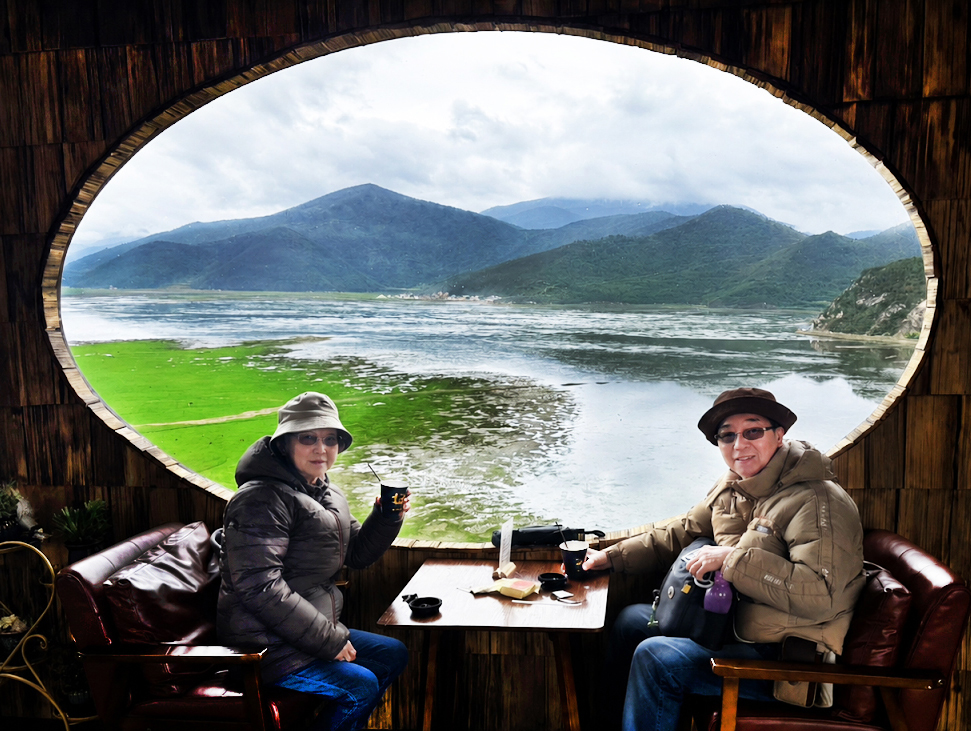
I enjoyed sitting with a cup of local coffee while slowly taking in the view from the viewing platform, watching the lake and mountains, while the horses, sheep and yaks gazed peacefully on the lush grasslands surrounding the lake. The yak is a distinctive animal here. It has a large, sturdy body covered with long hair that hangs almost to the ground. The yaks provide meat, milk, dairy products, wool, fibre, textiles and fuel (dried dung) to the Tibetans, as well as transportation.
Wandering Through Dukezong Ancient Town
Dukezong Ancient Town is over 1,300 years old and was once a Tea-Horse Road hub. Its stone streets, wooden houses, prayer flags, and Buddhist symbols — the White Stupa — reflect the strong Tibetan cultural heritage.
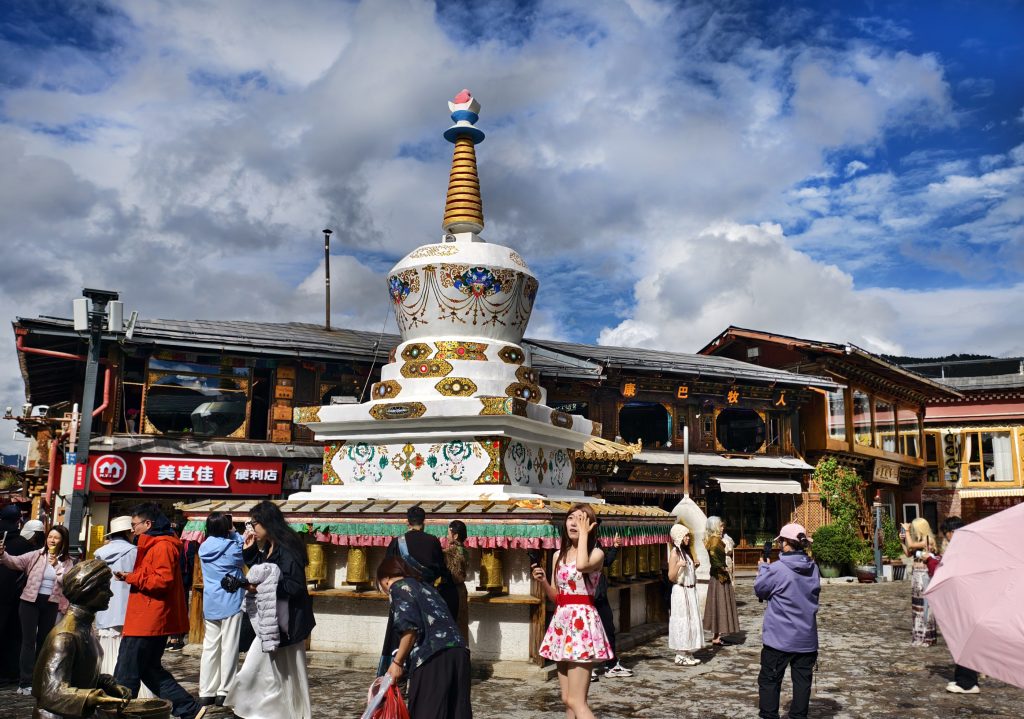
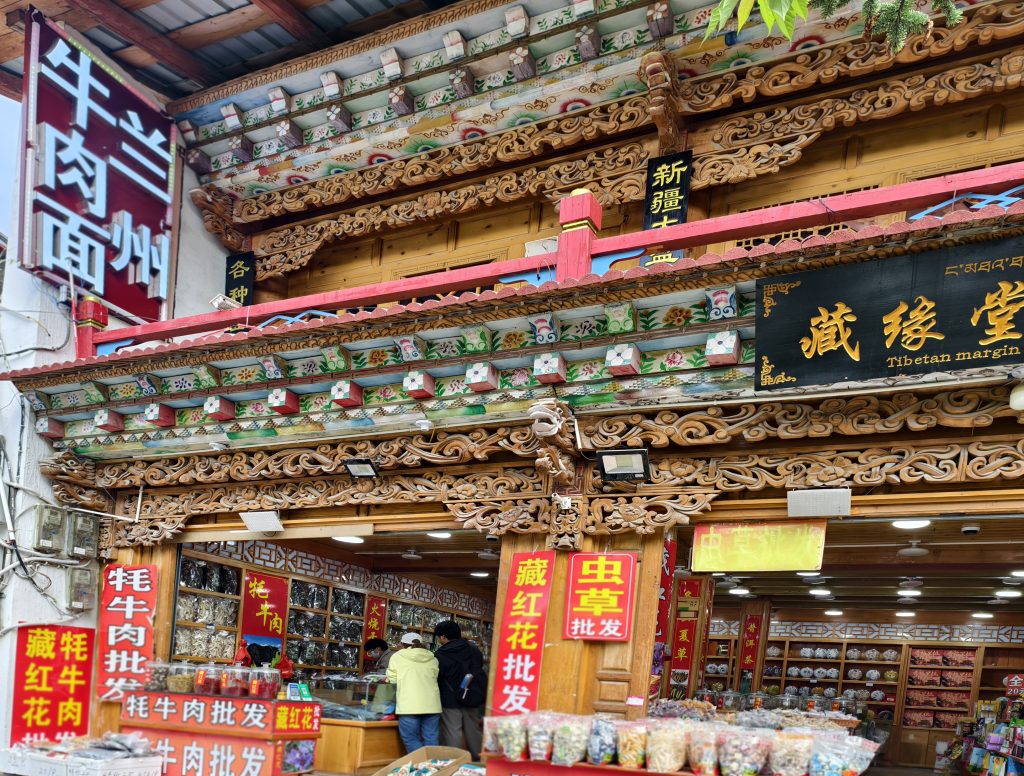
The town was rebuilt after the 2014 fire that destroyed many of its original old shophouses. It still retains its traditional character and architectural motifs in its rebuilt, new-looking shophouses. Many Buddhist religious and decorative items are on sale in many of the shops, apart from the rental of traditional costumes for photo shoots.
The Giant Prayer Wheel
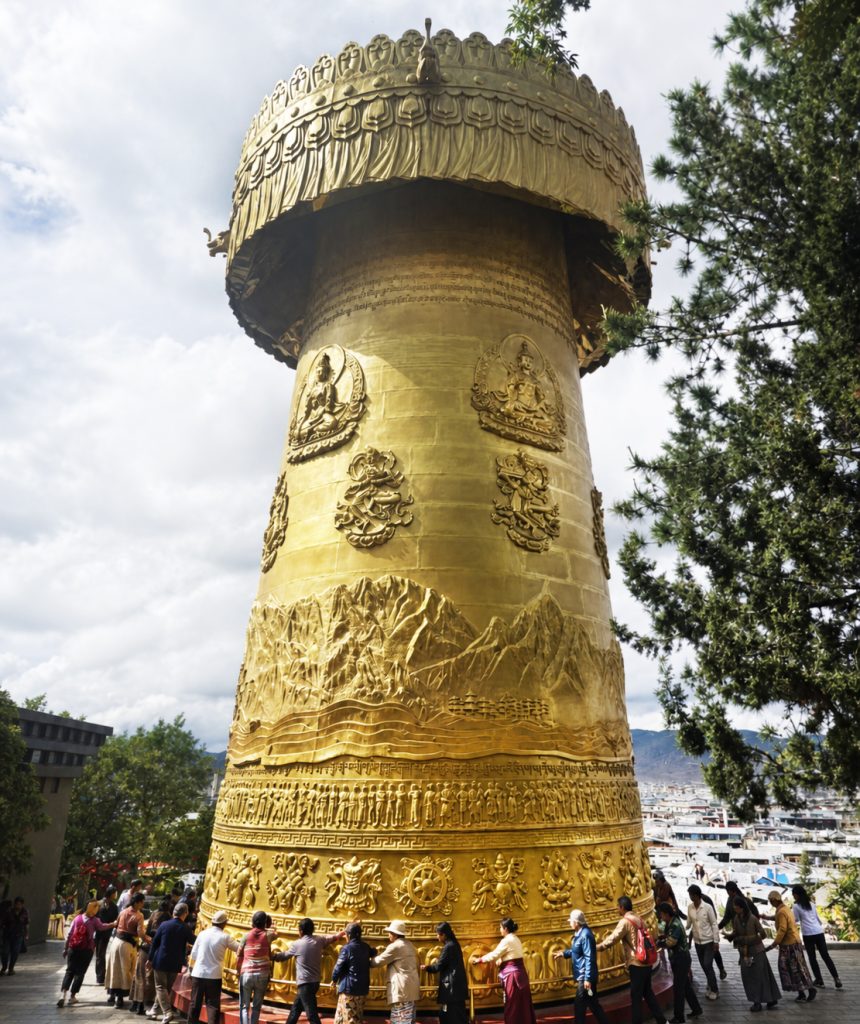
On Guishan (Turtle Mountain) Park near the town stands a 21-metre, 60-tonne golden prayer wheel. Reaching it takes effort at high altitude, but it is worth it.
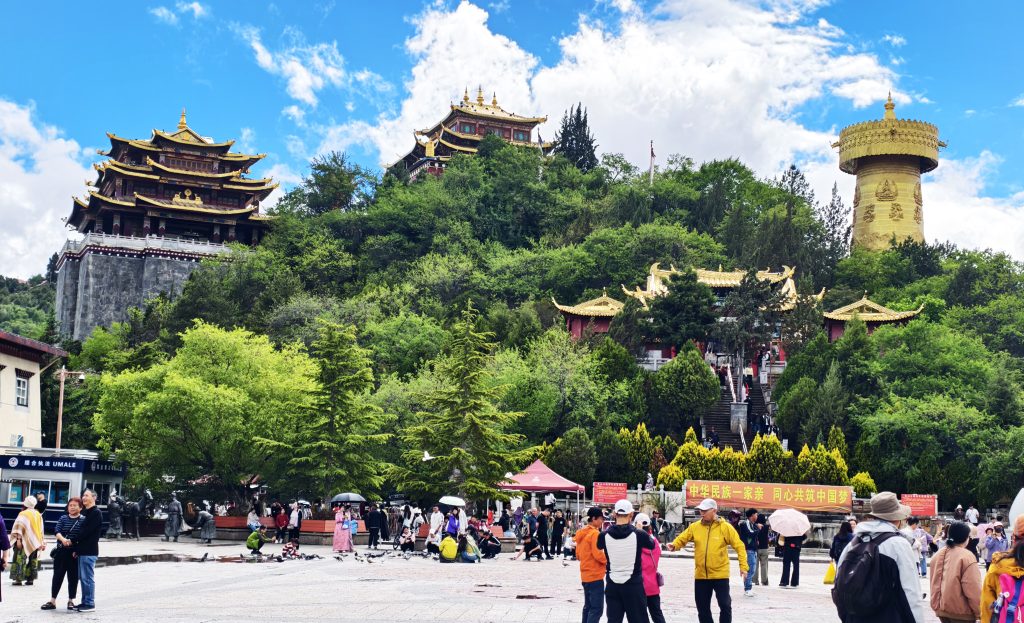
It took more than 10 visitors to push together to turn the prayer wheel in a clockwise direction, which devotees believed could bring them blessings and good fortune.
Songzanlin Monastery — The Little Potala Palace
Songzanlin Monastery, founded in 1679, is Yunnan’s largest Tibetan Buddhist monastery. Built in 1679, it sits at 3,380 metres high up on a hill. Located not far from Shangri-La city, its white walls and golden roofs have earned it the name “Little Potala Palace.” It has three huge main temple buildings with large Buddha statues inside. The monastery houses about 700 monks.
It feels both grand and peaceful against the mountain backdrop.
Shangri-La’s appeal lies in its blend of nature, history, and Tibetan spirituality — a place where the world feels briefly timeless.