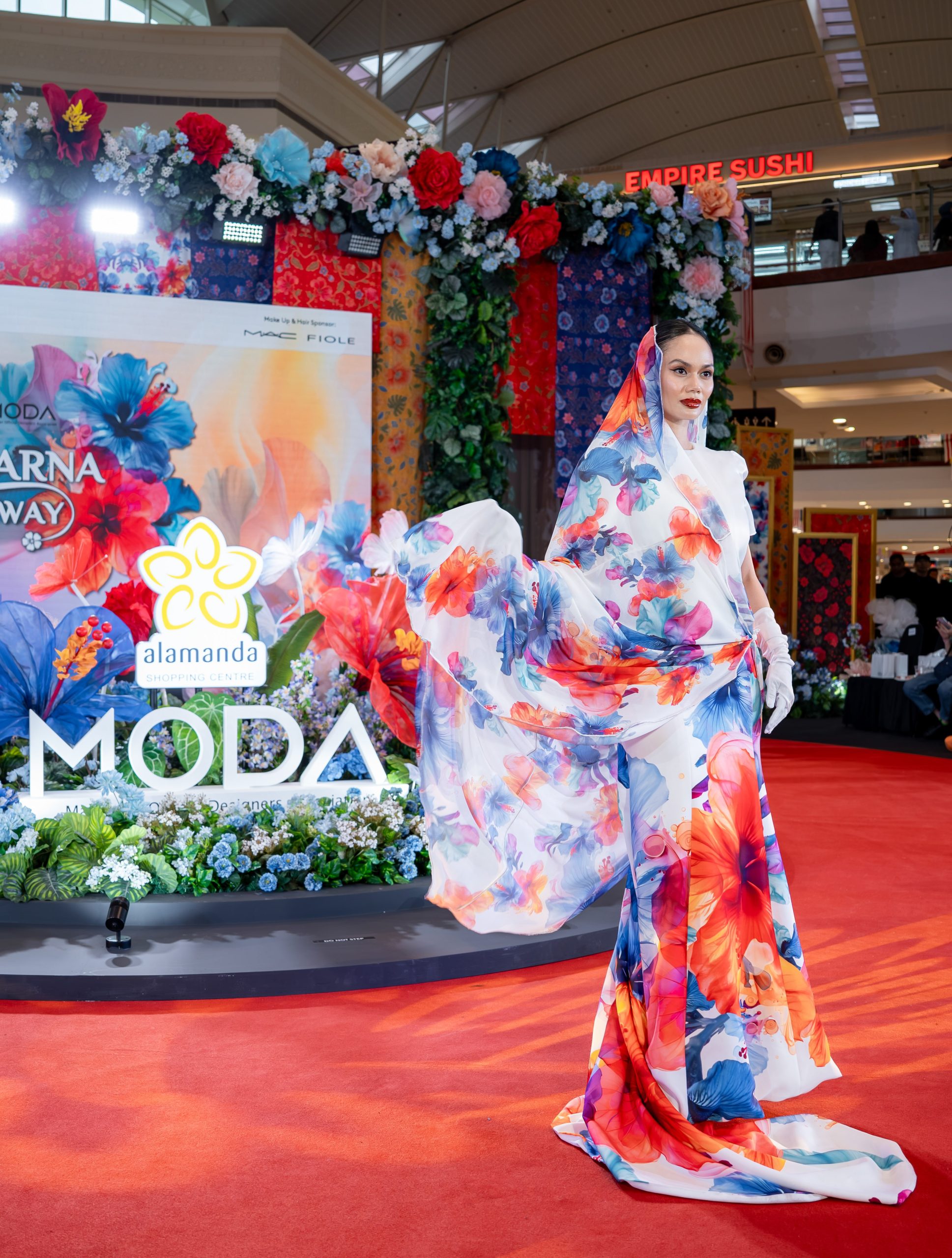
The Alamanda x MODA Malaysia Day Fashion Show brought 22 Malaysian designers together to explore how one floral fabric could inspire distinctly different creations. For Sarawak designers and models, the four-day showcase also offered an opportunity to bring Kuching’s fashion talent to a wider audience.
One Fabric, Many Expressions
Not many of us from East Malaysia are familiar with all the shopping malls in Kuala Lumpur and its surrounding areas, let alone making the journey to Putrajaya, Malaysia’s federal administrative capital, about 25 kilometres south of Kuala Lumpur and close to Kuala Lumpur International Airport.
However, I was glad that I made the journey to Alamanda Shopping Centre to support my designer friends from the Malaysian Official Designers’ Association (MODA) at the Alamanda x MODA Malaysia Day Fashion Show, held from September 10 to 13.
The four-day fashion presentation was part of the Malaysia Day celebrations, bringing together Malaysian fashion designers and showcasing the country’s diverse design talent in a setting that celebrated national identity, unity and creativity.
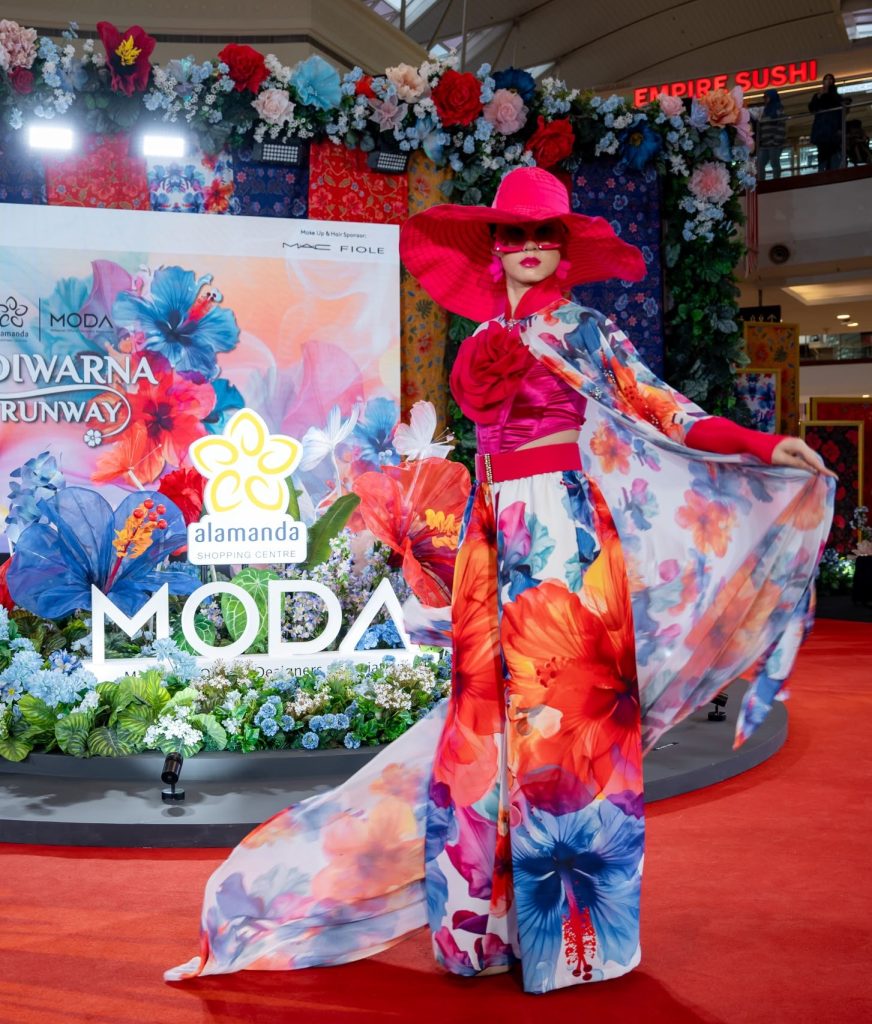
Alamanda Shopping Centre, located in Precinct 14, Putrajaya, came alive during the celebrations. Its Centre Court was transformed into an immersive runway, creating a focal point for shoppers, fashion enthusiasts and invited guests.
The setting itself reflected the spirit of Malaysia. The décor incorporated the hibiscus, our national flower, together with the familiar colours of the Jalur Gemilang, creating a distinctly Malaysian atmosphere. The runway became more than simply a platform for fashion; it was also a celebration of our shared national identity.
Over four days, audiences were treated to a variety of fashion presentations, ranging from ready-to-wear and contemporary designs to couture and traditional attire. The diversity of the collections reflected the richness of Malaysia’s fashion landscape, where modern creativity continues to exist alongside our cultural heritage.
Handheld Malaysian flags were also distributed to members of the audience, adding a festive touch to the presentations. As the flags were waved during the shows, the atmosphere became even more celebratory, with Malaysia Day falling on September 16.
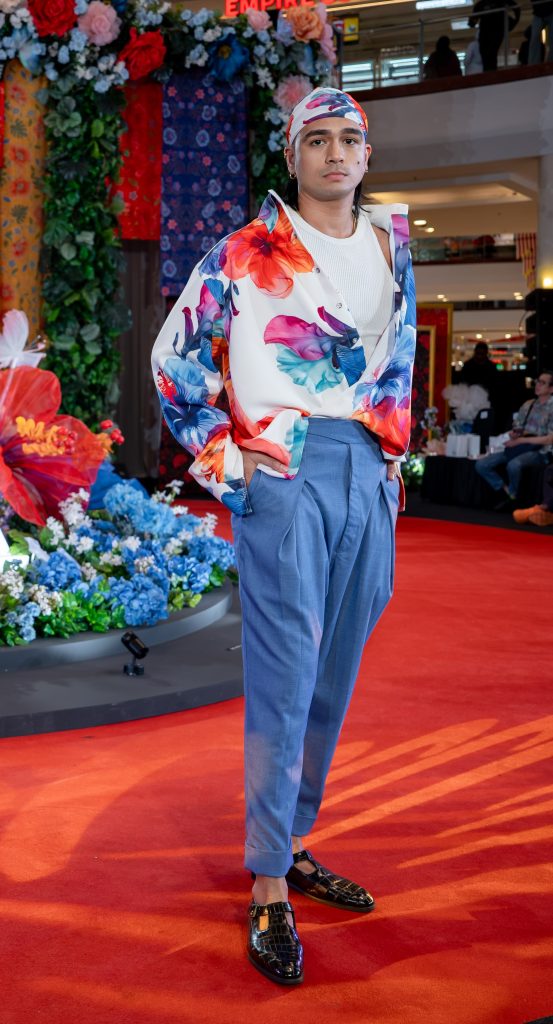
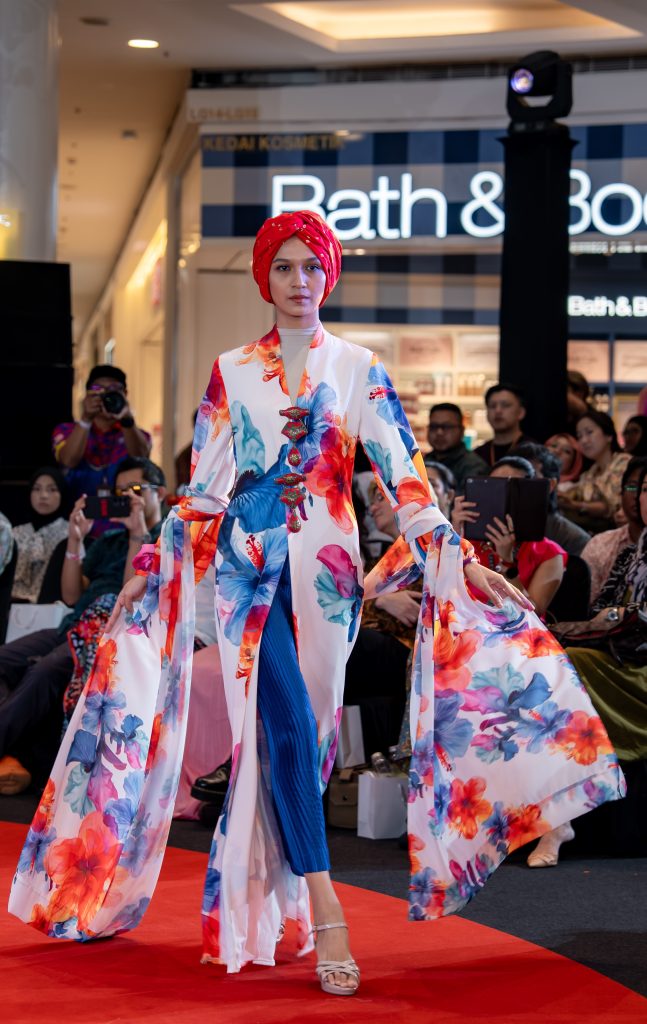
One of the highlights was the Opening Show, which brought all 22 participating designers together. Each designer was given the same fabric featuring a floral print inspired by the overall theme of the event.
It was fascinating to see how differently each designer interpreted the same material.
Although the fabric and floral motifs were shared, each designer brought their own design language to the runway. Some focused on elegant silhouettes, while others explored contemporary cuts, dramatic proportions, layering and more structured interpretations.
The showcase demonstrated that fashion is not simply about the fabric itself, but about how a designer transforms an idea into a distinctive visual identity.
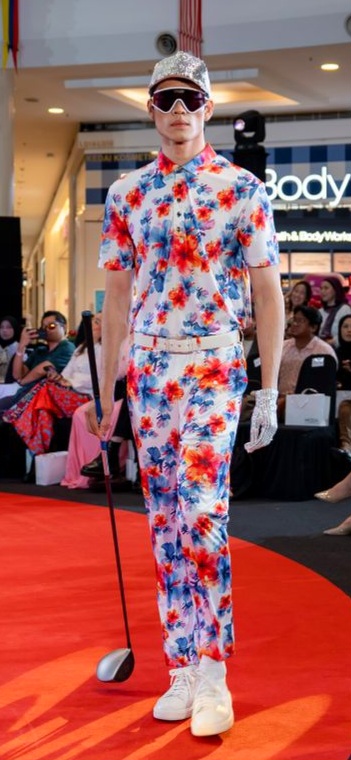
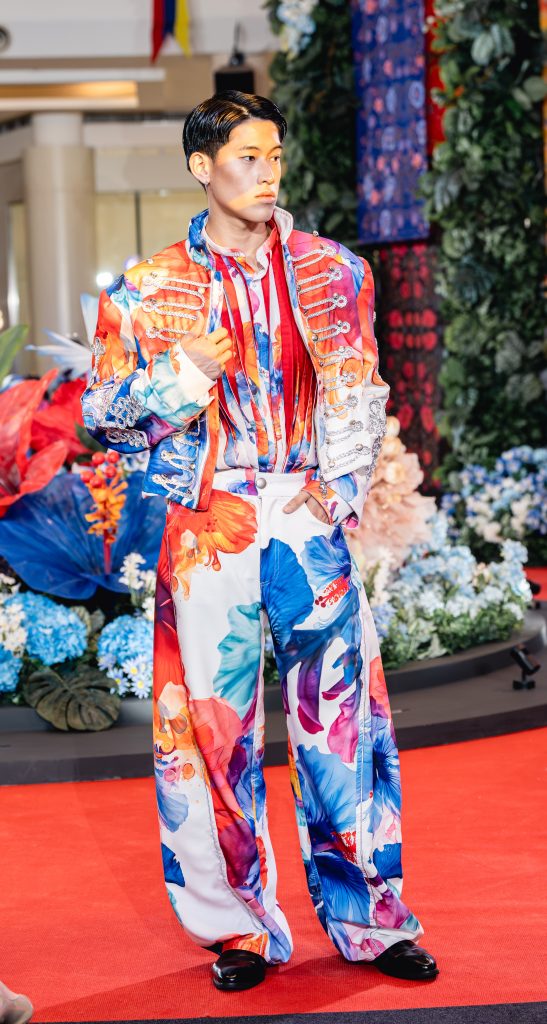
The floral print also complemented Alamanda’s Malaysian-themed setting beautifully. Flowers have long played an important role in Malaysian culture and design, and the hibiscus-inspired concept gave the collections a recognisably local character without restricting the designers’ creativity.
An interesting exception was CARRO, whose presentation used its own sportswear fabric while retaining the same floral print. The flowers appeared smaller on the fabric, giving the collection a different visual effect from the other designers.
This contrast was particularly interesting because it showed how the choice of textile can completely change the character of a design, even though the print remained consistent.
It was good to see how the designers interpreted the same theme in their own individual ways. The collections did not look identical simply because they shared a common fabric. Instead, the runway became a visual demonstration of individuality within unity, an idea that is particularly appropriate for Malaysia Day.
That, to me, is what makes Malaysian fashion so interesting. We come from different states, communities, cultures and traditions, yet there is room for all these influences to coexist. Fashion provides a wonderful platform where these differences can be expressed creatively.
As someone from Kuching, I always appreciate opportunities to see Sarawak designers outside Sarawak and to support friends and colleagues within the fashion industry. While Kuala Lumpur remains an important centre for the country’s fashion scene, events such as this also remind us that Malaysian creativity belongs to all of us, wherever we come from.
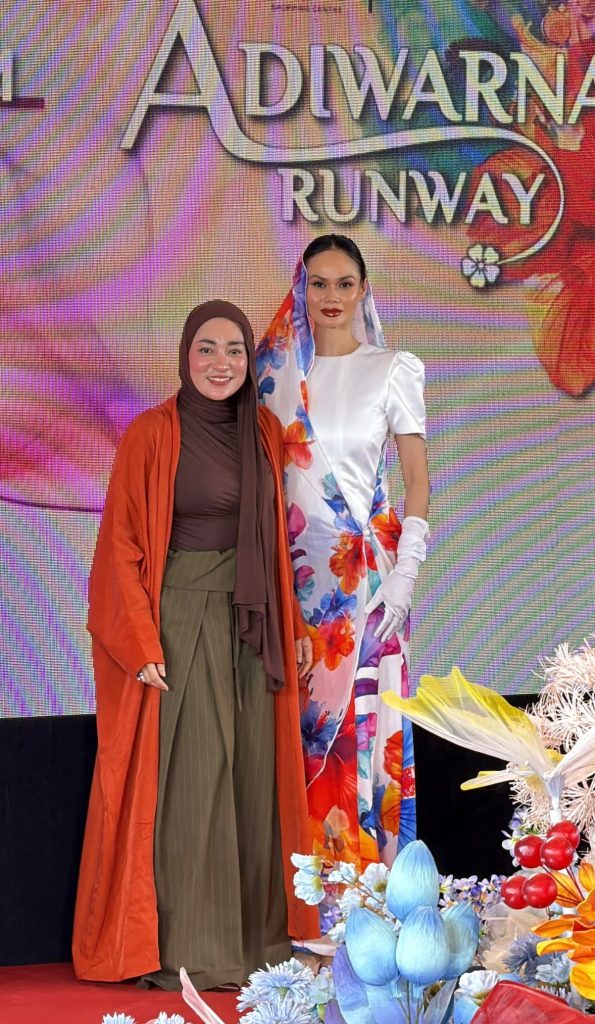
HERA Collection, based in Kuching, was represented by its founder, Nurul Supadi. Her modest fashion label continues to grow from strength to strength.
I first met Nurul when I was a judge at a fashion design competition in Kuala Lumpur, where she emerged as one of the winners. It has been wonderful to see how her work has developed since then.
Today, under the mentorship of veteran designer Bill Keith, her designs and styling have become increasingly refined. Her collections demonstrate a growing confidence in combining modest fashion with contemporary elegance, while remaining wearable and relevant to modern women.
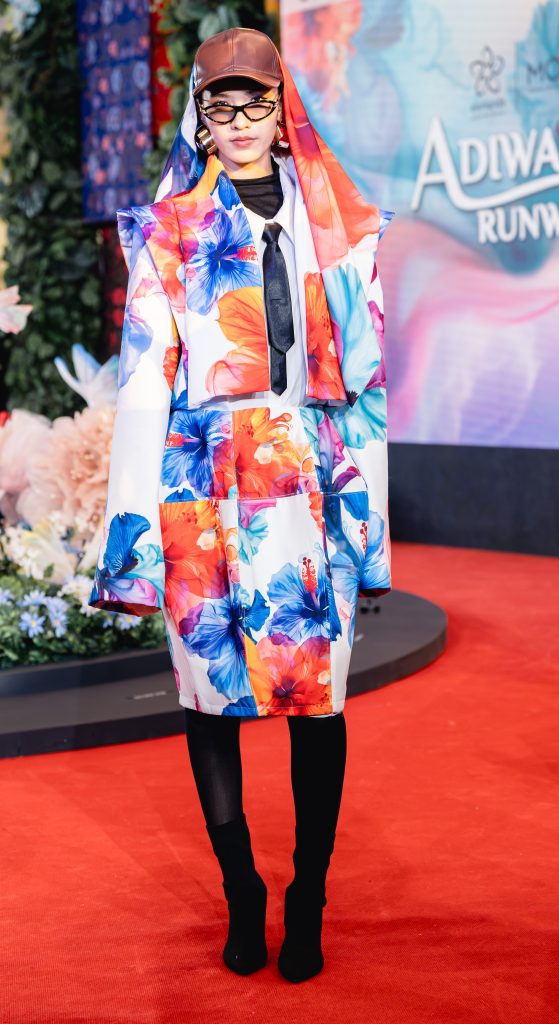
It is also encouraging to see a Sarawak-born fashion brand making its presence felt beyond the state, with HERA now available in both Kuala Lumpur and Kuching.
Kuching-born model Kelly Ng also modelled for Bill Keith in the Opening Show.
For me, this was one of the most meaningful aspects of the Alamanda x MODA Malaysia Day celebration.
The 22 designers shared the same stage, the same celebration and even, in this case, the same fabric, yet each could still express their own identity and creativity. And on Malaysia Day, there could hardly be a more fitting message of unity.