By Mohd Noor Iqram Rosli
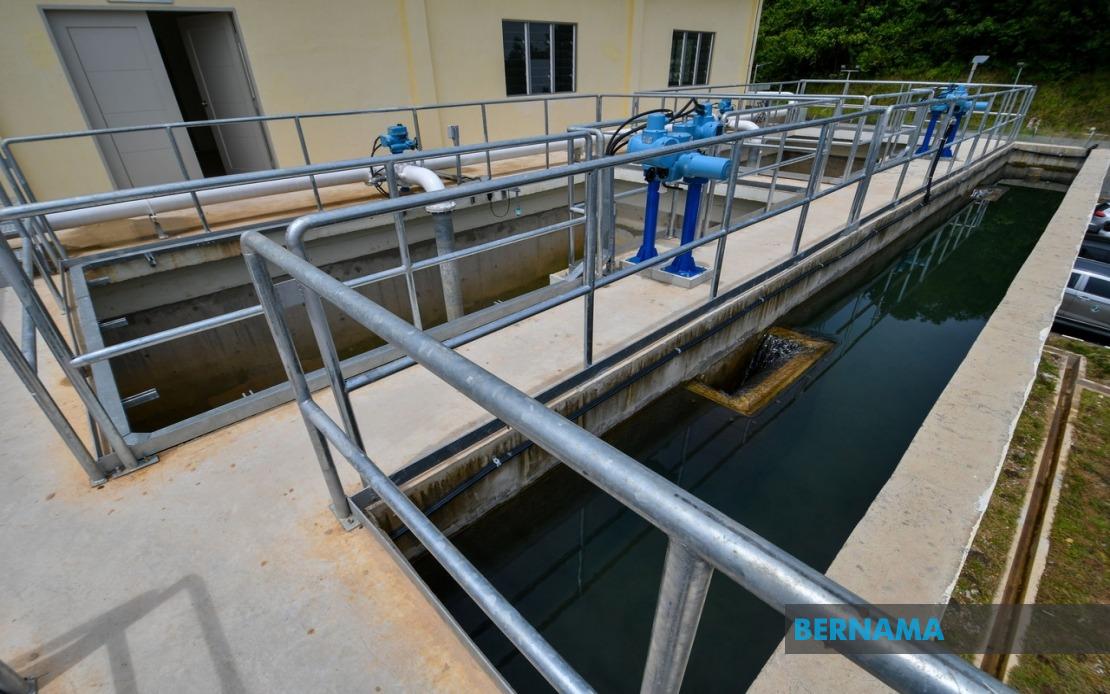
KOTA BHARU: Pengurusan Aset Air Berhad (PAAB) is strengthening its commitment to ensuring the people of Kelantan enjoy a more stable, high-quality and sustainable water supply through four water treatment plant (LRA) projects to be implemented in phases by 2030.
The projects involve the Chicha 2, Tok Bali, Bukit Chupak and Machang LRAs, which are among the key initiatives to increase treated water production capacity and strengthen the state’s water supply system.
Air Kelantan Sdn Bhd (AKSB) general manager Azhar Hanafi said that under PAAB’s financing model, several major projects could be implemented more systematically without placing excessive financial pressure on the state’s water operator, as one of the main challenges previously faced by the company was financial constraints due to the high cost and long implementation period of water infrastructure projects.
“AKSB has a transformation plan that includes a whole-of-government approach, with the cooperation of the federal and state governments, PAAB and other stakeholders to ensure Kelantan’s water supply system is further improved.
“The transformation of Kelantan’s water supply system requires substantial investment as it involves many aspects, including the construction of new treatment plants, replacement of ageing pipes, construction of storage tanks and the adoption of more advanced monitoring technology,” he told Bernama recently.
He said PAAB’s role extends beyond that of a financing provider, serving also as a strategic partner. This approach enables AKSB to focus on key areas such as operations, maintenance and service quality improvements.
On June 11, PAAB chairman Datuk Seri Jaseni Maidinsa said that as of May 2026, a total of RM1.63 billion had been allocated for the development of water supply infrastructure in Kelantan.
Of the total, RM264.28 million was allocated for completed projects, RM376.34 million for projects currently under construction, while RM991.41 million was earmarked for projects at the planning and design stage.
“These projects are expected to have a significant impact on residents in the state, who have long faced clean water supply shortages, while also serving as a new benchmark and catalyst for the development of Kelantan’s water sector.
“Based on this commitment, PAAB will continue to work closely with the Kelantan government and AKSB to ensure the state’s agenda to improve its water supply system is realised for the benefit of consumers throughout the state,” Jaseni said.
He said the RM70.76 million Bukit Chupak Water LRA, with a capacity of 10 million litres per day (MLD), which was inaugurated on June 11, has benefited more than 20,000 residents in Gua Musang and successfully resolved water supply problems that had persisted for nearly two decades in several critical areas.
“The RM55 million Chicha 2 LRA project, with a capacity of 20 MLD, is expected to be completed in October 2026, while the Tok Bali LRA project, costing RM162.26 million and with a capacity of 50 MLD, is scheduled for full completion in January 2028.
“Meanwhile, the Machang LRA is expected to be completed in 2030 at a total cost of RM500 million and will have a capacity of up to 120 MLD, making it one of the state’s key water infrastructure projects that will strengthen Kelantan’s long-term water supply security,” he said.
Meanwhile, several residents interviewed by Bernama described the efforts undertaken by the relevant agencies as a timely and long-awaited initiative to address the water supply disruptions that have affected parts of the state for years.
Resident Yusairi Ahmad, 44, said the construction of the new LRAs had given the people renewed hope and expressed the hope that all the projects would be completed on schedule without delays so that their benefits could be enjoyed as soon as possible.
“We are not looking for temporary solutions. We want lasting change and access to clean water for the long term,” he said.
Trader Sarimah Hassan, 50, said the development of water infrastructure would help provide the public with a cleaner water supply, stimulate local economic activity by facilitating daily business operations, and boost business confidence.
— BERNAMA