Rooted in memory and emotion, jazz finds a compelling voice in Sarawakian pianist Eugene Clifford Suboh, whose nearly two-decade journey reflects passion, discipline and an enduring commitment to the craft.
Keeping the Spirit of Jazz Alive
Music from the soul — jazz is the epitome of emotion, shaped by a collective of memories and experiences. Within every note lies a profound depth of feeling. It is an art form built on improvisation, where melody is interpreted through an understanding of harmony.
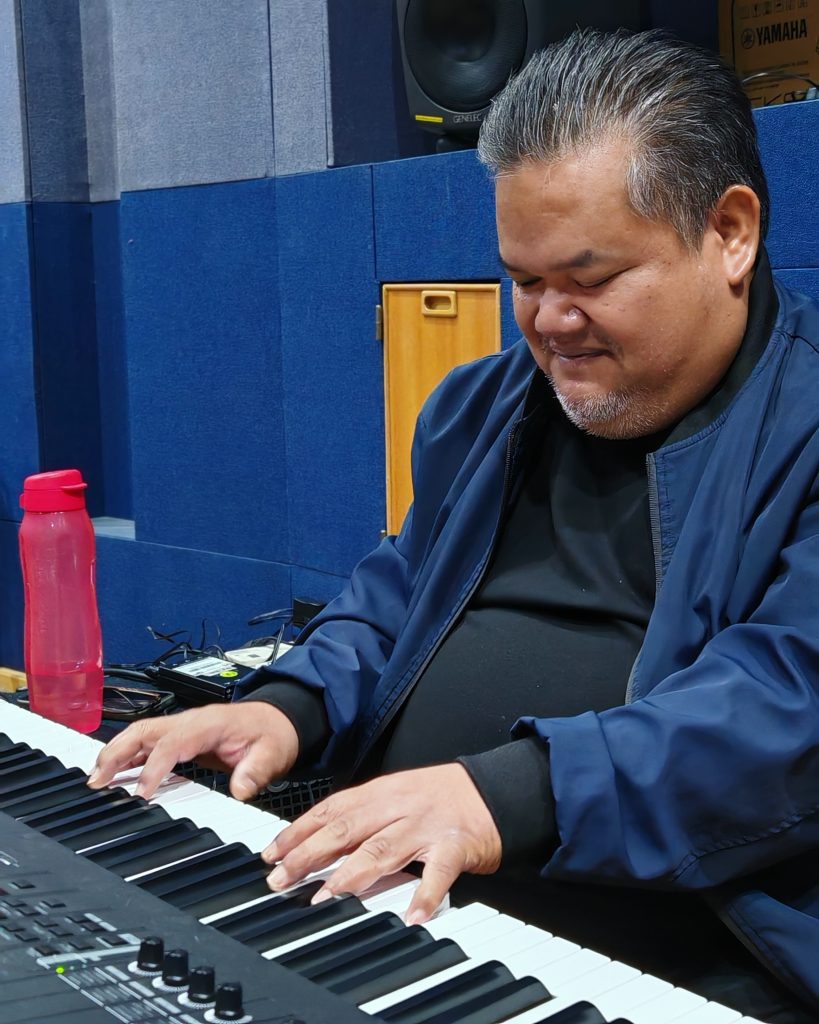
With a deep appreciation for the genre, this International Jazz Day, Sarawak Tribune spotlights Sarawakian jazz pianist Eugene Clifford Suboh. With nearly two decades in the industry, he has developed a repertoire that reflects both depth and mastery at the piano.
From a young age, Eugene knew music was his passion. Watching his mother play hymns on the piano at church sparked his love for the ivory keys. However, his earliest musical training was in the violin and trumpet — foundations that later shaped his journey as a music arranger.
When his mother recognised his potential on the piano, she began teaching him herself. “After that, my parents enrolled me in formal classes. I was so immersed in music that I went on to pursue a diploma in jazz composition and commercial arranging at Berklee College of Music in Boston, US.”
Life in the United States
On a scholarship, Eugene spent four years abroad from 1995 to 1999. As the first Bidayuh from Sarawak to attend the college, he seized every opportunity to learn. Immersed in a diverse environment of students from various cultural backgrounds, from Caucasian to Asians, and the Americans, the experience proved pivotal in shaping him as a budding musician.
“I also worked as a pianist for jazz practitioner Jan Shapiro. It was there that I met many remarkable musicians who influenced my pursuit of jazz. To me, learning jazz isn’t just about theory — it’s about understanding the culture. I was very fortunate to have that opportunity,” said the 51-year-old.
Beyond its creative appeal, Eugene describes jazz as a complex genre. He emphasised that education plays a crucial role in shaping a musician’s journey, noting that knowledge and understanding are essential for longevity in the field.
A music of emotion
For Eugene, jazz is deeply rooted in emotion. He explained that once a certain level of understanding is reached, it goes beyond the notes.
“It’s about improvising what you hear and feel — about reshaping the melody. This has become not just a habit, but a part of my life as a jazz pianist.”
This deeply experiential nature is what first drew him to jazz — and what continues to sustain him. For Eugene, jazz is not something he merely plays, but something he lives.
“Whenever I play the piano, there isn’t much to think about. When I touch the keys and read the chords, my mind knows what to do. Jazz is connected to my body, it touches my emotions, and I simply play what I feel.”

Growing up, Eugene was influenced by pianists such as Richard Clayderman and David Foster, carefully observing their performances and picking up nuances along the way. He also drew inspiration from groups and musicians like Yellowjackets, Chick Corea and Bill Evans. However, learning jazz in the 1990s came with its own limitations.
“As a young boy back then, my imagination was limited. There were no digital platforms — we learned by watching, listening and figuring things out on our own.”
Today, Eugene works with Radio Television Malaysia (RTM) as a Ketua Kombo, pianist and music arranger. He believes his career is proof that, with proper education, it is possible to make a living in music.
A strong support system
Having spent his life in music, Eugene believes a strong support system is essential to sustaining both craft and creativity. Describing himself as sentimental and sensitive by nature, he stressed the importance of having a compatible life partner.
“Without a strong support system, it can affect our creativity. Creativity and freedom are what keep our music alive. With a supportive spouse, only then can you truly thrive as a musician,” he said.
For Eugene, that pillar has been his wife of 23 years, Ratna Jaulin. He credits her as his constant — someone who has stood by him through life’s highs and lows, and who shares his love for music.
Through her support, he added, his passion has not only endured but continues to burn just as strongly.

The local jazz scene
Reflecting on the local landscape, Eugene noted that while jazz remains a niche within the broader music scene, its presence has been steadily growing. Events such as the Borneo Jazz Festival in Kuching and Miri point to a rising appreciation for the genre and its culture.
However, jazz in Sarawak is far from new. He recalled being part of the Symphony Orchestra Negeri Sarawak (JAZZ) under Shafiee Obe in the late 1980s — an ensemble influenced by jazz that was eventually disbanded in the late 1990s.
“Compared to overseas, we still have a long way to go. But I can see younger generations beginning to take an interest. With social media, there’s so much they can learn online, and that curiosity is growing.”
Marking International Jazz Day, Eugene hopes to leave behind more than just music — he hopes to inspire.
“I want to inspire others with what I have — to share and influence the younger generation. Not just to appreciate jazz, but to understand it the way I did, and the way many musicians before me have,” he said.