KUCHING: Sarawak is accelerating its transition to a diversified, low-carbon energy economy, backed by foreign investment, technological innovation, and a stronger focus on STEM education.
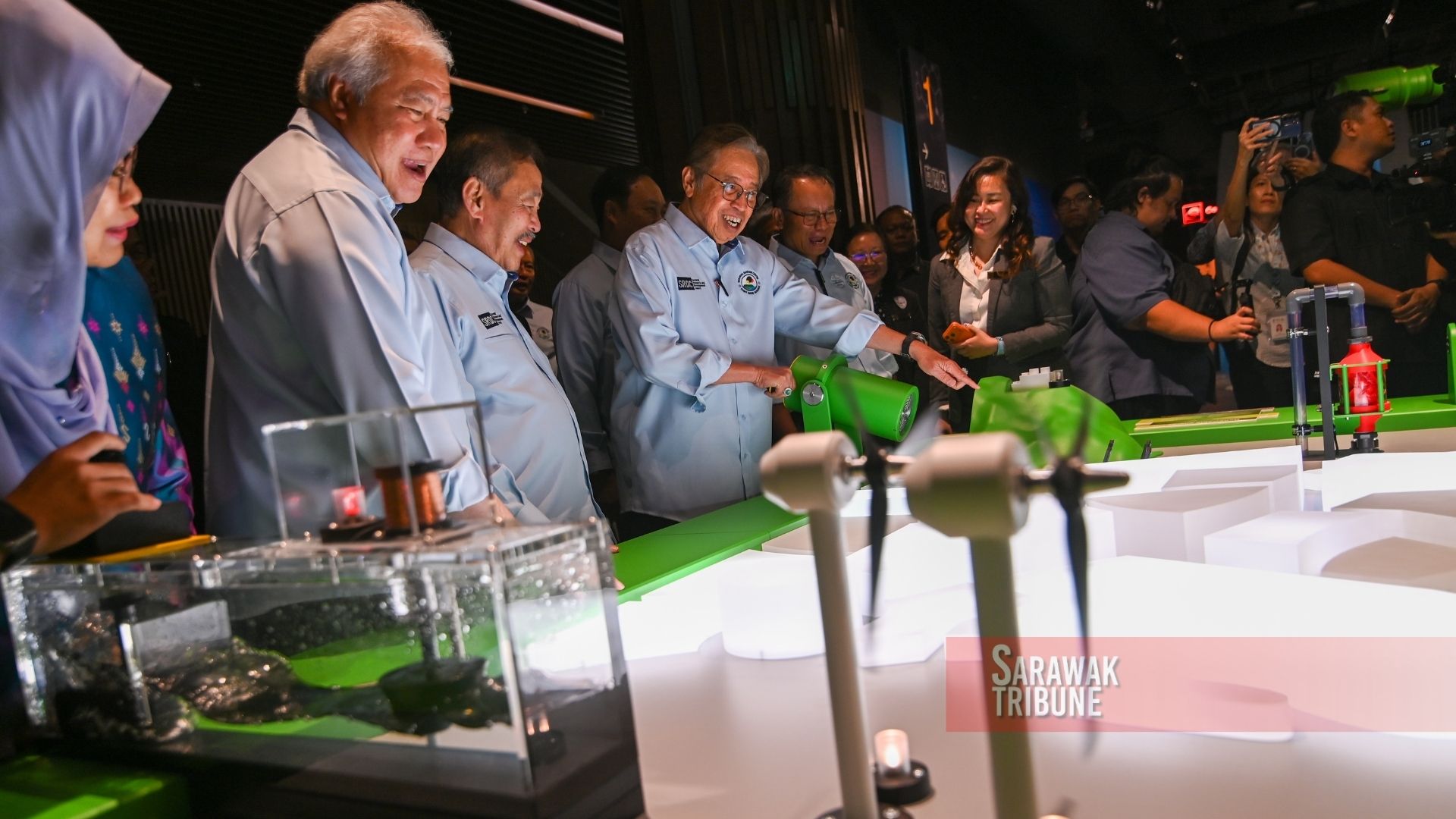
Premier Datuk Patinggi Tan Sri Abang Johari Tun Openg said the state government is laying the groundwork for what he described as a “healthy energy” economy, leveraging a mix of renewable and conventional energy sources to future-proof Sarawak’s development.
“We are preparing Sarawak to adapt to an economy based on healthy energy,” he said, noting that the state is investing in hydroelectric power, biomass, gas turbines, and solar energy as part of a comprehensive energy strategy.
He was talking to reporters at a press conference during the GPS Convention at the Borneo Convention Centre Kuching today (April 19).
Among key initiatives is the expansion of solar power generation, including installations in Batang Air, which serve as a foundation for further growth.
Abang Johari also revealed that Sarawak has attracted significant foreign investment, particularly from Abu Dhabi and China, to scale up its solar capacity.
In the biomass sector, the state has made strides in converting organic material into biochar, a carbon-rich product with energy potential.
Ongoing research is focused on determining the calorific value of biochar, with comparisons being made between Japanese and Chinese technologies.
Early indications suggest that Chinese advancements may hold an edge in biomass energy development.
Gas remains another cornerstone of Sarawak’s energy mix.
The Premier emphasised that gas turbines, supported by extensive infrastructure under the state’s gas roadmap, continue to play a crucial role.
To support this, Sarawak has also introduced legislation to regulate gas transmission, ensuring efficient and secure energy distribution.
Beyond infrastructure and investment, Abang Johari underscored the importance of human capital development in supporting the energy transition.
He highlighted efforts to strengthen education in science, technology, engineering, and mathematics (STEM), alongside disciplines such as law, social sciences, and medicine.
In particular, he pointed to the upcoming establishment of a Faculty of Law at Universiti Malaysia Sarawak (UNIMAS), which is expected to broaden the state’s academic ecosystem and equip future generations with the expertise needed to navigate complex regulatory and economic landscapes.
“This will give us the entire background for Sarawak to master strategic and important disciplines to prepare for the new economy,” he added.
With a multi-pronged approach combining energy diversification, foreign partnerships, and education reform, Sarawak is positioning itself at the forefront of sustainable economic transformation in the region.