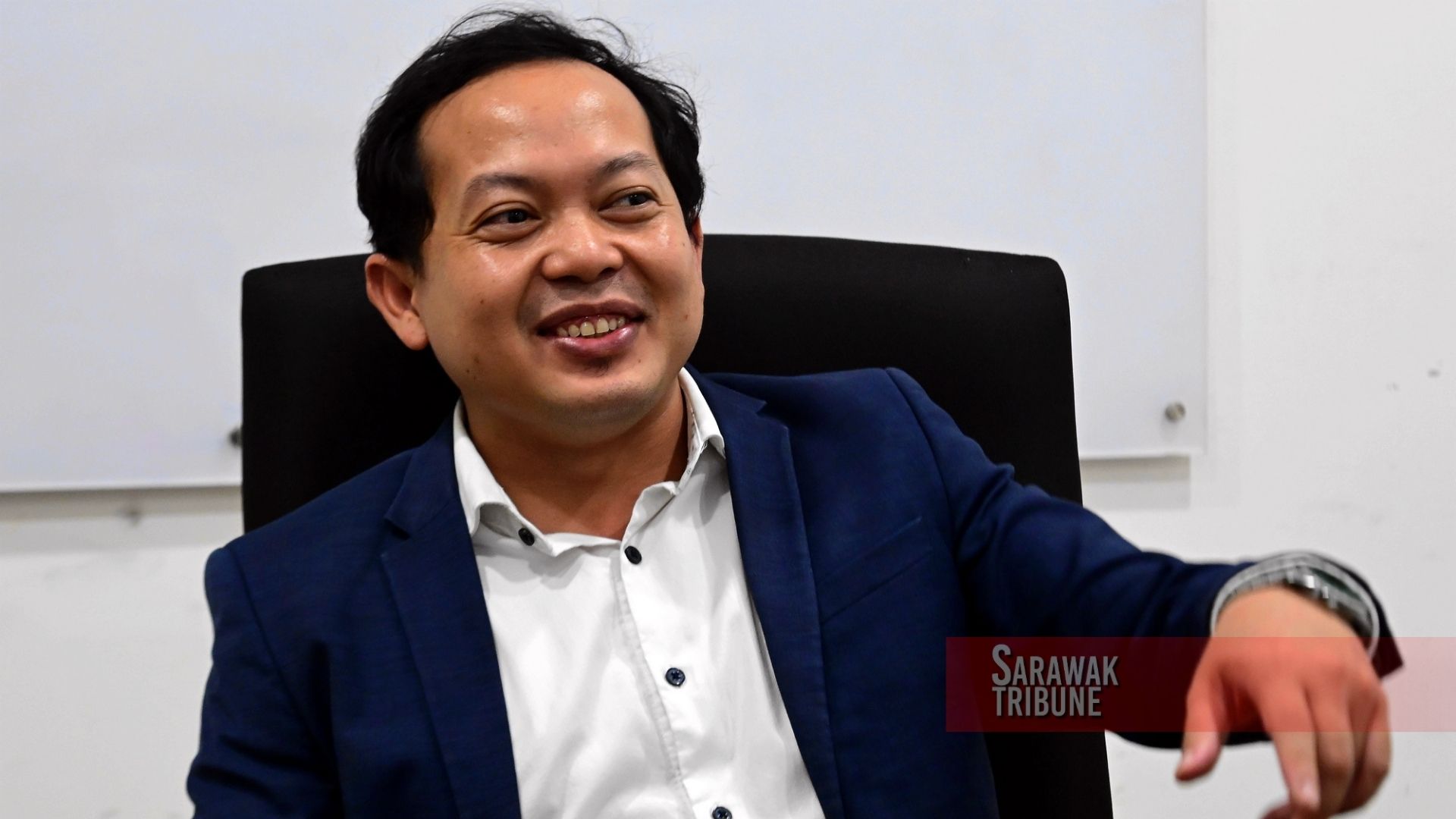
KUCHING: Sarawak’s ambition to launch its first nano satellite by 2030 is not an unrealistic dream but an achievable milestone that could pave the way for the state’s participation in the rapidly expanding global New Space Economy.
The Deputy Dean of the Faculty of Aerospace Engineering and senior lecturer at iCATS University College Abdul Qaiyum Alidin said advances in satellite technology over the past decade had significantly reduced development costs, making space technology increasingly accessible to universities, industries and even smaller economies such as Sarawak.
He said unlike in the past, when satellites were massive, extremely costly and developed almost exclusively by major powers such as the United States, Russia and China, today’s satellites can perform many of the same functions despite being only a fraction of the size.
“Yes, I believe the 2030 target is very realistic. In the era of the New Space Economy, satellites no longer have to be large like they were decades ago.
“The first nano satellite is important because it demonstrates that we have the capability to design, develop and build our own technology. Once we successfully launch the first satellite, we can move on to a second, third and eventually an entire constellation of satellites,” he said during an interview with Sarawak Tribune and Suara Sarawak.
Abdul Qaiyum said the true value of space technology was not merely in launching a satellite, but in the vast amount of data it could collect and transform into high-value services.
He explained that operating a single satellite would not be sufficient, as the New Space Economy relies on multiple satellites working together to continuously gather information that can later be processed into commercial applications.
“Owning just one satellite is not practical. We need many satellites because together they generate valuable data.
“As satellite manufacturing becomes increasingly affordable, we can apply space technology to create data-driven solutions that support entirely new industries.”
Among the sectors expected to benefit are carbon credit verification, rare earth mapping, forest conservation, urban planning, agriculture and climate monitoring.
Abdul Qaiyum said satellite technology enables accurate measurement, reporting and verification (MRV), providing reliable scientific data that can eventually be converted into commercial services, particularly in the growing carbon credit market.
While satellites were once developed primarily for defence and surveillance purposes, he said falling costs and advances in electronics, battery systems and miniaturised cameras have opened the technology to commercial industries and private sector innovation.
“It is estimated that a modern 3U CubeSat weighing less than 10kg could now cost between USD300,000 and USD500,000, a dramatic reduction compared to conventional satellites that once weighed several tonnes and required significantly larger investments.”
Abdul Qaiyum believes Sarawak is well positioned to participate in the global aerospace industry, given its growing semiconductor and electronics ecosystem.
He said the state’s ambitions in aerospace represent the next step in its transition towards a high-value, technology-driven economy.
“We have already demonstrated our capabilities in semiconductors, electronics, hydrogen and aviation. Space technology is simply the next frontier.
“Our goal is not just to launch satellites, but to create new industries, high-value jobs and opportunities for young Sarawakians to participate in one of the world’s fastest-growing economic sectors.”