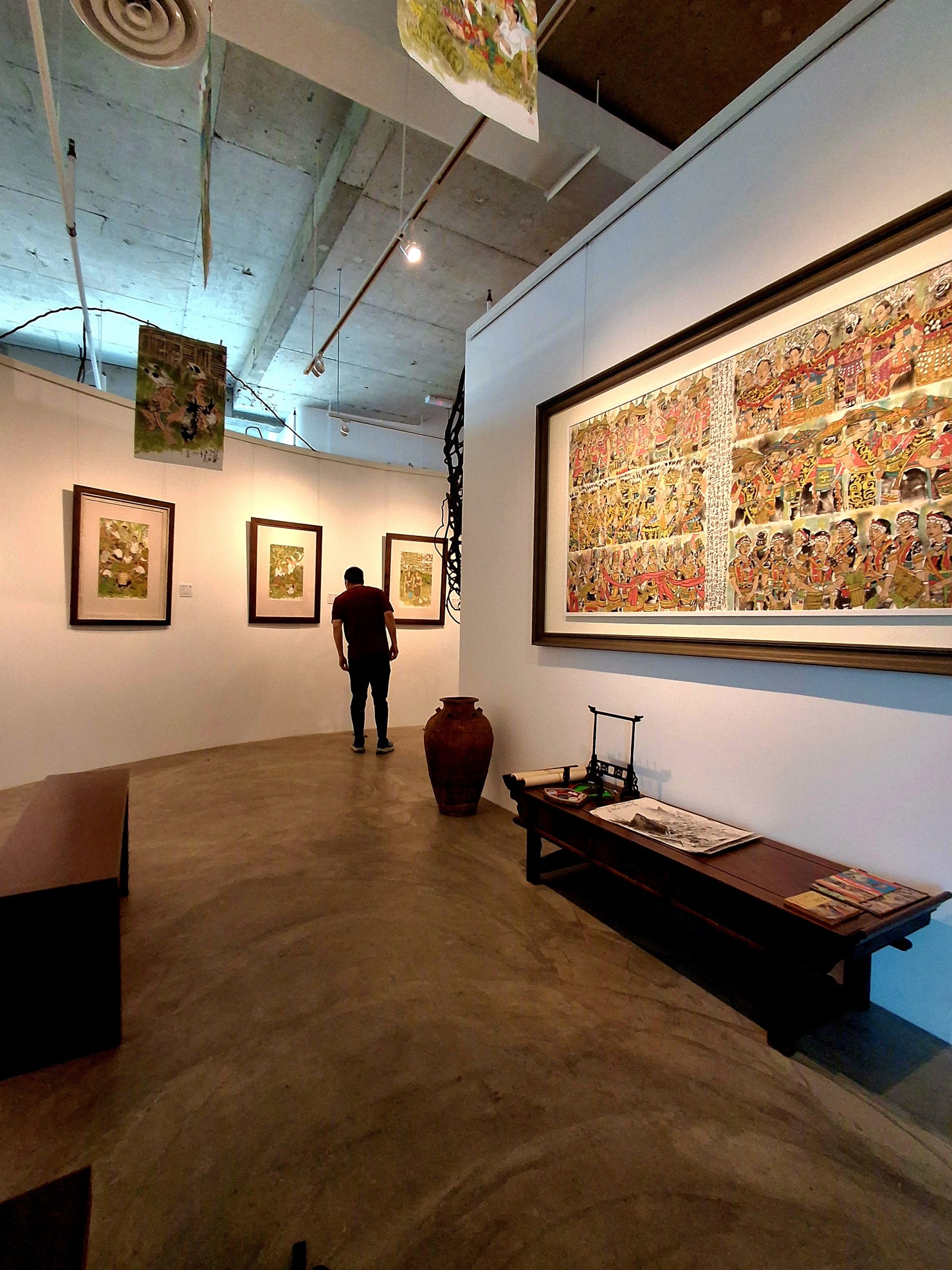
From powerful depictions of Iban warriors to immersive sculptures crafted from rainforest vines, a diverse collection of artworks at Hoan Gallery presents a vibrant tribute to Sarawak’s people, traditions and landscapes.
Where Sarawak’s stories come alive
WHILE Hoan Kee Huang, founder of Hoan Gallery, led a group of artists on a Sarawak painting expedition from June 10 to 14, travelling from Miri to Sibu before returning to Kuching, I spend a quiet lunchtime at his gallery.
Away from conversations and the distractions of a group setting, the experience of exploring artworks alone becomes deeply personal. Studying each piece in silence and reflecting on its details, emotions and meanings offers a very different experience from viewing art while surrounded by others eager to share their opinions. In the stillness, the artworks seem to reveal their stories more intimately, inviting contemplation and a deeper appreciation of the artists’ visions.
In March 2026, I attended an exhibition at Hoan Gallery featuring several artists. Among them, the works of Lee Choon Kui immediately caught my attention. The 76-year-old self-taught artist from Kedah is renowned for his mastery of Chinese ink painting. At that exhibition, his works also centred on Chinese opera performers and temples, demonstrating his remarkable ability to capture character and atmosphere through expressive brushwork.
Returning to the gallery in June, I was greeted by similar works, yet the atmosphere felt noticeably different. As the month is closely associated with the Harvest Festival and the indigenous communities of Sarawak, it is fitting that many of the paintings celebrate Dayak culture.
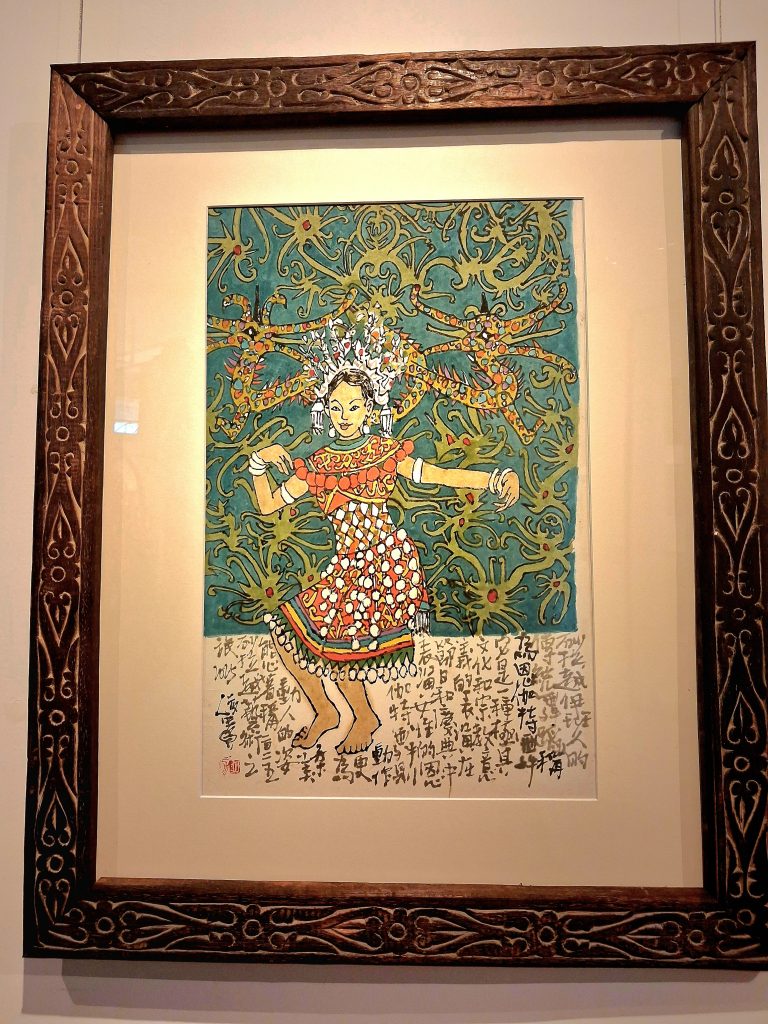
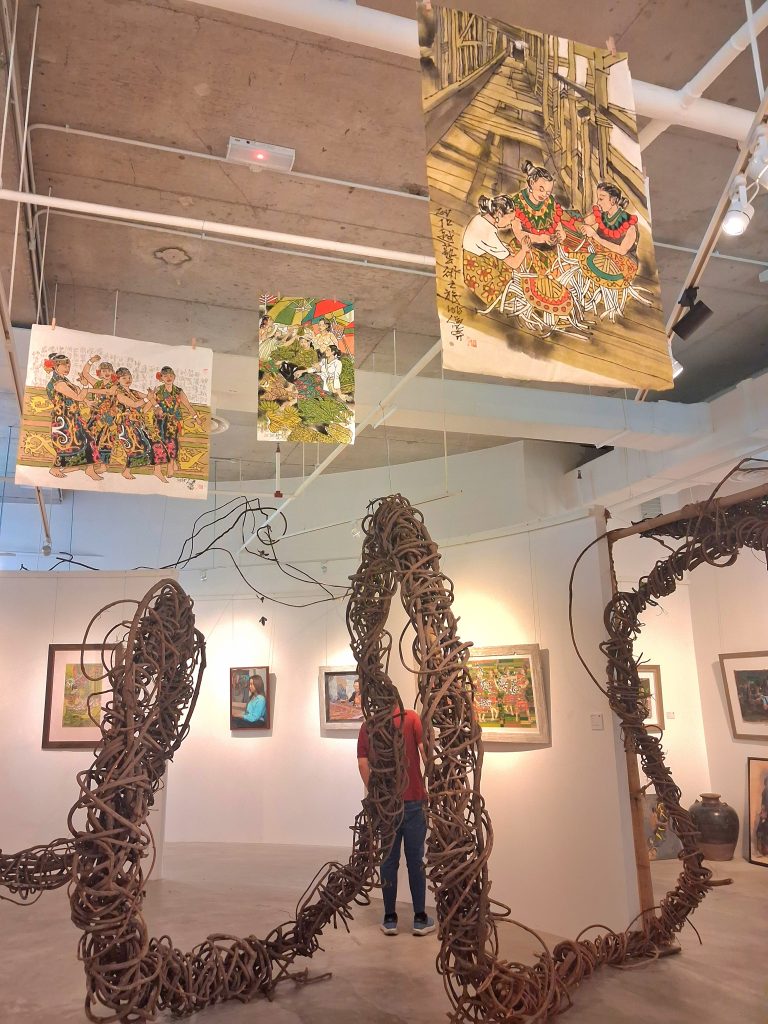
Iban warriors emerge powerfully from sweeping strokes of black ink, while graceful depictions of Iban women performing traditional dances showcase elegance and refinement.
Lee’s artistic style is distinguished by intricate, rhythmic lines that create a sense of movement and vitality. His interpretation of Dayak culture through Chinese ink presents a compelling visual dialogue between tradition and contemporary expression.
The result is art that is not only aesthetically striking but also culturally resonant.
As vice-chairman of the North Kedah Art Society, Lee has participated in numerous exhibitions in Kuala Lumpur, Kedah, Penang, Pahang and China. His works have also been acquired by corporate and public collections, including UOB and various local businesses.
His paintings belong to the tradition of ink art, a medium rooted in East Asian brush painting that has evolved into a highly expressive art form.
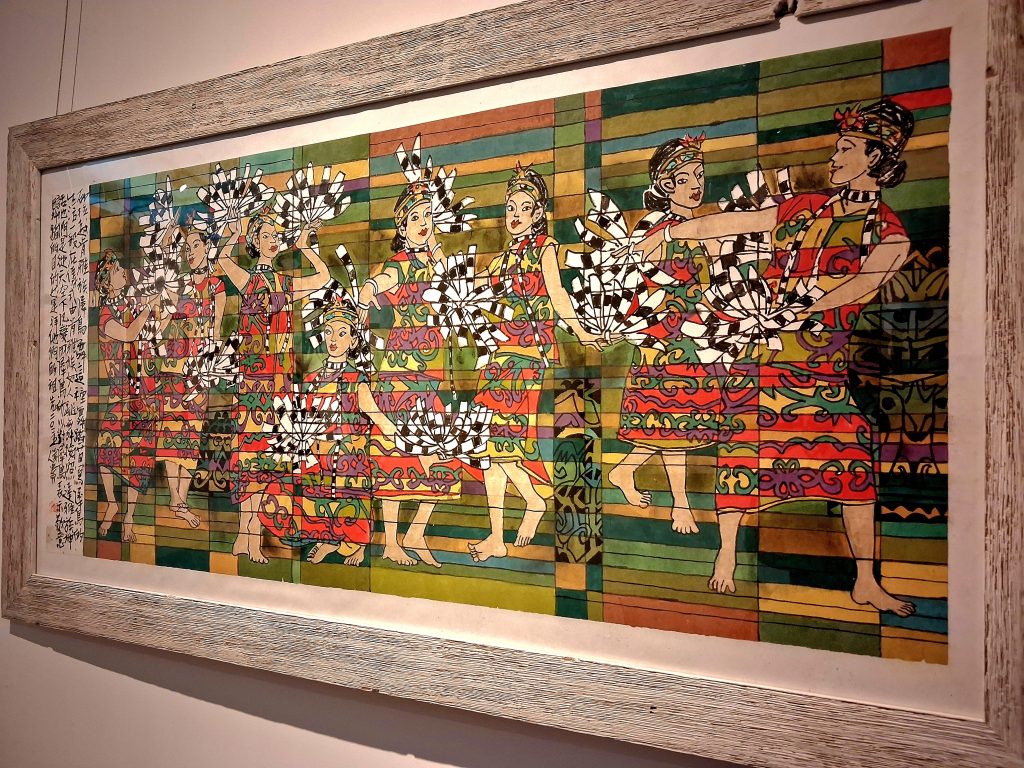
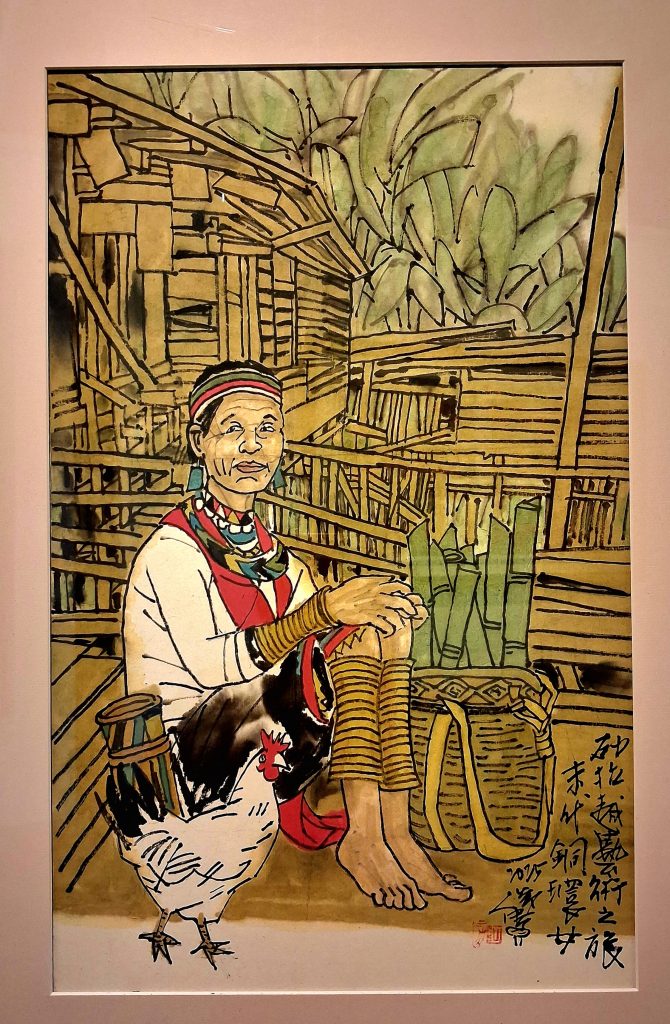
Unlike oil or acrylic painting, where colour and layering often dominate, ink art relies heavily on the artist’s command of line, texture, balance and the interaction between ink and paper. Its value lies not only in technical mastery but also in its ability to convey emotion, movement and character through seemingly simple strokes.
Collectors are often drawn to works that combine craftsmanship with a distinctive narrative. Lee’s paintings achieve precisely that, offering viewers a fresh perspective on Sarawak’s indigenous heritage while remaining faithful to the discipline of Chinese ink painting.
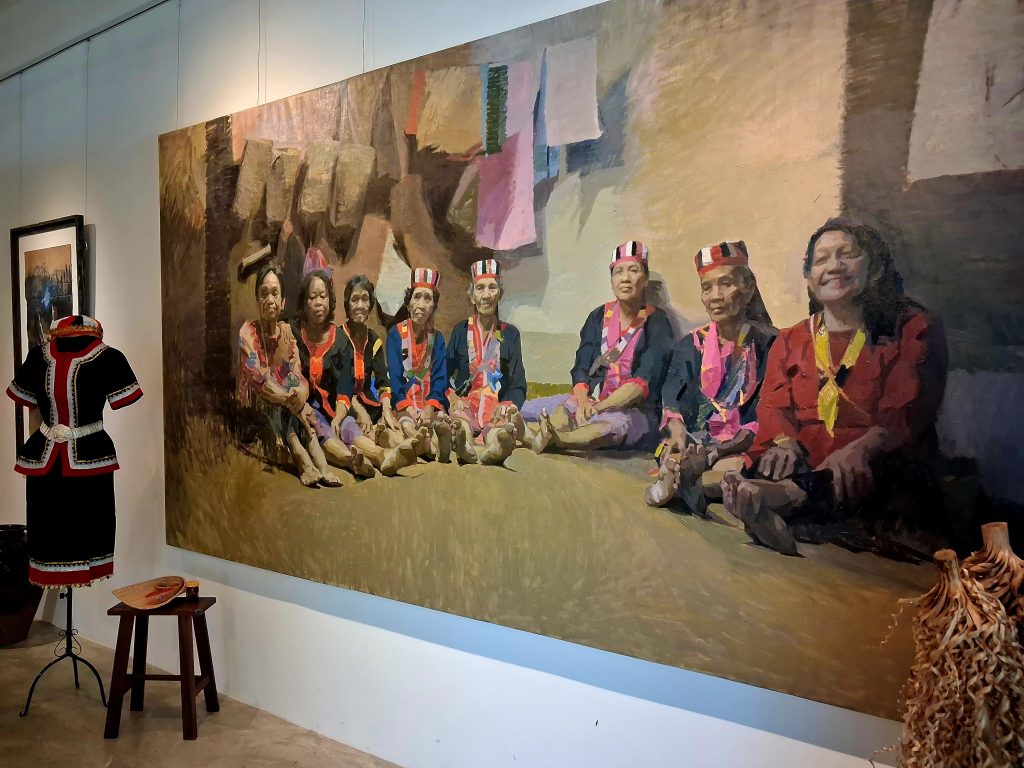
The exhibition also introduces visitors to younger artistic voices. Among them is Brandon Ritom, whose oil and acrylic works explore themes of presence, history and cultural continuity. The 36-year-old Dayak artist, who studied Art and Science at Central Saint Martins in London, presents the large-scale work ‘Dayung Borih Gawea Nguguoh, Kupo’ Raso II’. Through the piece, Ritom continues his efforts to highlight ancestral cultures that risk being overshadowed by modernisation.
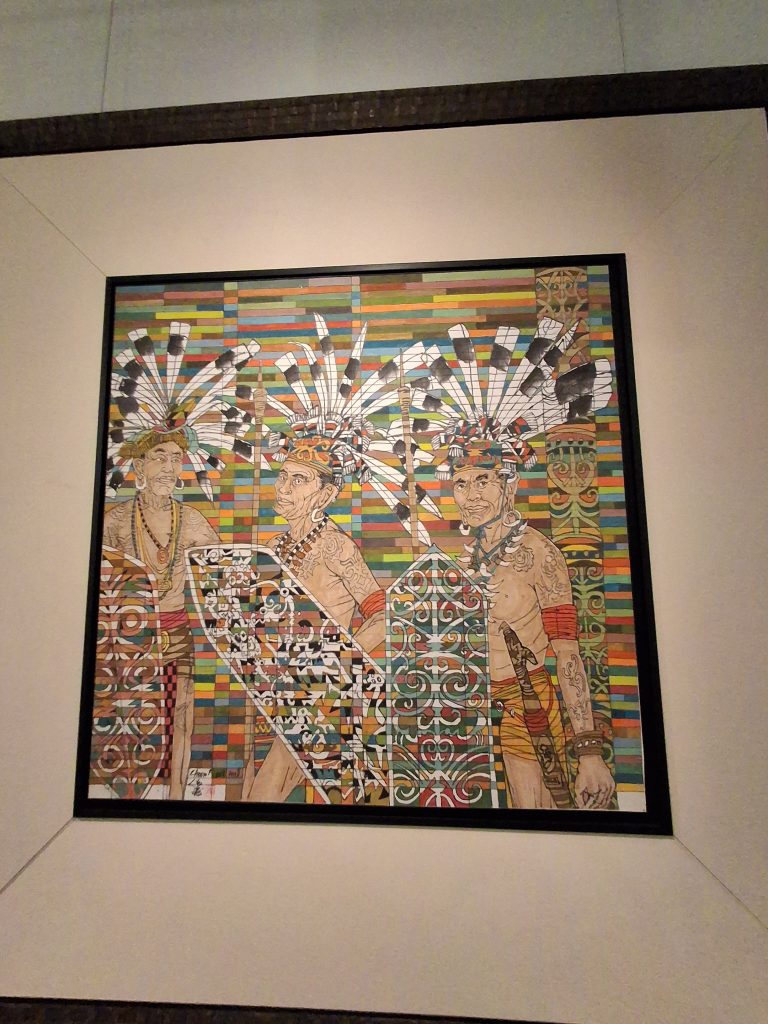
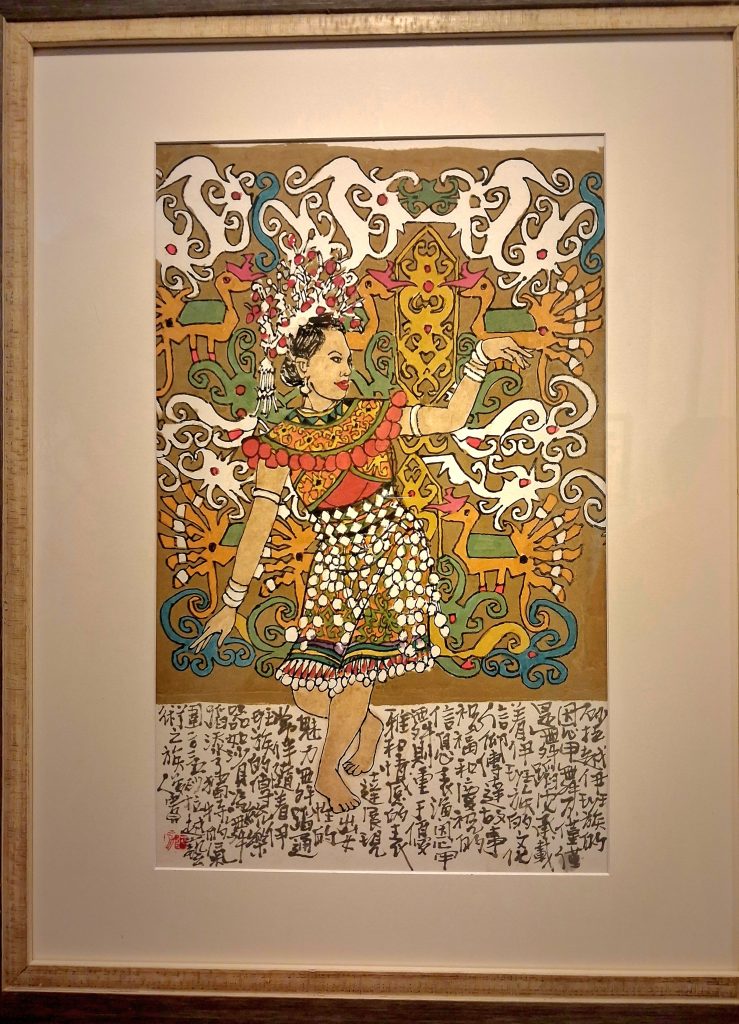
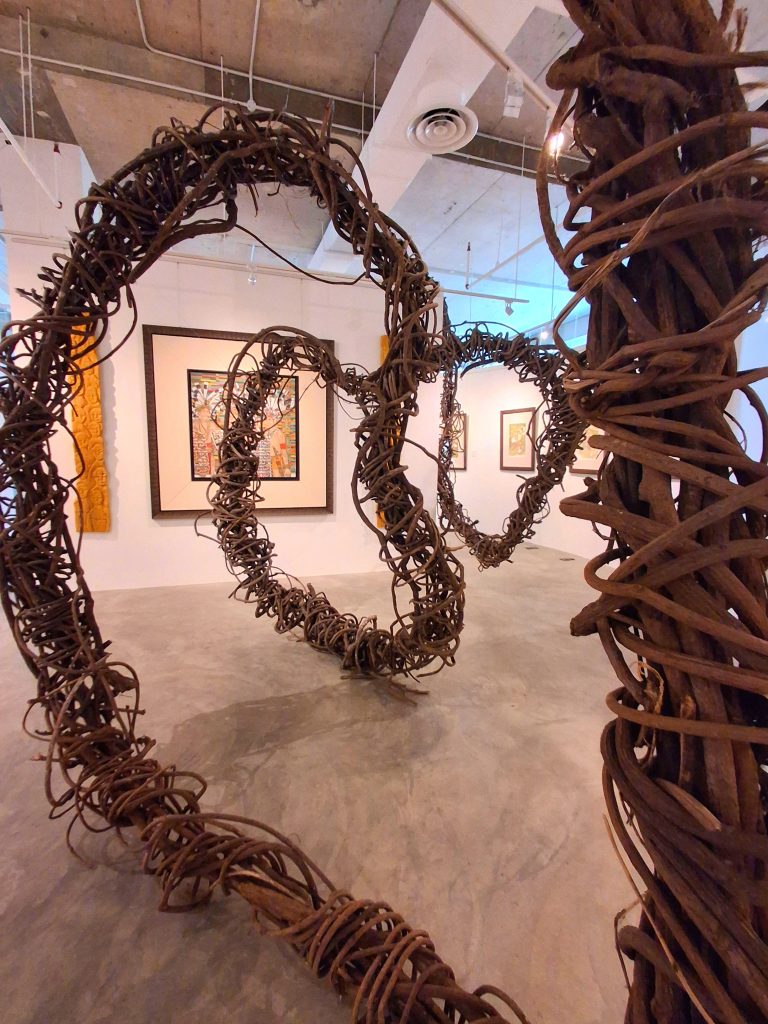
Equally fascinating is the sculptural work of M. Sahzy, often known as the ‘Jungle Sculptor’. For this exhibition, his installations weave natural vines through the gallery space, creating forms that appear to grow organically from the building itself.
The use of rainforest materials such as rattan and other natural vines serves as a reminder that Sarawak’s identity remains deeply connected to its natural environment.
Together, the paintings and sculptures create a rich visual tapestry of heritage, memory and place. On this quiet afternoon, Hoan Gallery becomes more than simply an exhibition space. It becomes a journey through Sarawak’s soul, told through ink, canvas, vine and imagination.