THE first thing haze hampers is not the skyline. It hampers the simple act of breathing.
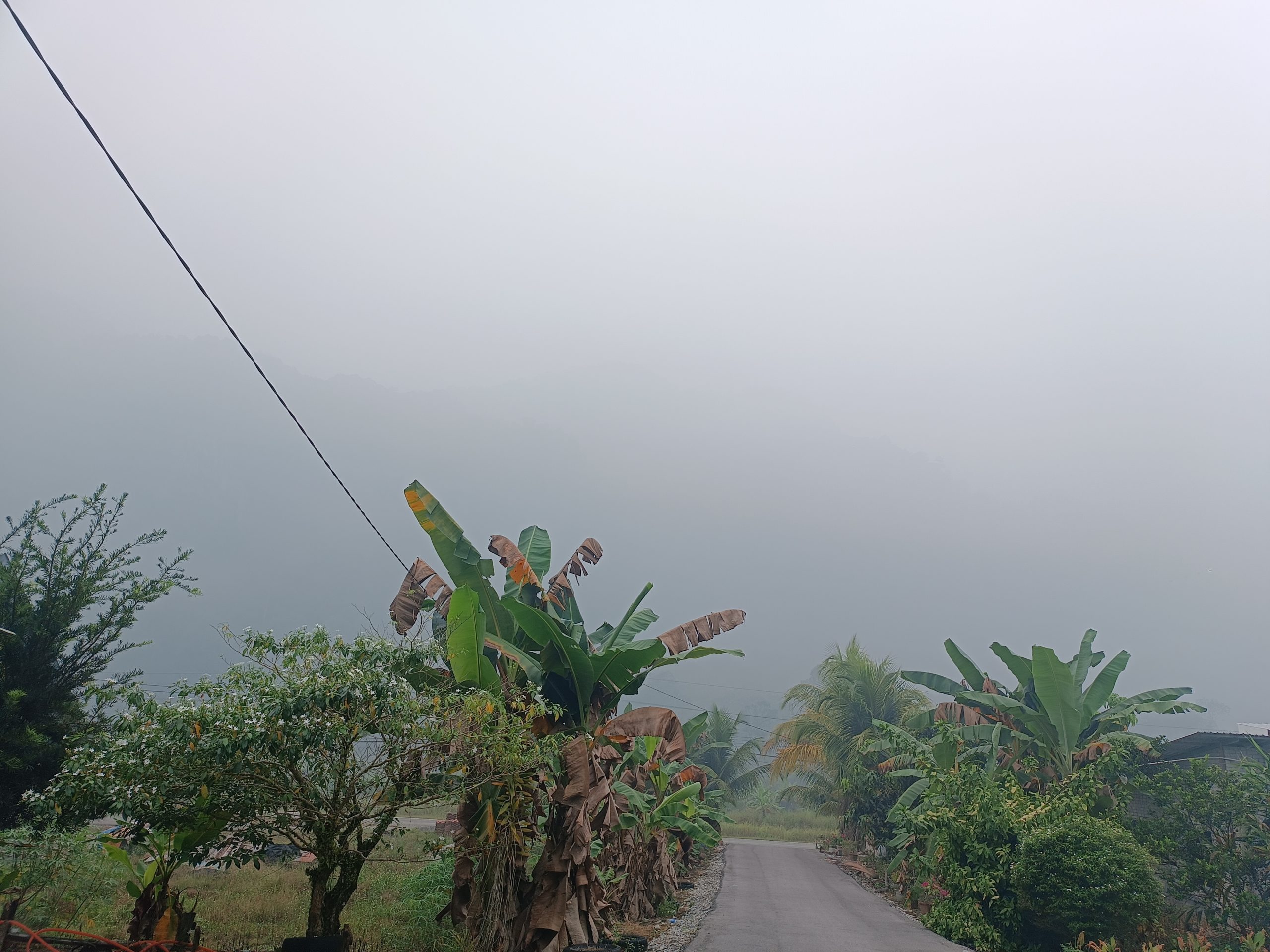
Across Sarawak, familiar landmarks disappear behind a grey curtain.
Children cough in classrooms and at home, elderly residents struggle through morning and evening walks, and open markets that normally buzz with conversation are quieter as patrons retreat indoors.
Yet, the paradox is real: Kuching’s air may be hazardous, but its coffee shops remain full. Even when the API exceeded 300, health authorities advised people to avoid outdoor activities because the haze posed a risk to the general public.
Why are people still eating out? The simplest explanation is that eating is viewed as an essential social routine, not a recreational outdoor activity.
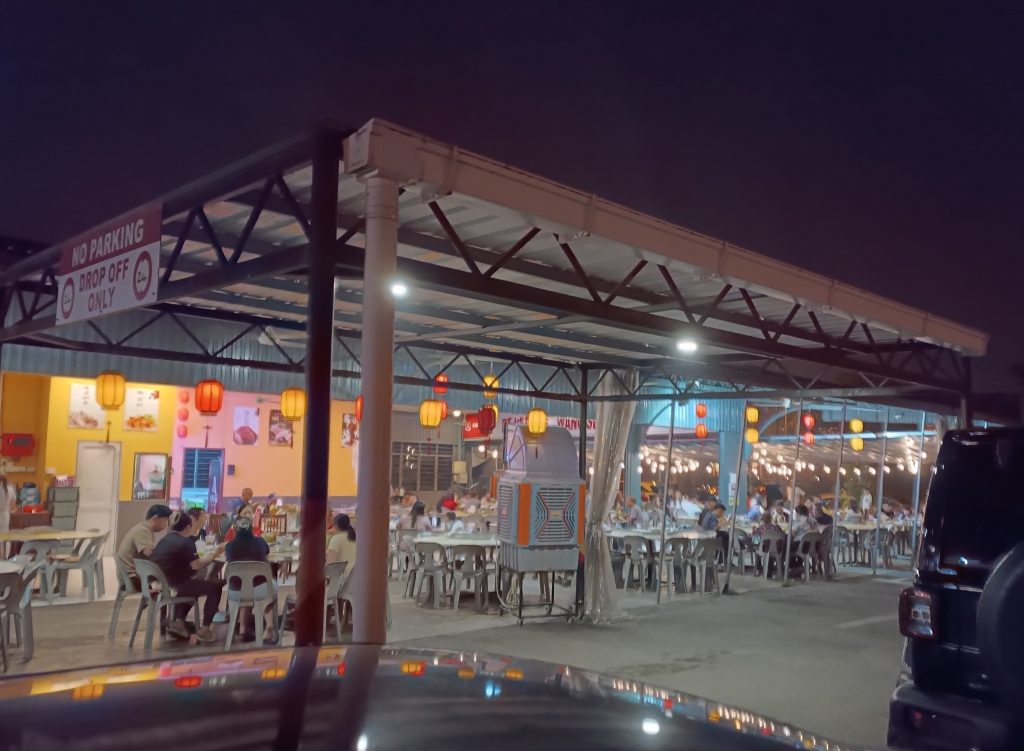
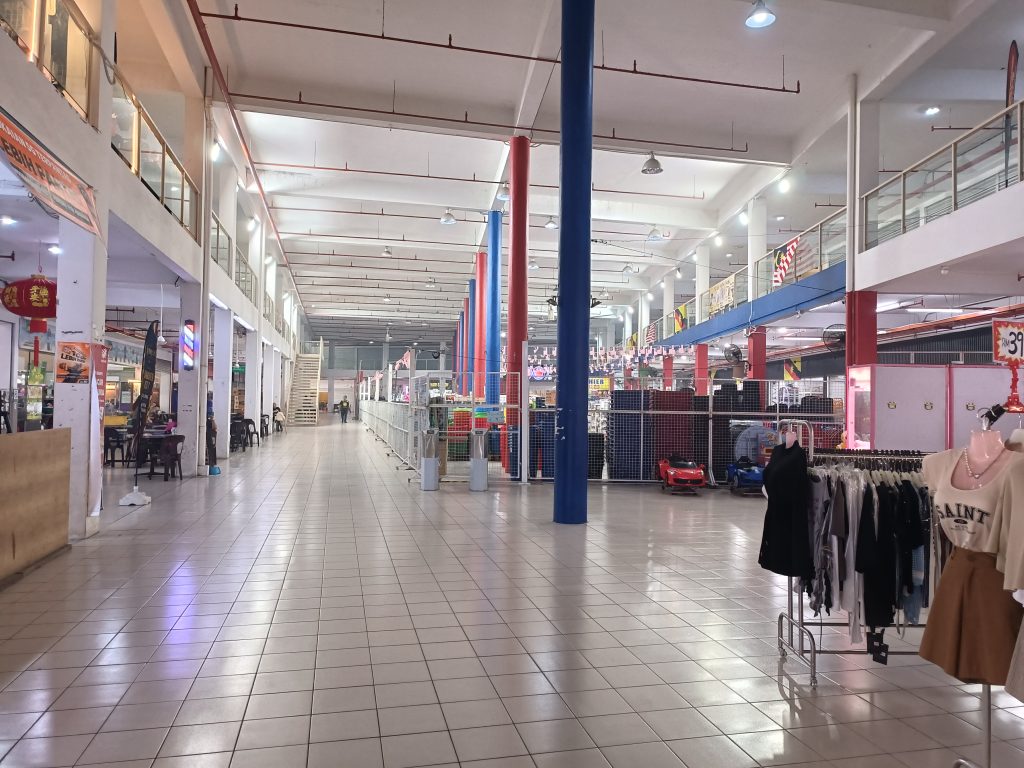
Observation across Kuching and Bau may suggest that kopitiam culture is deeply ingrained. Breakfast, tea and supper are daily rituals, some people choose to wear a mask while travelling, then remove it only to eat.
Risk feels invisible – PM2.5 particles cannot be seen individually. Once seated, many people underestimate their exposure just because they are not exercising, but they are still breathing polluted air.
Many patrons perceive naturally ventilated coffee shops as more comfortable than enclosed spaces, despite the outdoor haze.
Hawkers and food operators cannot simply close. Their continued operation also encourages customers to maintain normal routines.
What arrives each Southwest Monsoon is often described as an environmental nuisance. In reality, it is a public health emergency unfolding in slow motion.
The smoke blanketing Sarawak is largely driven by forest and peat fires in Kalimantan, Indonesia. Seasonal southwesterly winds transport enormous quantities of fine particulate matter across borders, turning a regional ecological disaster into a shared humanitarian challenge.
Malaysian Environmental Health Practitioners Association’s Chairman, Prof. Dr Jamal Hisham Hashim, said haze from open burning is made up largely of fine particulate matter known as PM2.5, as reported by New Straits Times on September 2.
The particle is 2.5 micrometres or less in diameter, roughly 1/28 the width of a human hair.
These particles are small enough to penetrate deep into the lungs and reach the alveolar region, where gas exchange takes place.
Ultrafine particles, measuring less than 0.1 micrometre, can enter the bloodstream and trigger inflammation in blood vessels.
This may increase the risk of blood clotting, stroke and heart attack.
For doctors, the haze season is measured by rising patient numbers.
At hospitals and government health clinics, respiratory complaints typically increase whenever air quality deteriorates.
Public Health, Housing and Local Government Minister, Datuk Amar Dr Sim Kui Hian, said surveillance had detected an increase in some haze-related conditions in recent weeks.
The haze is getting severe in Sarawak now. An emergency has been declared in Serian, following the worsening haze situation there.
PM2.5 is particularly dangerous because it is nearly invisible and can bypass the body’s natural respiratory defences.
Medical research has consistently linked prolonged exposure to worsening asthma attacks, reduced lung function, cardiovascular complications and increased hospital admissions.
According to Dr Sim, average upper respiratory tract infections (URTI) cases rose from approximately 1,717 per week earlier in the year to 1,752 per week recently. Conjunctivitis cases also increased from an average of 17 to 21 cases per week.
“Poor air quality can affect everyone, but certain groups are more vulnerable, particularly infants and children, the elderly, pregnant women, outdoor workers, and individuals with existing respiratory or cardiovascular conditions,” he reminded the public.
Yet the health impact extends well beyond hospitals.
Sarawak’s open-air coffee shops, food courts and roadside eateries represent more than dining spaces. They are neighbourhood meeting places where retirees read newspapers, workers gather before dawn, and families share evening meals.
During a severe haze, these communal spaces become unintended exposure zones.
Unlike enclosed buildings equipped with air filtration, many kopitiams remain fully open to the atmosphere.
Customers linger over coffee while inhaling polluted air for extended periods.
Stall operators, waiters and cooks have even fewer choices. They spend eight to twelve hours each day working in conditions where exposure is continuous rather than occasional.
The economic dilemma is painfully familiar. Closing means losing income. Remaining open means accepting greater health risks.
Outdoor workers carry an even heavier burden. Traffic police, construction labourers, municipal cleaners, delivery riders and farmers cannot simply move indoors.
Every shift becomes an exercise in balancing livelihood against respiratory health. For many daily wage earners, missing work is financially impossible, even when air quality reaches unhealthy levels.
Children deserve particular attention because the haze affects them differently from adults.
A child breathes more rapidly, meaning more polluted air enters the lungs relative to body size. Exposure during critical stages of lung development may have lasting consequences.
Schools often suspend outdoor sports and assemblies when the Air Pollutant Index (API) rises, but classrooms themselves are not always immune if buildings lack adequate filtration or ventilation management.
Parents also face difficult decisions.
“Should children attend school? Is it safe to play outside? When should a cough become a medical consultation?”: these are the questions that linger in the heads of worried parents.
Public health messaging becomes just as important as medical treatment, because timely information helps families reduce unnecessary exposure before illness develops.
The elderly face another invisible threat: isolation.
Many older Sarawakians maintain active social routines through morning markets, parks and neighbourhood coffee shops.
Haze forces some of them indoors, reducing physical activity and social interaction while increasing risks associated with chronic diseases.
For individuals living alone, prolonged indoor confinement may quietly affect mental well-being alongside physical health.
Public health experts increasingly argue that the haze should be treated with the same seriousness as other recurring seasonal health threats. That means moving beyond emergency responses toward long-term preparedness.
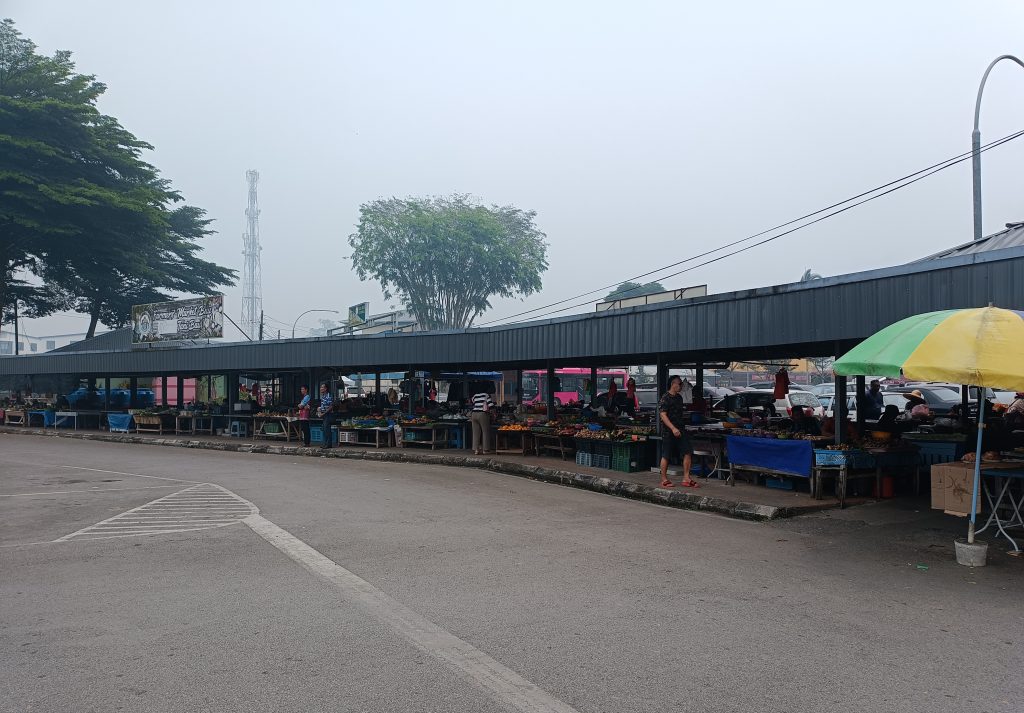
One of the open vegetable markets.
Healthcare facilities require sufficient respiratory medications, nebulisers and protective equipment before peak haze months. Schools need clear protocols for outdoor activities.
Employers should adopt flexible measures for outdoor workers when pollution reaches hazardous levels. Communities must also understand that surgical masks offer limited protection against PM2.5, while properly fitted respirators such as N95 masks provide significantly better filtration during severe episodes.
According to the 2025 statement available in the ‘Official Portal Ministry of Health: Usage Of Personal Protection During Haze’, the N95 respirator may be used as protection during the haze. The respirator filters the small airborne particles and can reduce exposure to the haze. The N95 mask is effective only if used correctly.
Although the use of N95 masks increases effort in breathing, for some people, the use of N95 masks may cause discomfort breathing, tiredness or headache.
This may be due to the mask causing increased resistance to breathing, and a reduction in the volume of air breathed. For most people this is not serious however precautions must be taken in certain categories of people.
It is cautioned that the N95 mask is not suitable for pregnant women and children. Persons with chronic lung or heart conditions who feel uncomfortable when wearing the N95 masks should stop doing so and consult a doctor before carrying on.
Ultimately, Sarawak cannot solve transboundary haze alone. The fires originate beyond its borders, demanding stronger regional cooperation in peatland restoration, fire prevention, satellite monitoring and enforcement against illegal burning.
ASEAN has made progress through collaborative agreements, but recurring haze demonstrates that prevention would be more effective than responding after smoke has already crossed the border.
Every haze season reminds Sarawakians of an uncomfortable truth: air ignores political boundaries.
The smoke drifting over Kuching, Samarahan, Sri Aman and the interior does not distinguish between rich and poor, urban and rural, healthy and vulnerable. It enters classrooms, hospital wards, coffee shops and family homes alike.
When breathing becomes difficult, haze is no longer merely an environmental story. It becomes the story of public health, shared responsibility and the fundamental right to clean air.