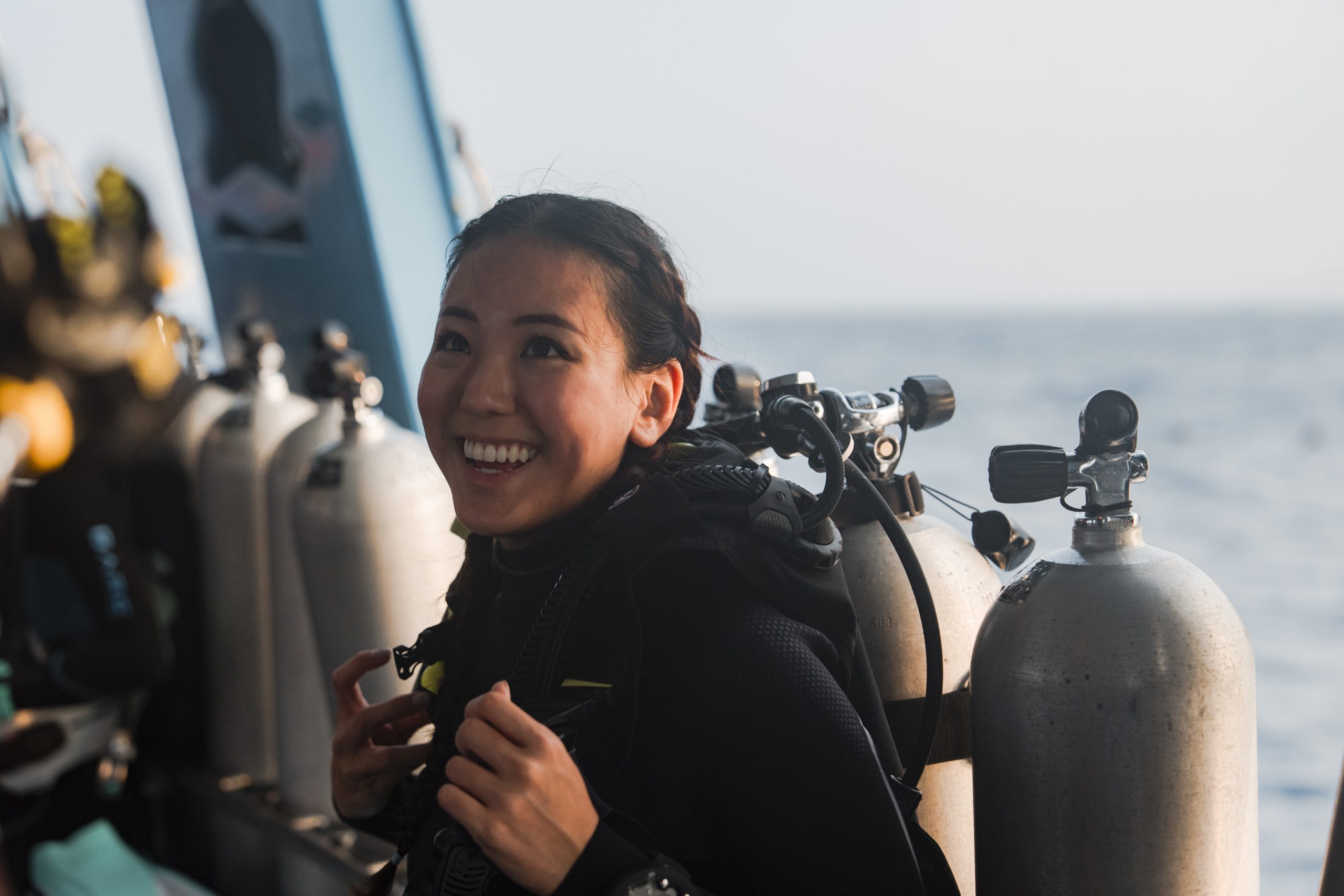
ACTRESS, TV host and content creator, Jolene Tiong, has never been particularly good at staying in one lane. At 27, the Malaysian talent has already moved between modelling, pageantry, livestreaming, television, running a marketing and e-commerce agency, and life underwater as a PADI AmbassaDiver.
Now, she is preparing for another major milestone: a leading role in the United Kingdom production, ‘My Indian Boyfriend: The Golden Mile’.
Born and raised in Klang Valley, Selangor, Tiong proudly traces her Sarawakian roots through her father, whose family remains deeply rooted in Sibu. Chinese New Year gatherings, family milestones, and regular visits to her grandparents have kept Sarawak a constant anchor in her life. If Selangor taught her to adapt to a fast-moving world, Sibu taught her the value of family, community, and slowing down.
In conversation with Sarawak Tribune, Tiong reflects on ambition, insecurity, public scrutiny, and the unexpected choices that built her career – from confronting one of her deepest insecurities on national television at 19 to finding peace beneath the ocean and filming the audition for her latest acting role alone on a balcony in Hong Kong.
For Tiong, there may never be just one path. That’s rather the point.
Sarawak Tribune: You were born and raised in Selangor, but your father is Sarawakian. Having regularly returned to Sarawak for festivities and family gatherings, how have those two places shaped who you are today?
Tiong: I have such vivid memories of returning to Sibu for Chinese New Year and family occasions. I come from a big family, and I remember there being around 20 of us under one roof sharing just two bathrooms. On Sundays, we’d start waking up at around 4:00 am and take turns getting ready, just so all 20 of us could be out of the house for church at 7:00 am. It sounds chaotic, but it was so much fun! I think those experiences gave me such a strong appreciation for family, community, and togetherness.
Selangor shaped me differently. Life moves quickly, and growing up there exposed me to different cultures, personalities, and opportunities. That’s where a lot of my adaptability comes from.
Selangor taught me how to move through a fast-paced world, while Sarawak reminds me where my roots are when the noise stops.
What kind of child were you growing up?
I was definitely an overachiever, although the funny thing is that the pressure rarely came from my parents. They were the ones telling me, “Just pass and be happy”, while I was telling myself I needed the A.
I’m also grateful that my parents exposed me to so many different things. My school holidays could include public speaking and theatre one day, then robotics or science classes the next. I think that variety shaped my curiosity and willingness to try things outside my comfort zone.
I was always especially drawn to performing. From around seven to 12, I sang in my school choir. In high school, my friends and I formed a band and performed for occasions like Teachers’ Day, and at 16, I played the female lead in a school musical. Looking back, the signs were probably always there. I just never imagined that something I enjoyed so much could eventually become my career.
What were some of the dreams or ambitions you had growing up?
As a teenager, I genuinely wanted to be a K-pop idol! Girls’ Generation and Super Junior were huge at the time, and I loved singing, dancing, and performing.
But it felt like an impossible dream back then. I knew people who seemed far more talented and confident than I was, and I don’t think I had the courage then to take that kind of risk. So I chose what felt like the practical path: studying International Business and Marketing, and later pursuing my Master of Business Administration in Vancouver, Canada.
Yet performing kept finding its way back into my life. In a strange way, I think I’m now doing something my younger self wanted but wasn’t brave enough to pursue. I just took a slightly longer route to get here.
What was the starting point?
It started when I was 16 and a photographer reached out to me on Instagram asking if I wanted to do a photoshoot. I wasn’t trying to become a model, but something in me thought, “Why not? Let’s try”.
One shoot led to another, then came runway modelling, television commercials, and billboard campaigns. The real turning point was joining Miss Astro Chinese International in 2018, which opened doors into television, travel hosting, and emceeing. Later, livestreaming gave me an entirely different relationship with an audience.
Beyond the glamour, what lessons from pageantry still guide you today?
Miss Astro was my first real introduction to the discipline, preparation, and resilience required in show business. More importantly, it taught me how to block out the noise and separate public perception from my own identity.
I was only 19 when I entered a nationally broadcast Chinese-language pageant, and my Mandarin was so limited I could barely order a meal comfortably. That was partly why I joined — I wanted to challenge myself and force myself to learn. At the time, the media called me the “dark horse”. I was the youngest, had a pixie haircut, was very tanned, and received criticism for not being “Chinese enough”.
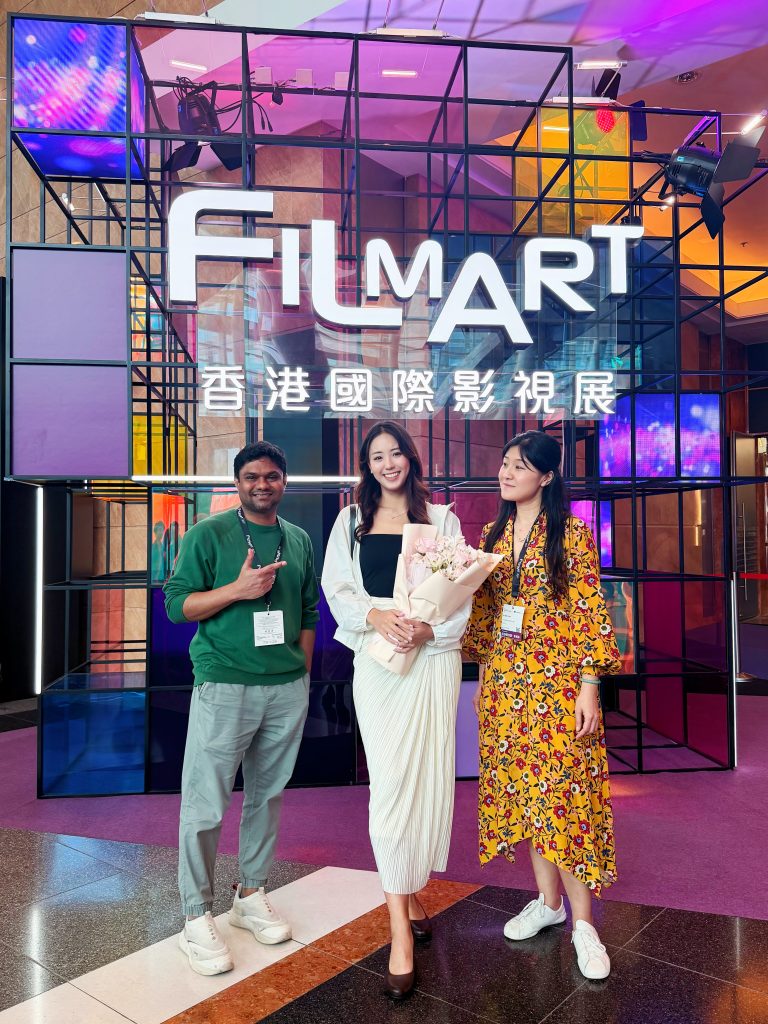
Behind the scenes, my quietest fear was my scoliosis. My back had always been the part of my body I habitually hid. During the live finale, we had to walk the runway in swimwear, and I was really nervous backstage, knowing that the curvature of my spine made my back different from the other contestants. Getting through that was terrifying, but the moment I stepped off that stage, it felt incredibly freeing. Finishing as first runner-up was great, but hearing from other women with scoliosis afterward was comforting because it made me realise that an insecurity had become a source of connection and their strength.
Navigating that kind of public scrutiny at 19 was an intense masterclass in mental fortitude. The negative comments definitely lingered at first, but the bigger lesson was learning that I couldn’t control other people’s perception of me – I could only control how much power I gave it.
Did the negative comments linger?
At 19, absolutely. I hadn’t yet learnt how to separate public perception from my own identity.
Livestreaming unexpectedly became a massive part of rebuilding that confidence. There was no pageant format or character to play – we’d game, sing, cook, talk about life, and sometimes spend hours doing completely unscripted, ridiculous things together.
Eventually, it stopped feeling like I was performing for an audience and started feeling like I was hanging out with a very large group of friends. That’s probably the version of me people online got to know best: spontaneous, unfiltered, and probably a little chaotic.
How different are you when carrying different characters?
I wouldn’t say they’re completely different versions of me. Livestreamer Jolene is probably closest to emcee Jolene because both rely heavily on spontaneity and connection.
I’ve livestreamed for three, eight, sometimes even 16 hours at a time. You’re completely live and unscripted. There’s no “cut, let’s try that again”. You’re essentially your own producer, director, and talent, and whatever happens, you keep going.
Acting requires almost the opposite mindset. You’re stepping into somebody else’s world and trusting the director, your scene partners, and an entire production team to build something together. Livestreaming taught me to think on my feet. Acting teaches me to surrender some control and collaborate. I love both for very different reasons.
What would your closest friends say you’re really like?
Probably sociable, present, soft-hearted, and a little clumsy – I’m constantly discovering bruises and wondering where they came from!
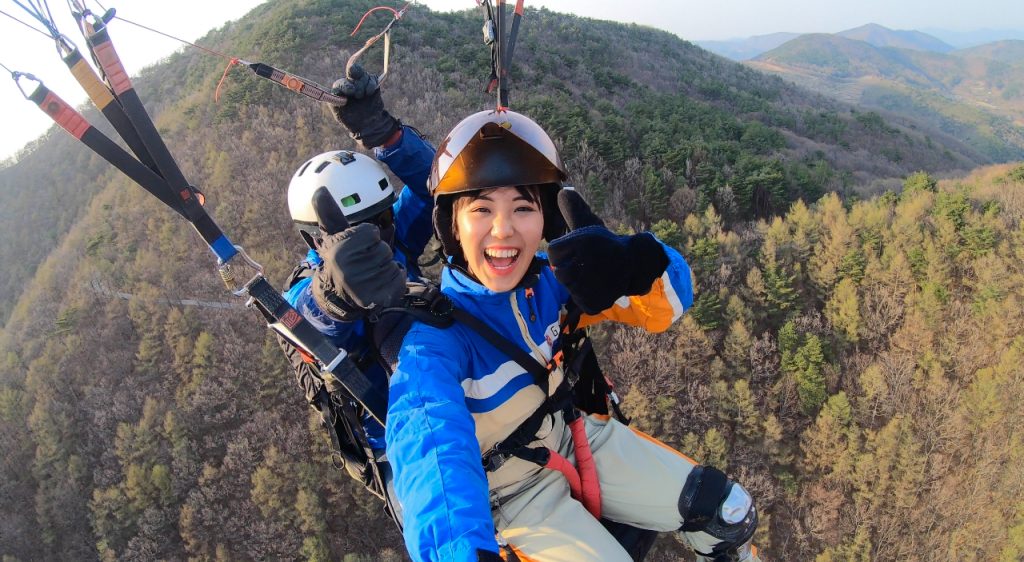
I’m the person who starts talking to whoever is sitting next to me on a plane or offers to take someone’s photo before they even ask. It’s funny because my career is so online, but when I’m physically with someone, I’m completely off my phone. Staying present with people in real life is what keeps me grounded. (And yes, I also cry at almost every movie!)
Was there ever a moment when you felt uncertain about your direction?
Honestly, I probably wake up at least once a week wondering, “What am I doing with my life?”
I’ve worked behind the scenes as a production assistant, competed on a survival show, modelled, hosted events and television, livestreamed, acted, and built a small marketing agency. For a long time, I wondered whether doing so many different things meant I lacked direction.
Eventually, I realised that growth doesn’t always mean moving upwards; sometimes you move laterally, step away from something, or come back to it later with a completely different perspective. The common thread isn’t a job title – it’s curiosity, storytelling, and connecting with people. There are so many things to experience in one lifetime. Following only one path sounds a little boring to me.
What does “me time” look like?
Movement and nature keep me grounded. Because of my scoliosis, taking care of my body is important, so I enjoy the gym, yoga, and Pilates.
But give me a walk by the ocean and a sunset and I’m very happy. There’s something comforting about saying goodnight to the day and remembering that tomorrow gives you another chance to try again.
Let’s talk about your scuba diving passion. How and when did you start diving underwater?
My mum introduced our family to scuba diving, and I had my first underwater experience when I was 10.
As I got older, diving became increasingly important because life above water was always so busy and achievement-driven. Underwater is one of the few places where everything goes completely quiet. You have to be fully present. It reminds me how small I am in this enormous world, and I always come back humbled and recharged.
That’s also why ocean advocacy feels less like work and more like gratitude. The ocean has given me so much peace throughout my life, and conservation is my way of giving something back.
What do you look for underwater?
Nudibranchs! They’re tiny sea slugs that I basically think of as underwater Pokémon. There are so many colours and varieties, and finding them becomes strangely addictive. They’re difficult to spot, which reminds me that sometimes the most extraordinary thing around you isn’t the biggest or loudest – you just have to slow down enough to notice it.
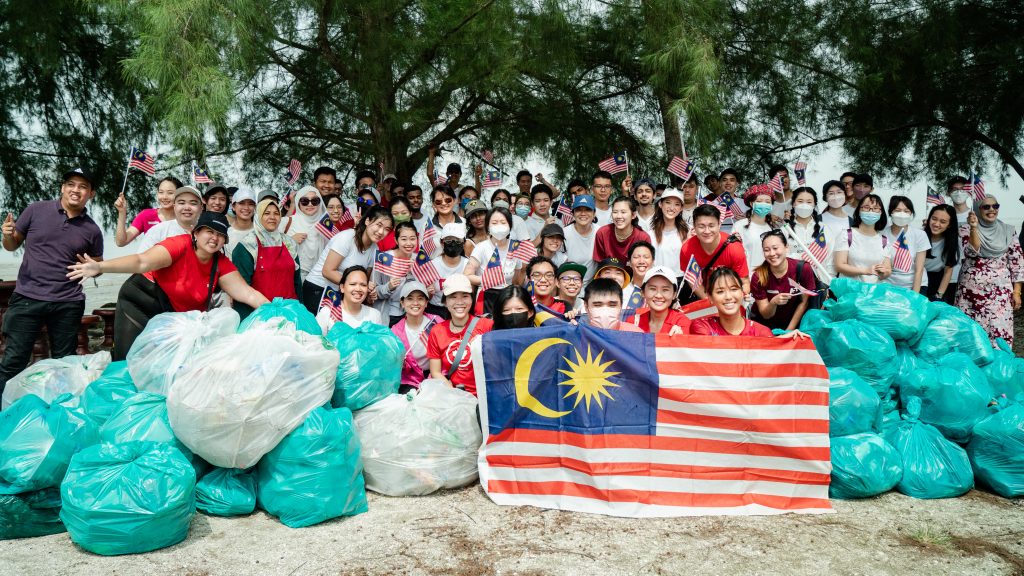
Unfortunately, trash isn’t nearly as difficult to find. On the same dive, you can be amazed by how beautiful the ocean is and then confronted by plastic bottles, wrappers, or ghost nets that continue trapping marine life long after being abandoned. Seeing both makes it impossible not to care.
We’ve been involved in coral restoration work in the Perhentian Islands, Terengganu, and I want to keep making experiences like that more accessible so people don’t just hear about conservation; they actually participate in it.
Moving onto your acting career – how did the opportunity to star in ‘My Indian Boyfriend: The Golden Mile’ come about?
I was travelling in Hong Kong when the casting opportunity came through. I didn’t have a studio, lighting, or even a scene partner, so I put my phone on a tripod on an apartment balcony and recorded it there.
It was a tense, two-person emotional scene, so I had to deliver my lines, pause, react to empty air, and pretend I was speaking to someone else while neighbours in other buildings were looking out wondering what I was doing! It was easily one of my least glamorous auditions, which makes it slightly surreal that it led to me being cast as Jasmine.
I connected deeply with her because she’s navigating the excitement of building a life abroad while dealing with the guilt of leaving family behind – something I experienced firsthand when I moved to Vancouver for my MBA. What I love about Jasmine is that she isn’t simply choosing between family and independence; she loves both, and that’s exactly what makes the conflict difficult. I already knew what that felt like, so I think I was able to bring something truthful into that little balcony audition.
What would you like to try next?
I’d love to keep challenging myself internationally as an actress, and an action film is definitely high on my list. Throw me into fight training, stunt work, or some ridiculous physical challenge and I’d probably say yes!
Outside entertainment, I want to go deeper into ocean advocacy and marine conservation. More acting, more ocean, and probably a few other things I haven’t thought of yet. Maybe one day I’ll go back into making music and performing on stage.
Looking ahead, when people reflect on your career years from now, what do you hope they will remember?
I hope people remember that I really lived.
That I stayed curious, tried things even when they scared me, allowed myself to change direction, and kept exploring. I don’t want to be remembered only as an actress, host, diver, or any particular title because I hope there are still many versions of myself that I haven’t met yet.
But more than what I achieve, I hope the people who cross paths with me remember how I made them feel. I hope they remember someone who listened, who made them feel seen, who was warm, and who genuinely cared. Ultimately, I hope I leave behind evidence of a life that was fully lived and generously shared.