THERE are some football clubs you look at and immediately understand what they are about.
Manchester City? Money. Liverpool? Pressing, passion and probably Cody Gakpo somewhere in the building. Manchester United? Spending money they probably shouldn’t. Arsenal? I shall leave that to the Arsenal fans to shout about.
And then there’s Tottenham Hotspur.
I’ve spent a ridiculous amount of time trying to work out exactly what Tottenham are about, because every time I think I’ve found the answer, the club changes it.
For years, the answer seemed simple enough. Tottenham wanted to be a big club without behaving like one. Champions League football, world-class players, European nights – but the moment real money was on the table, there always seemed to be a calculator somewhere in the room.
The Levy years
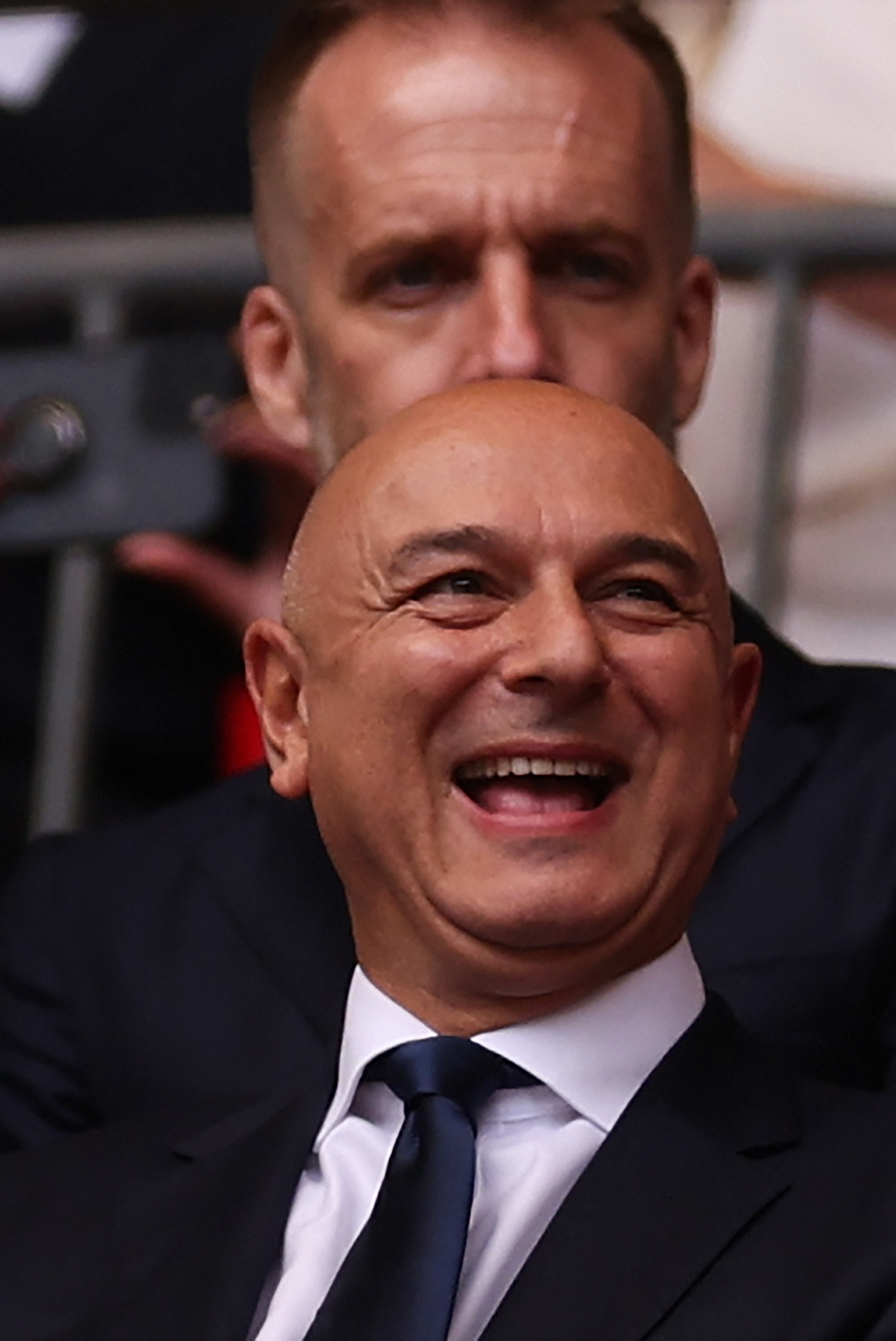
Sitting behind that calculator for almost 25 years was Daniel Levy.
He became chairman in 2001 and built a reputation as one of the toughest negotiators in football – buying for value, selling for top dollar and treating every pound as if it mattered because, to him, it clearly did.
And it worked, in its own way.
Tottenham went from a club scrapping to establish themselves among England’s better sides to a regular fixture in the Champions League.
The football wasn’t bad either. Gareth Bale arrived as a teenager in 2007 and became one of the best players on the planet.
Luka Modrić, Christian Eriksen, Mousa Dembélé, Jan Vertonghen, Toby Alderweireld and Harry Kane all followed.
Under Mauricio Pochettino, Spurs stopped just competing and started really competing – finishing second in the Premier League in 2016-17 before reaching the Champions League final in 2019.
And yet the same complaint followed Levy through almost every one of those years: he doesn’t spend enough.
Here’s where it gets interesting.
While supporters were fixated on the transfer market, Levy was building something considerably bigger.
The move from White Hart Lane into the new Tottenham Hotspur Stadium in 2019 cost around £1 billion (about RM5.47 billion) – not just a football ground, but a venue designed to host NFL games, concerts and other revenue-generating events.
There was something almost absurd about the contrast: the club wouldn’t spend £60 million (about RM329 million) on the midfielder fans wanted, but it would spend a billion pounds on one of the most technologically advanced stadiums in the sport.
To Levy’s credit, that stadium became a genuine asset and part of a much bigger vision of turning Spurs into a global sports and entertainment business.
The problem, of course, is that supporters don’t sing songs about revenue streams.
They sing about trophies.
Tottenham’s biggest missed opportunity arrived when they got closest to winning one – a 2-0 defeat to Liverpool in the 2019 Champions League final in Madrid.
Instead of becoming a springboard, the years that followed became a revolving door: José Mourinho in and out, Nuno Espírito Santo in and out, Antonio Conte in and out.
It wasn’t simply about money
This is where the “Levy wouldn’t spend” narrative starts to break down, because Tottenham did spend – just unevenly, and rarely with conviction.
In 2019, they broke their transfer record for Tanguy Ndombele at around £55 million (about RM301 million). Three years later, roughly £60 million (about RM329 million) went on Richarlison.
Under Ange Postecoglou, the approach shifted again: James Maddison for £40 million (about RM219 million), Micky van de Ven for around £34-43 million (about RM186-236 million), Brennan Johnson for £47.5 million (about RM260 million) and, the following summer, £65 million (about RM356 million) on Dominic Solanke.
That’s not a club hiding its wallet.
It’s a club spending real money without always spending it on the right thing at the right moment – and there’s a meaningful difference between the two.
You can spend £50 million and shop intelligently. You can spend £70 million and get it completely wrong. Football doesn’t come with a receipt guaranteeing a return.
Then, in 2025, it finally happened.
Tottenham beat Manchester United 1-0 in the Europa League final in Bilbao, securing their first trophy since the 2008 League Cup and their first European title in 41 years.
Sixteen days later, Postecoglou was sacked.
Just over three months after that, Levy left too – stepping down as chairman on Sept 4, 2025, and ending almost 25 years in the role.
The man who had become the symbol of Tottenham’s inability to win anything walked away right after they had finally won something.
You couldn’t write it better.
Life after Levy
But what happened next is the part that actually explains the club.
If the problem really was Levy – too cautious, too calculating, too reluctant to gamble – then removing him should have produced clarity.
Instead, it produced chaos.
Thomas Frank succeeded Postecoglou and lasted barely six months before being sacked in February 2026 after a run of two wins in 17 league games dragged Spurs into a relegation fight.
Igor Tudor took over on an interim basis but couldn’t arrest the slide.
Roberto De Zerbi arrived at the end of March with the club in genuine danger of the drop and eventually steadied things enough to keep Tottenham in the Premier League.
Four head coaches in a little over a year.
That’s not the profile of a club that suddenly found its ambition once the cautious chairman left. It’s the profile of a club that swapped one kind of uncertainty for another.
Which brings us to this summer.
Under De Zerbi, Tottenham finally went shopping properly.
Sandro Tonali arrived from Newcastle for a fee that could rise to £100 million (about RM548 million), while Mateus Fernandes joined from West Ham for £85 million (about RM466 million). Savio arrived from Manchester City, with Omar Marmoush following from the Etihad on an initial loan.
By the time the window closed, Spurs had spent more than £300 million (RM1.64 billion).
This is, on paper, exactly what supporters spent years asking for: a chairman gone, a manager backed and a wallet finally opened without hesitation.
And then football happened.
Tottenham opened the season with a 3-0 defeat at Brentford and followed it four days later with a 2-0 home loss to Newcastle – the very club they had just raided for their record signing.
Two games, no goals, five conceded.
What is the Tottenham way?
So the question isn’t really whether Tottenham are spending enough anymore. Clearly they are.
The real question is whether spending was ever actually the issue, or whether it was always a symptom of something else: a club that has never been able to settle on one version of itself and stay there long enough to find out if it works.
Levy’s contradiction was that he built a genuinely modern football institution – commercially, financially and structurally – while never fully backing the football side to match it.
Bale, Modrić, Son and Kane all passed through under his watch. Spurs reached a Champions League final and eventually won the Europa League. But the pitch never quite matched the ambition of the building around it.
Now, with Levy gone, Tottenham appear to be running the opposite experiment: forget the calculator, spend more than £300 million, buy the names, hand the manager the tools and hope the football follows.
Except De Zerbi is already the fourth man to try since the old regime began to unravel, and the early signs suggest swapping caution for cash doesn’t automatically solve a problem that was never really about money in the first place.
Go back to where this started – the clubs you understand at a glance.
Money. Pressing and passion. Spending they probably shouldn’t. Patience that might eventually pay off.
Every one of those clubs, for better or worse, knows what it’s trying to be.
Tottenham still don’t, and more than £300 million hasn’t changed that.
If anything, it’s made the question louder: is this finally the new Tottenham, committing to something and seeing it through – or is this still the old Tottenham, just finding a more expensive way to avoid answering the question at all?
Roshan, signing out!