MIRI: Artificial intelligence (AI), data analytics and precision farming technologies will play a central role in transforming Sarawak’s agriculture sector as the state seeks to unlock the full potential of its vast peatlands and strengthen food security.
Premier Datuk Patinggi Tan Sri Abang Johari Tun Openg said while the successful perennial rice pilot project marked an important milestone, its long-term success would depend on combining scientific research with digital technologies capable of monitoring crops, soil conditions and weather patterns in real time.
He also said modern agriculture is no longer solely about planting and harvesting but increasingly relies on data-driven decision-making.
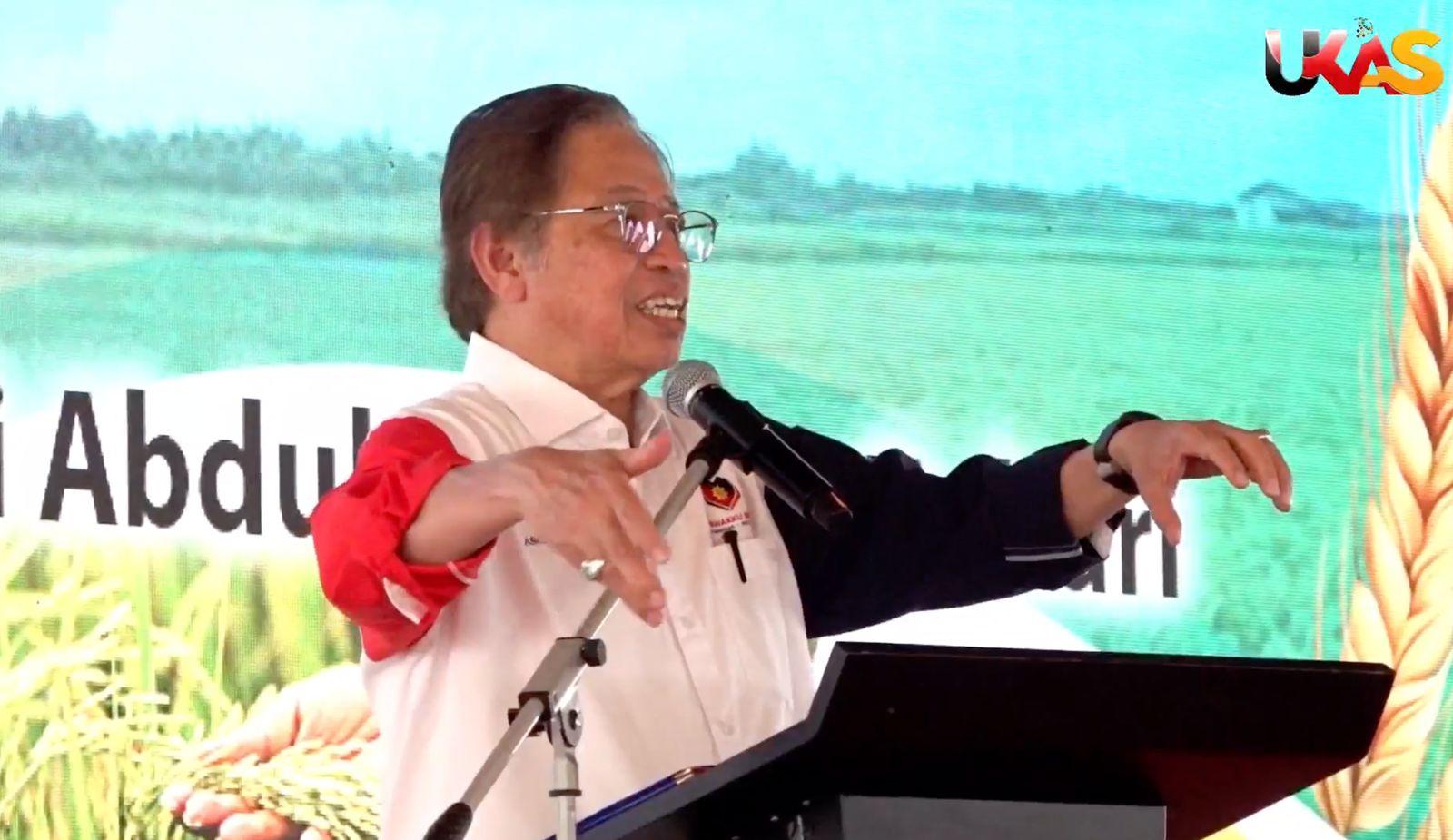
“The future is through what we call smart agriculture. That is where artificial intelligence as well as data analytics is important,” he said when officiating at the Harvesting Ceremony of the Perennial Rice Pilot Project in SK Kuala Baram 2 today.
Abang Johari explained that digital technologies could be used to collect and analyse data on climate conditions, soil structure and water levels, enabling scientists and farmers to better understand how crops perform under different environments and respond more quickly to changing conditions.
He said researchers would also be able to monitor crop growth remotely, allowing farming practices to be continuously refined based on real-time information collected from different cultivation sites across Sarawak.
“Among the factors that require close monitoring are flooding patterns, particularly in low-lying peatland areas. However, floods in Sarawak are generally temporary and often subside within days or weeks, unlike prolonged flooding experienced elsewhere.
“If the crops can withstand that situation, then flooding is no longer a problem,” he said,
Abang Johari also pointed to Sarawak’s favourable climate as one of the state’s competitive advantages for agricultural research, noting that temperatures are generally moderate throughout the year and supported by adequate rainfall.
Combined with digital monitoring technologies, he said these natural conditions create an ideal environment for developing new farming systems that are both productive and climate resilient.
“The perennial rice project demonstrates how technology can help overcome challenges that once limited agricultural development on peatlands, thus opening up opportunities to cultivate land previously regarded as unsuitable for farming.
“As we continue investing in research, digitalisation and innovation, we can transform agriculture just as we have transformed other sectors.
“Therefore, science and technology will remain key drivers of Sarawak’s efforts to build a more productive, sustainable and resilient agricultural industry,” he added.