Part 2: From river menace to green gold
DALAT: At first light, as the quiet waters of Batang Oya begin to stir, villagers along the riverbanks are already familiar with a sight that has become part of their daily lives – thick patches of water hyacinths drifting with the currents.
Known locally as ‘terparok’, the fast-growing aquatic plants have long been a challenge for communities in Dalat. What appears as a harmless green carpet floating on the water has, over the years, become a serious problem, blocking waterways, disrupting boat movements and affecting villagers who depend on the river as their main route of transportation.
For generations, the river has been more than just a waterway. It is a lifeline connecting villages, farms and livelihoods. Villagers still use boats daily, including those travelling to sago plantations and other areas upriver.
But as ‘terparok’ continue to multiply, navigating the river has become increasingly difficult.
During periods of heavy rain and flooding, large amounts of the plants drift downstream, gathering along riverbanks, bridges and narrow passages.
Previously, removing the weeds often meant lifting them out of the river and leaving them along the banks — a temporary solution to a recurring problem.
From river nuisance to valuable resource
Today, however, the same plant that once caused frustration is being given a second life.
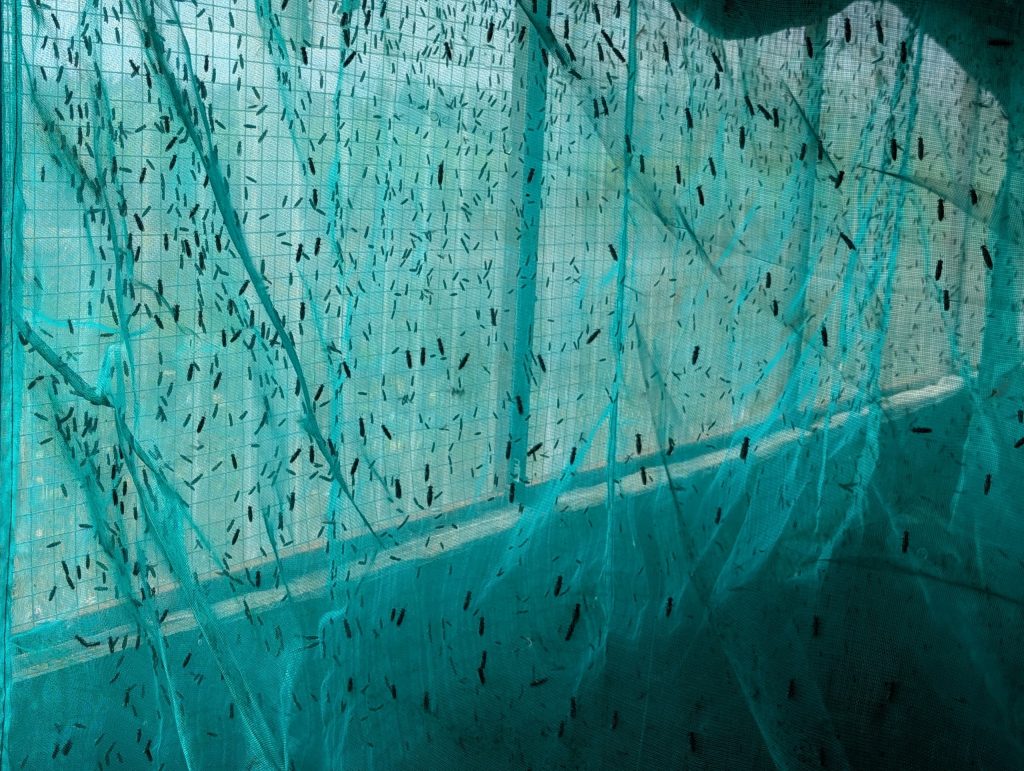
Through an innovative community initiative by Koperasi Dalat Lestari Bhd, water hyacinths are being transformed into an organic fertilizer and animal feed using Black Soldier Fly (BSF) technology.
The tiny insect, often overlooked and misunderstood, has become an unexpected solution to a major environmental challenge.
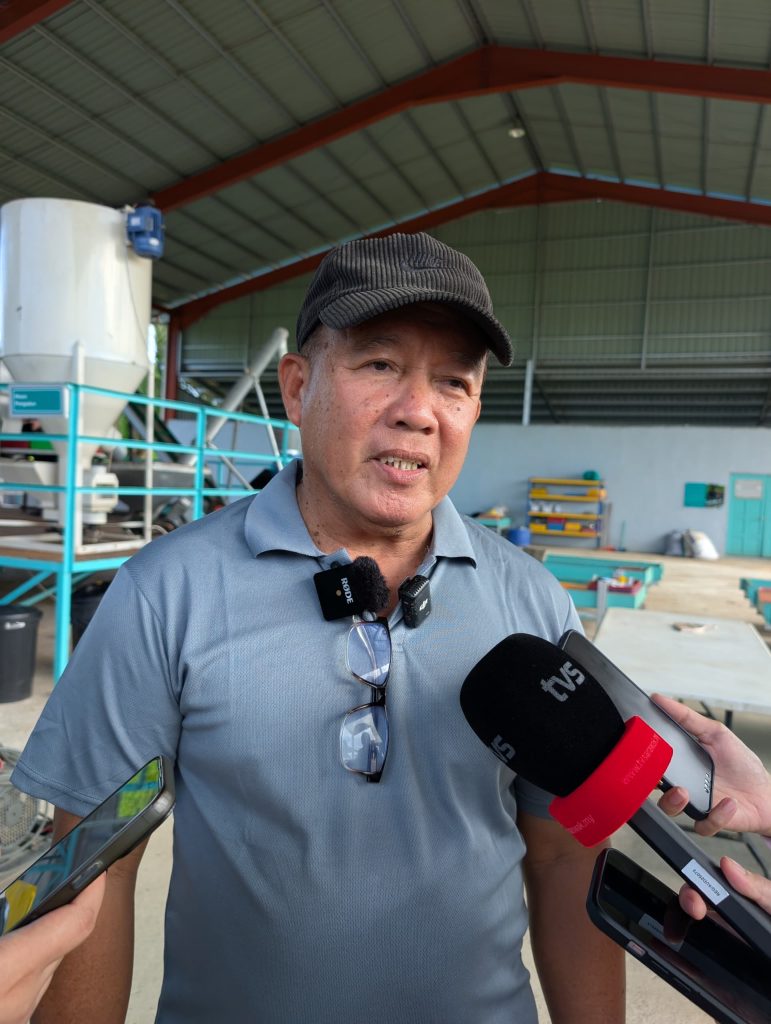
Chairman of Koperasi Dalat Lestari Bhd, Muhammad Aznie Abdullah, said the idea emerged from the need to find a sustainable way to manage the ‘terparok’ problem while creating economic opportunities for the local community.
“The presence of ‘terparok’ has caused major problems for villagers who depend on the river for their daily movement. That was why we looked for a solution that could turn this problem into something useful,” he said.
Turning ‘terparok’ into green gold
The cooperative began exploring BSF technology after discussions with Eddie Leong, who introduced the method of breeding the insects and converting organic waste into valuable products.

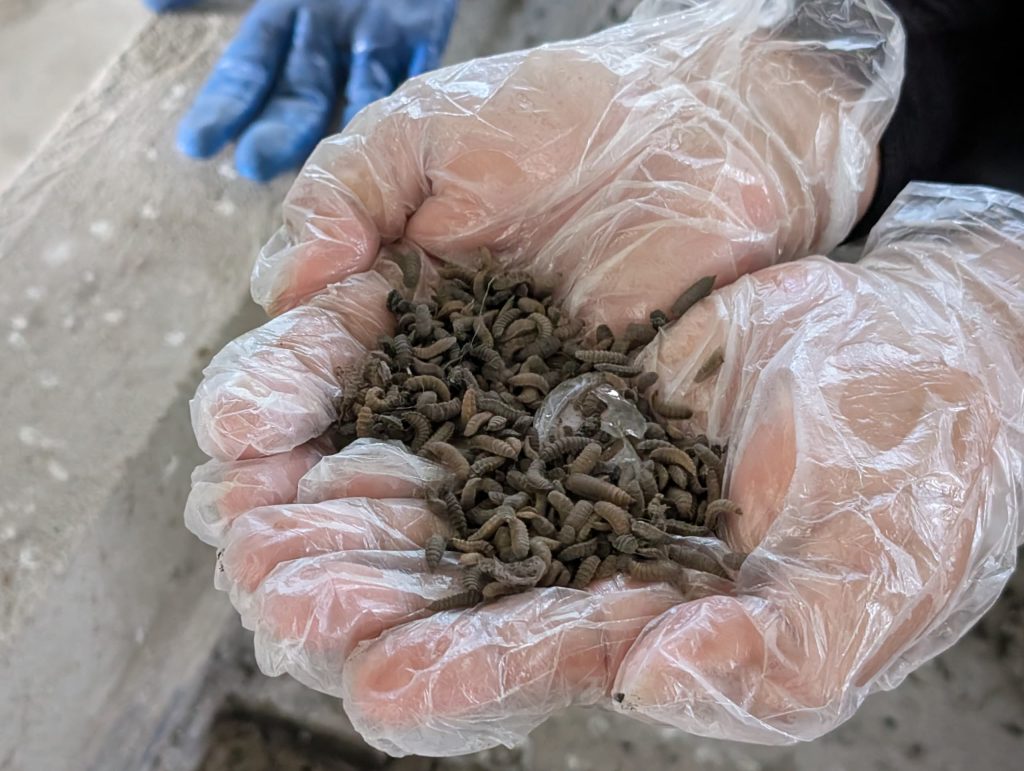
Unlike common houseflies, black soldier flies are considered beneficial insects. Their larvae are efficient decomposers, capable of consuming organic materials such as plant waste and converting them into nutrient-rich by-products.
At the Dalat processing centre, the cycle begins with villagers collecting ‘terparok’ from the river. The cooperative purchases the plants from villagers at 40 sen per kilogramme, providing them with additional income while helping to keep the waterways clear.
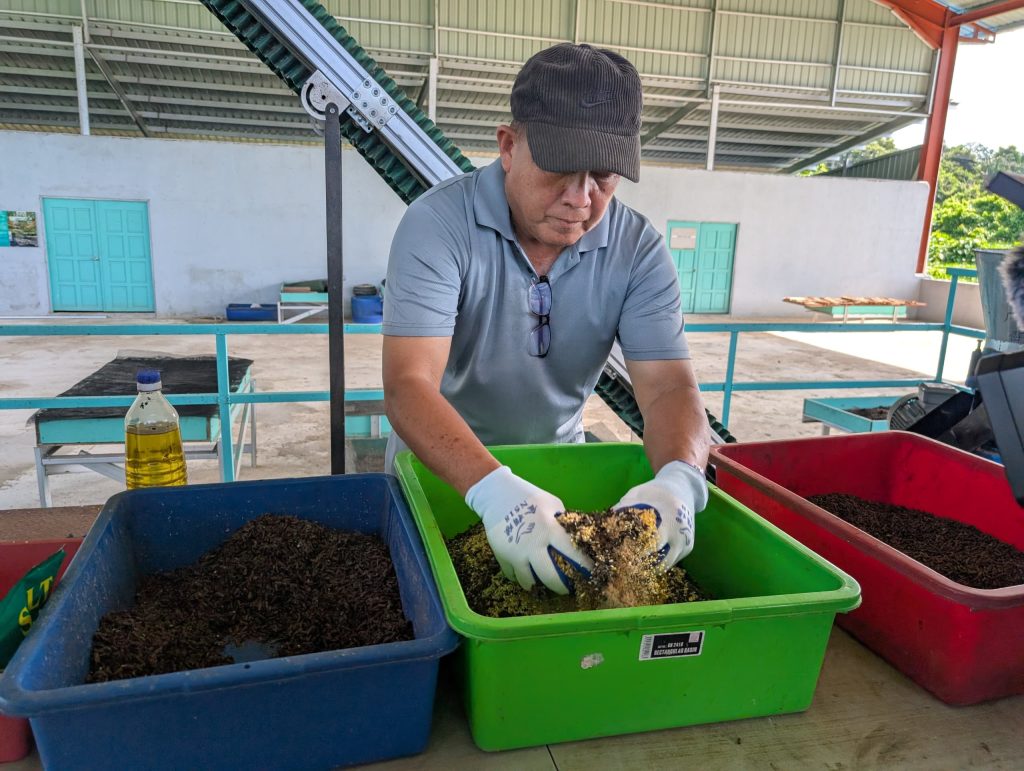
Once delivered, the water hyacinths are cleaned, shredded and mixed with palm oil mill waste before being used as feed for the black soldier fly larvae.
The larvae then consume the mixture and produce frass, a nutrient-rich organic material that is processed into a fertiliser.
The mature larvae are also harvested and dried to become protein-rich feed for chickens and fish. From a single environmental problem, the project has created two valuable products.
“So far, the response from the public to our products has been very good. The feedback has been encouraging. Our organic fertiliser has shown good results, especially for vegetables, pepper plants and ornamental flowers because it contains no chemical additives.
“Our goal now is to increase production so that we can reach a wider market,” Aznie said.
Growing demand, bigger ambitions
Currently, the cooperative produces between 300 and 500 kilogrammes of fertiliser each month, equivalent to around 100 to 200 packs of its three-kilogramme product.
The fertiliser is sold at RM10 for a three-kilogramme pack, while a smaller 300-gramme pack costs RM2.
Although demand has been encouraging, production remains limited. The cooperative has received enquiries from outside Dalat, including from the oil palm sector, but has yet to expand due to its current production capacity.
“Our target is to reach five tonnes of production per month. It is not impossible, but we need to work harder and increase our workforce,” he said.
Currently, three workers manage operations at the processing centre.
Learning to farm millions of tiny helpers
Among them is 53-year-old Rina Asin, who never imagined she would one day be involved in insect farming.
A former full-time housewife, Rina began with no knowledge of BSF technology.
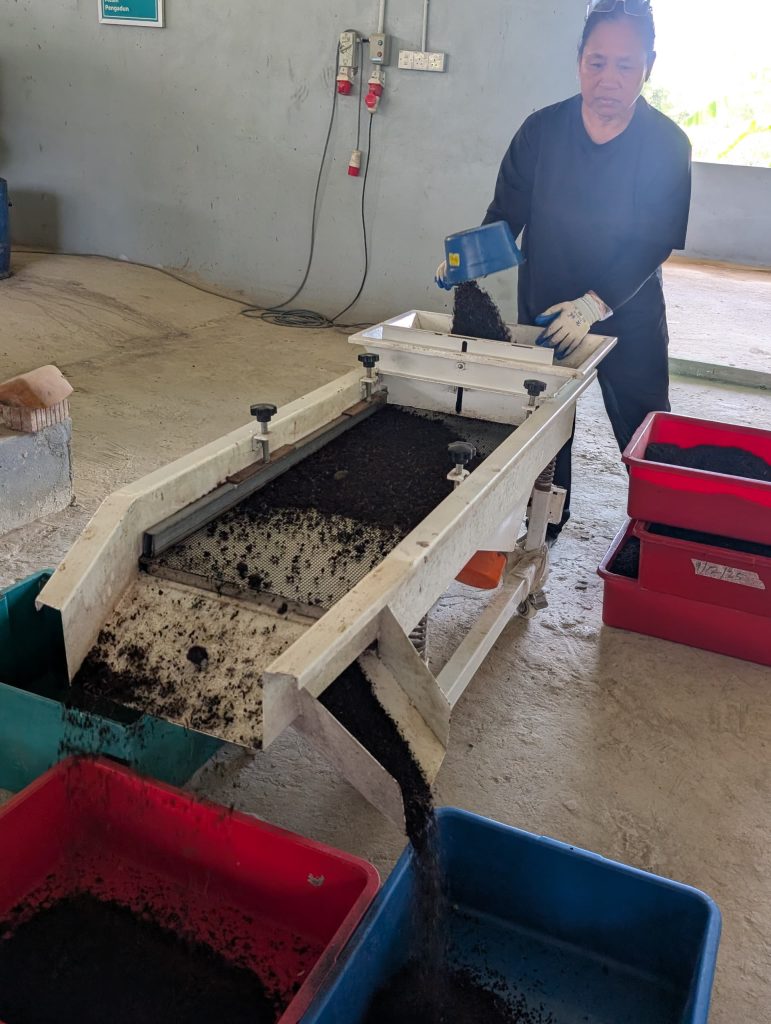
She joined the Koperasi Lestari Dalat Bhd after attending a three-day training programme in her village before receiving further guidance from experienced workers at the processing centre.
“I started from zero. I did not know anything about this before. Everything I learned came from the training and from those already working here,” she said.
Her daily routine now involves preparing feed for the larvae, collecting fly eggs and monitoring the breeding process.
The shredded ‘terparok’ is mixed with palm oil mill waste and other organic materials, including leftover food such as rice and bread, before being fed to the larvae.
She explained that egg production directly influenced fertiliser output.
“When there are more flies and more eggs, we can produce more fertilisers,” she said.
Beyond the processing centre, Rina has also witnessed the project’s impact on the river.
“When ‘terparok’ accumulate, they become dangerous. They obstruct boats, affect engines and can even damage structures such as bridges. They also become places where crocodiles can hide,” she said.
Cleaning the river, earning an income
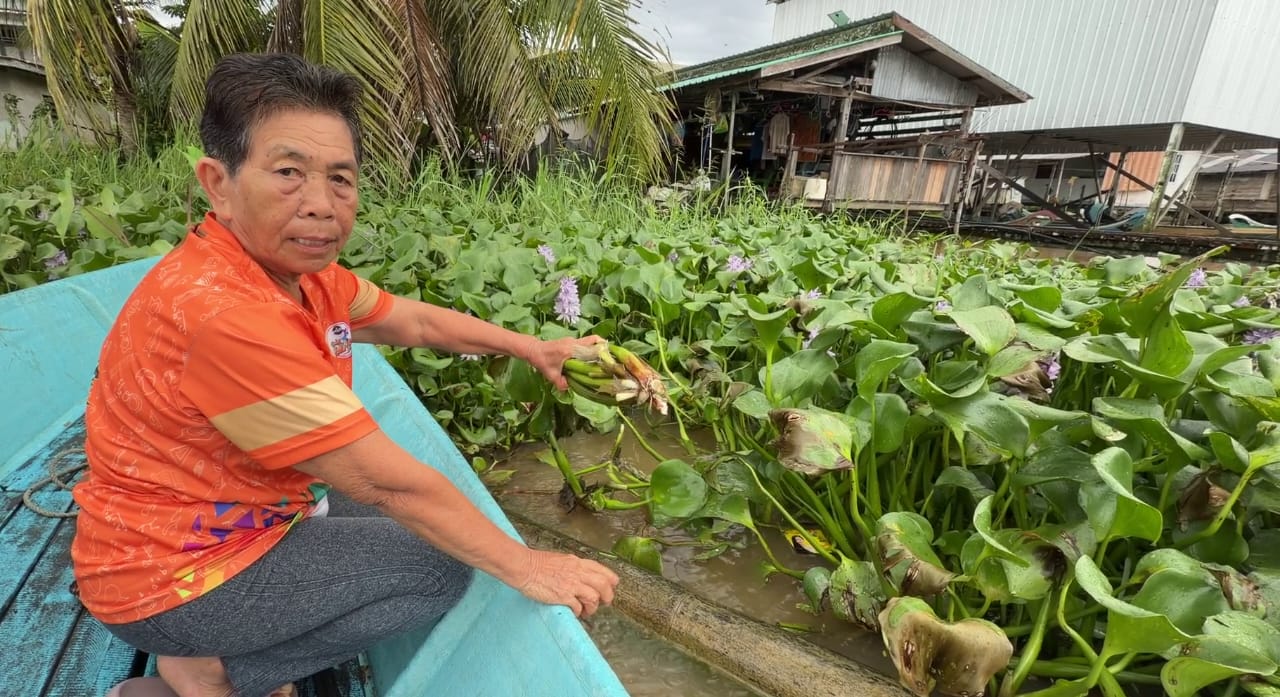
For villagers like 53-year-old Nurkhalida Abdullah from Kampung Kekan, the project has created a new source of income while contributing to cleaner waterways.
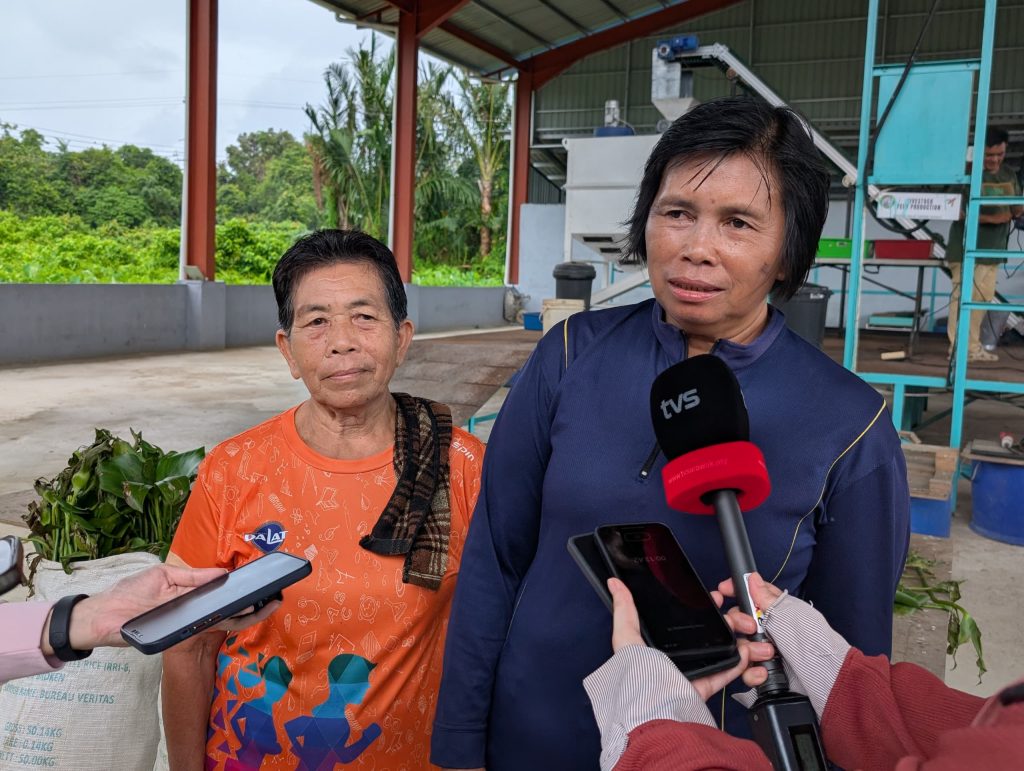
Twice a week, Nurkhalida and her friends, Bedah Pak, 72, collect water hyacinths floating near their village.
Rather than travelling far upriver, they gather whatever drifts nearby before storing it for delivery to the cooperative.
“Sometimes we do not need to go far. If the ‘terparok’ float past our village, we collect them and keep them ready,” she said.
Each collection can amount to between 80 and 100 kilogrammes. At 40 cent per kilogramme, consistent collections can generate several hundred ringgit in additional monthly income.
However, harvesting ‘terparok’ involves more than simply pulling the plants from the river.
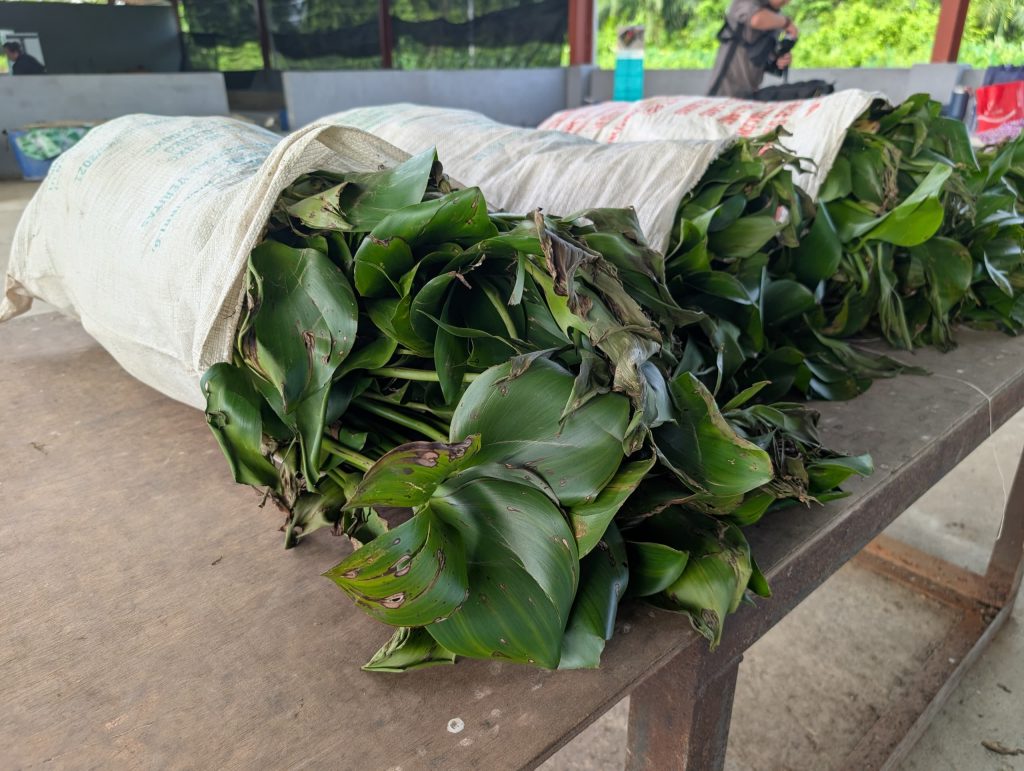
Villagers must remove the roots, discard damaged leaves and thoroughly wash the stems before they are accepted by the processing centre.
“They only accept clean ‘terparok’. We remove the roots, remove damaged leaves and wash everything before packing them,” Nurkhalida explained.
Looking back, she recalled a time when thick mats of the invasive plants made river travel difficult, particularly for villagers commuting to their farms.
“When there are too many ‘terparok’, boats cannot move easily. People have to steer around them to avoid getting stuck,” she said.
Today, although the weeds have not disappeared completely, she believes the project has made a noticeable difference. Instead of becoming wastes, the plants have become valuable resources.
A model for sustainable rural development
For Dalat, the black soldier fly has become more than just an insect. It symbolises a new approach to tackling environmental challenges – one where waste is transformed into a resource, communities gain new economic opportunities and nature itself becomes part of the solution.
What began as a battle against an invasive aquatic plant has evolved into a story of innovation, resilience and community cooperation.
In the quiet corners of Dalat, millions of tiny larvae are proving that even the smallest creatures can play a significant role in building a greener and more sustainable future.
The Organic Fertiliser Processing and Black Soldier Fly (BSF) Breeding Farm is a collaborative initiative between Petroliam Nasional Bhd (PETRONAS) and the Sarawak Government, aimed at empowering rural communities through sustainable agriculture and environmental innovation.
The socio-economic programme focuses on converting organic waste into value-added products through BSF breeding and organic fertiliser production while creating new income-generating opportunities for villagers and promoting responsible waste management.
Aznie described the initiative as a game changer for the local community, saying it had not only provided a practical solution to Dalat’s long-standing water hyacinth problem but had also opened new economic opportunities for residents.
“On behalf of Koperasi Dalat Lestari Bhd and the people of Dalat, we are deeply grateful for this initiative. We thank Minister for Women, Early Childhood and Community Wellbeing Development, Datuk Seri Fatimah Abdullah, for her vision in introducing this project, and PETRONAS for sponsoring the construction of the facilities and providing the machinery needed to operate the centre.
“We are committed to making full use of these facilities to ensure the project continues to benefit the community and contributes to Dalat’s sustainable development,” he said.