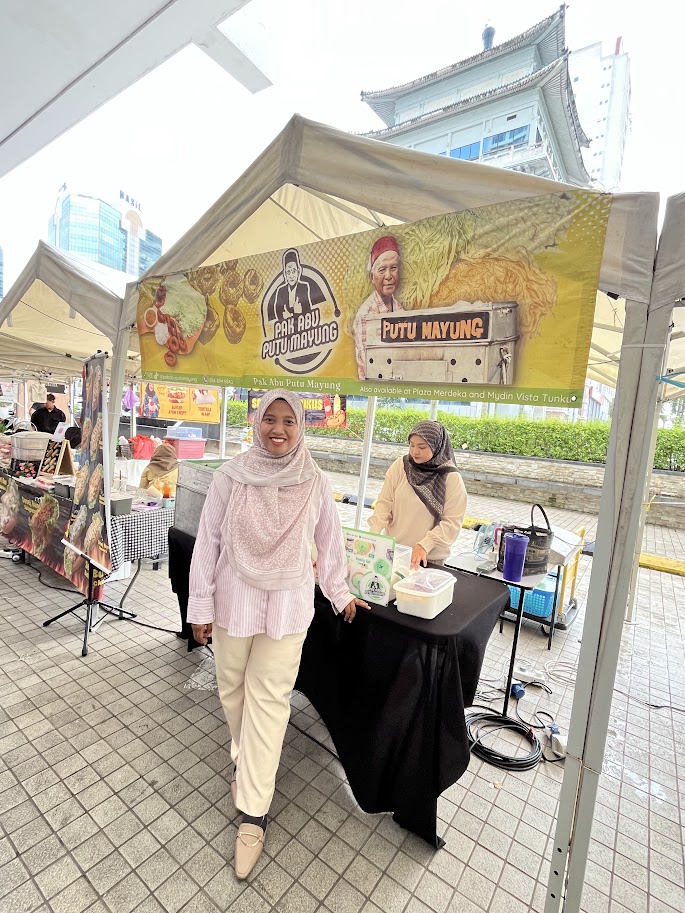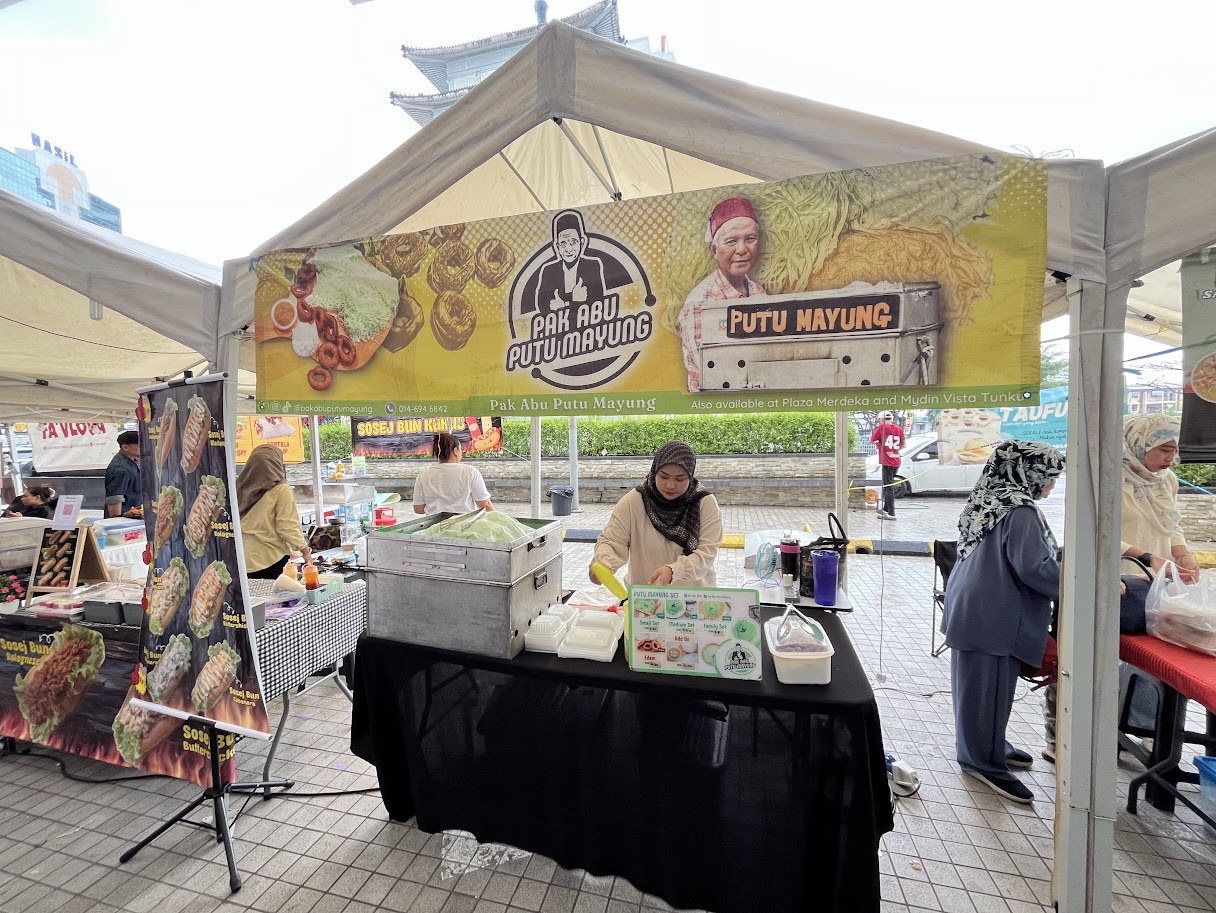
IN the heart of Petra Jaya’s bustling malls, one family’s traditional food business is quietly drawing steady crowds. Their specialty? The timeless spring hopper, known locally as putu mayung.
The name Pak Abu Putu Mayung stands out as the best putu mayung seller in Kuching.
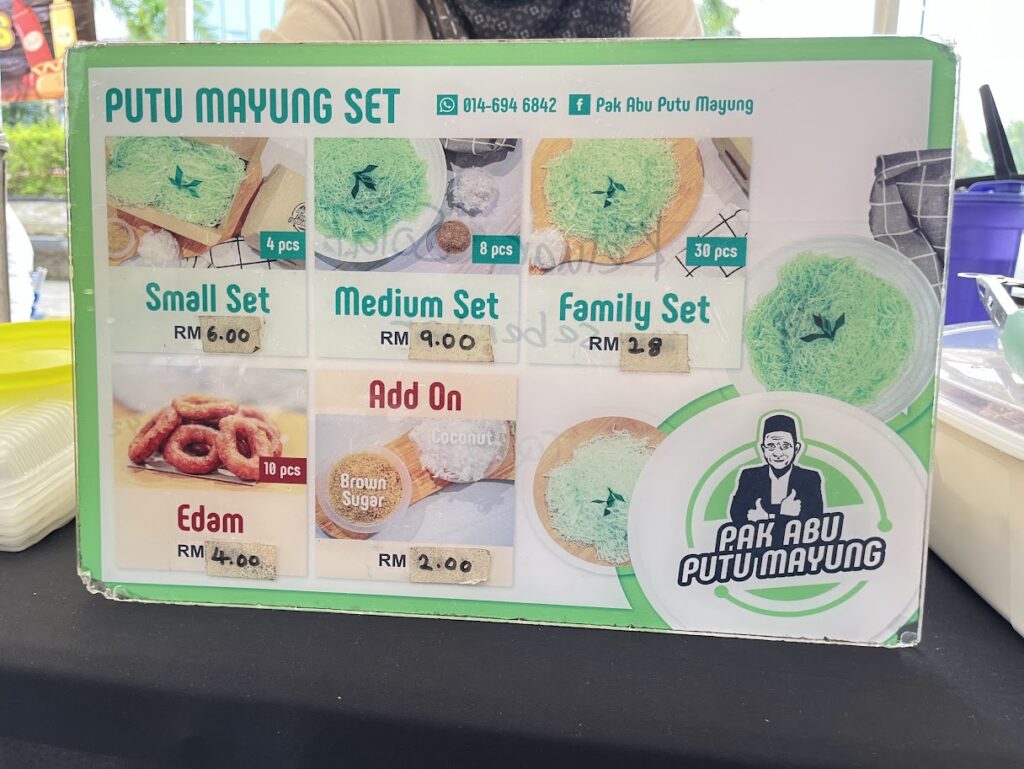
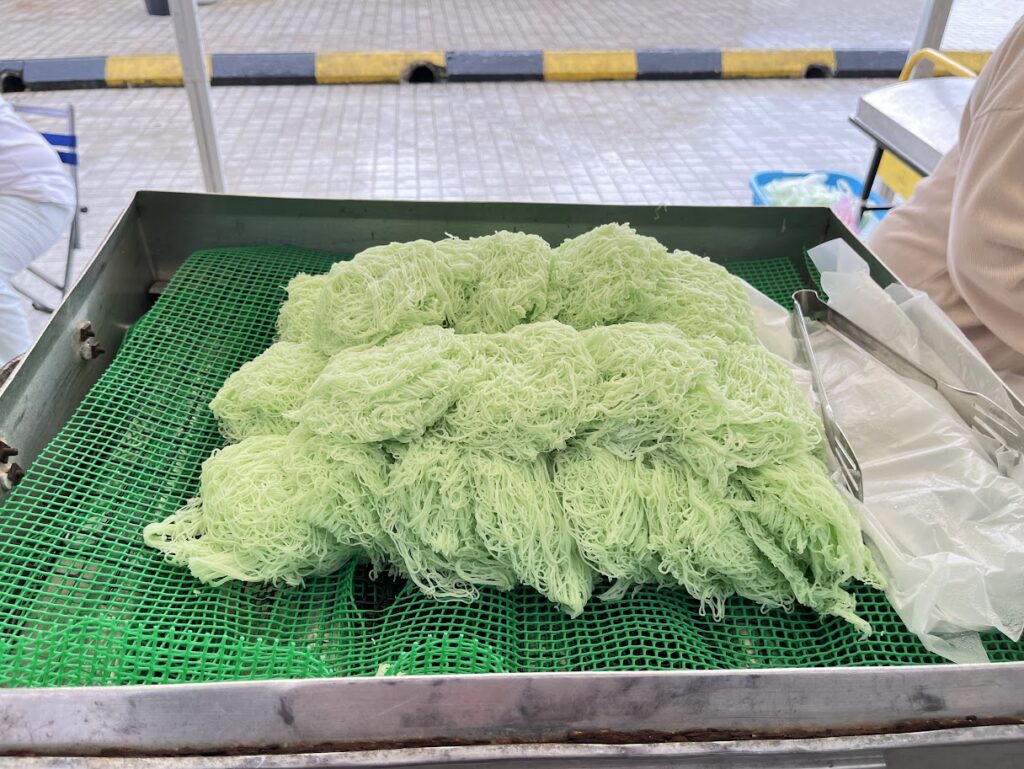
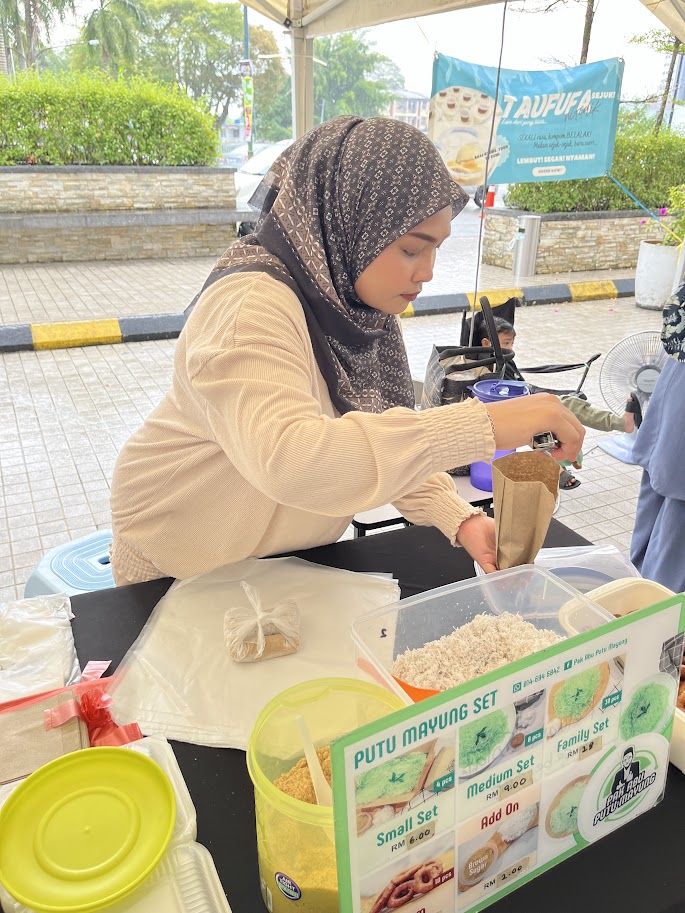
Made from fine rice flour pressed into noodle-like strands and steamed into delicate coils, putu mayung is typically served with freshly grated coconut and soft brown sugar.
Although its roots are South Indian, it has become a comforting and nostalgic treat for many.
For 27-year-old Siti Fatonah Abu Bakar, preserving this traditional recipe is more than just a job; it is a continuation of her family’s legacy.
“My parents started selling putu mayung sometime between 2005 and 2007,” she said.
“Back then, I was just helping out when needed. My mother handled the preparation, and my father sold it around town on his motorcycle, especially at India Street,” she added.
Fatonah officially took over the business around 2019, shortly before the COVID-19 pandemic disrupted daily life.
At the time, the family had no storefront, only a few regular selling spots at night markets and roadside stalls.
“The business really came from my father’s persistence. He learned the recipe from others and spent years improving it. There were many failures at the start. Some batches were too hard, others lacked flavour.
“But he kept trying until he found the right texture,” she explained.
The result is a soft and fragrant putu mayung, known for its lightness and balance.
“Our customers always say they love how it melts in the mouth. The brown sugar we use is smooth and not gritty. The grated coconut is fresh, white, and lightly salted to enhance the flavour and helps it last longer,” she said.
Though the recipe appears simple, each step is crucial. The base ingredients are just rice flour, pandan leaves, hot water and cold water.
Pandan leaves are blended with water to infuse a natural aroma. The flour is then mixed with both types of water in carefully measured amounts to achieve the right consistency.
Shaping the dough is where the magic happens. At first, the family used a hand-press mould, similar to what is used for making murukku. But as demand increased, her father had a machine custom-made in Kuala Lumpur.
“It can hold around two and a half kilograms of dough at once, which helps us produce faster and in larger quantities. We have been using this machine since about 2009 or 2010,” she said.
When COVID-19 hit, everything changed. Outdoor selling was restricted, and night market stalls were no longer allowed to operate.
“We had to make a decision. So, we used our savings to open kiosks inside shopping malls. That was the only way to keep the business going,” she said.
Today, they run kiosks at Mydin Petra Jaya and Ecomall Samariang, open daily from 10:30 am to 9:30 pm.
Fatonah oversees the business full-time.
“I monitor the production, staff and daily operations. It is my main job now, and I am proud to continue what my parents started,” she said.
During Ramadan, the family expands their reach by setting up stalls at three major bazaars: Kubah Ria, Stutong and Sukma.
The preparation takes place in one central kitchen before being distributed to the various locations. Hired staff are stationed at each site to handle sales.
“We make sure we maintain the same quality across all locations. People look for consistency, especially when it comes to traditional food,” she said.
One of their busiest periods is Hari Raya, when customers from the Indian Muslim community place orders for white, unsweetened putu mayung.
Instead of eating it with coconut and sugar, they enjoy it with curry instead.
“Every year we receive many Raya orders. It has become a tradition for some families, and we are happy to be part of their celebrations,” she said.
Despite the steady business, staying relevant in the age of viral snacks and modern food trends is a challenge.
“We are always competing with the latest food fads. That is why we try to participate in events and create content on social media to reach younger audiences,” she said.
Still, at the core of their success is the family recipe and the love passed down from one generation to the next.
Fatonah learned everything directly from her parents, especially her father who was the driving force behind the recipe’s evolution.
“No one else in the family knows how to make it. Just us. He tried many versions until he got it right, based on what people liked. He never gave up,” she said.
Now, she hopes to continue refining the business while staying true to its roots. Her goal is not just to sell food but to keep the tradition alive.
“To us, this is more than just a product. It is our family’s heritage. As long as people continue to enjoy it, we will continue to make it,” said Fatonah.