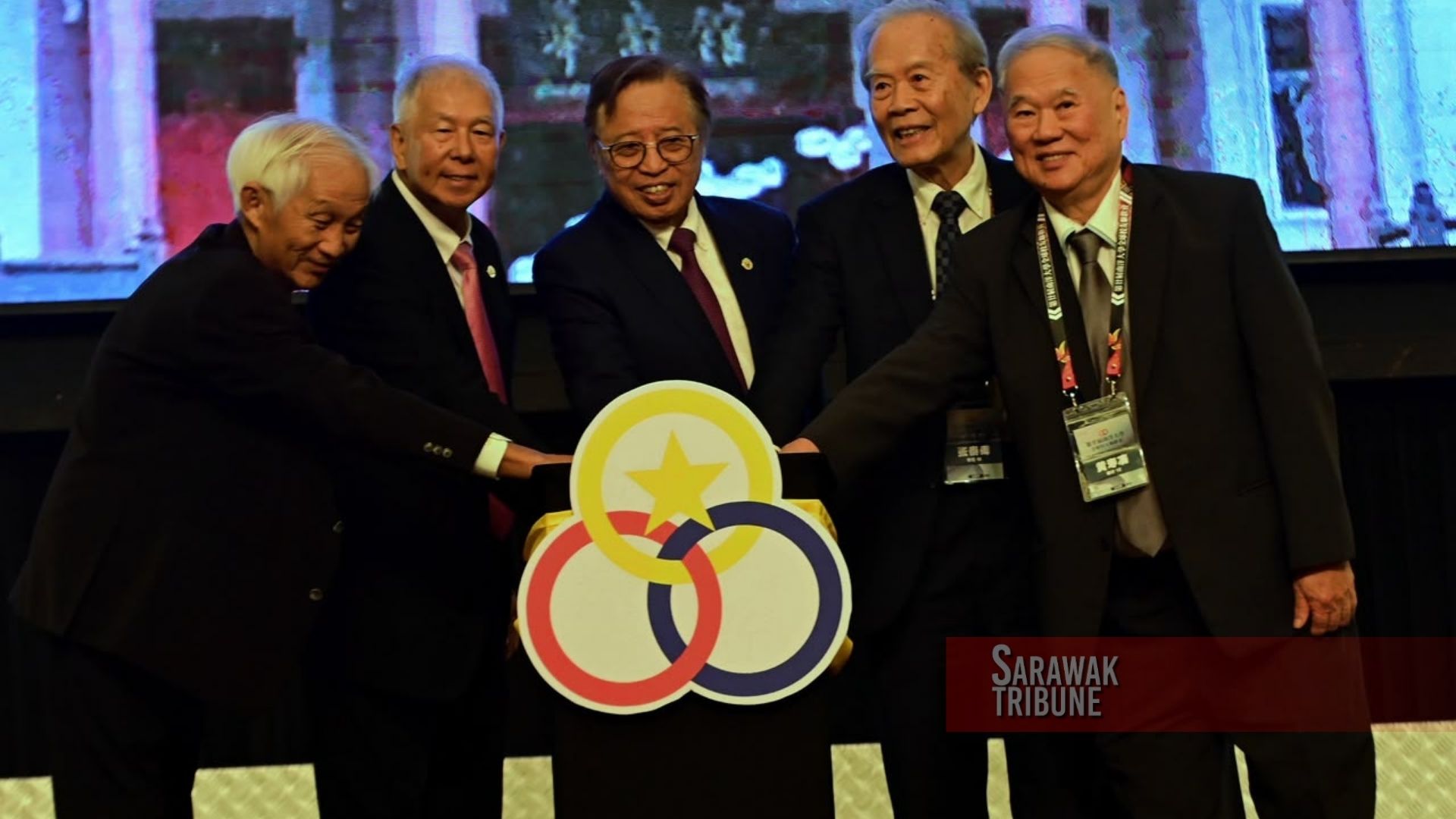
KUCHING: Recognising the Unified Examination Certificate (UEC) is essential to preparing Sarawak for the future, as graduates must be equipped with the language skills needed to compete in an increasingly global and trade-driven economy.
Premier Datuk Patinggi Tan Sri Abang Johari Tun Openg said failing to recognise the UEC would place future generations at a disadvantage, especially when many universities around the world already accept the qualification.
“It will be a waste if you don’t recognise the UEC because universities in other countries have recognised it, and you will deprive the future,” he said in his speech during the 20th Global Reunion of Nanyang University Alumni here last night (July 18).
Abang Johari said the Sarawak government’s recognition of the UEC reflects its strong emphasis on education and human capital development to support the state’s long-term economic growth.
While Bahasa Malaysia remains the national language and a symbol of national identity, he said proficiency in English and Mandarin has become increasingly important in today’s global economy.
“Our economy is export-oriented and we are a trading nation. Our survival depends on the market, and the market needs Mandarin.
“We export palm oil and liquefied natural gas (LNG) to China. As a businessman, you need to negotiate, and you must know the language. If you go to China and can speak Mandarin, you have already solved half the problem,” he said.
He added that relying solely on interpreters could create communication gaps during negotiations, while direct language proficiency would strengthen business relationships and expand market opportunities.
He also pointed out that many economies in Southeast Asia have significant Chinese business communities, making Mandarin an important language for regional trade and investment.
To further strengthen education, Abang Johari said the Sarawak government allocates RM10 million annually to Chinese schools, describing the investment as part of the state’s commitment to acquiring knowledge and developing a highly skilled workforce.
“Many Bumiputera and native students are now studying in Chinese schools because we want to gain knowledge,” he said.
The Premier said Sarawak’s economic transformation is driven by its abundant natural resources, including hydropower, solar energy, biomass and natural gas, which have positioned the state as a producer of renewable energy and value-added products such as methanol and ammonia.
He said these opportunities require a workforce equipped with multilingual skills and quality education to participate effectively in international markets.
He added that Sarawak is also investing heavily in higher education through its four state-owned universities namely Swinburne University of Technology Sarawak, Curtin University Malaysia, i-CATS University College and the University of Technology Sarawak (UTS).
He said eligible Sarawakians are able to pursue studies at these institutions under the state’s free tertiary education initiative, which aims to produce the skilled and knowledgeable workforce needed to drive Sarawak’s future development.
“Our schools, whether Chinese, mission or government schools, are the feeders that will produce the human capital we need.
“That is why the government is investing in education, because our future depends on knowledgeable and highly skilled Sarawakians,” he said.