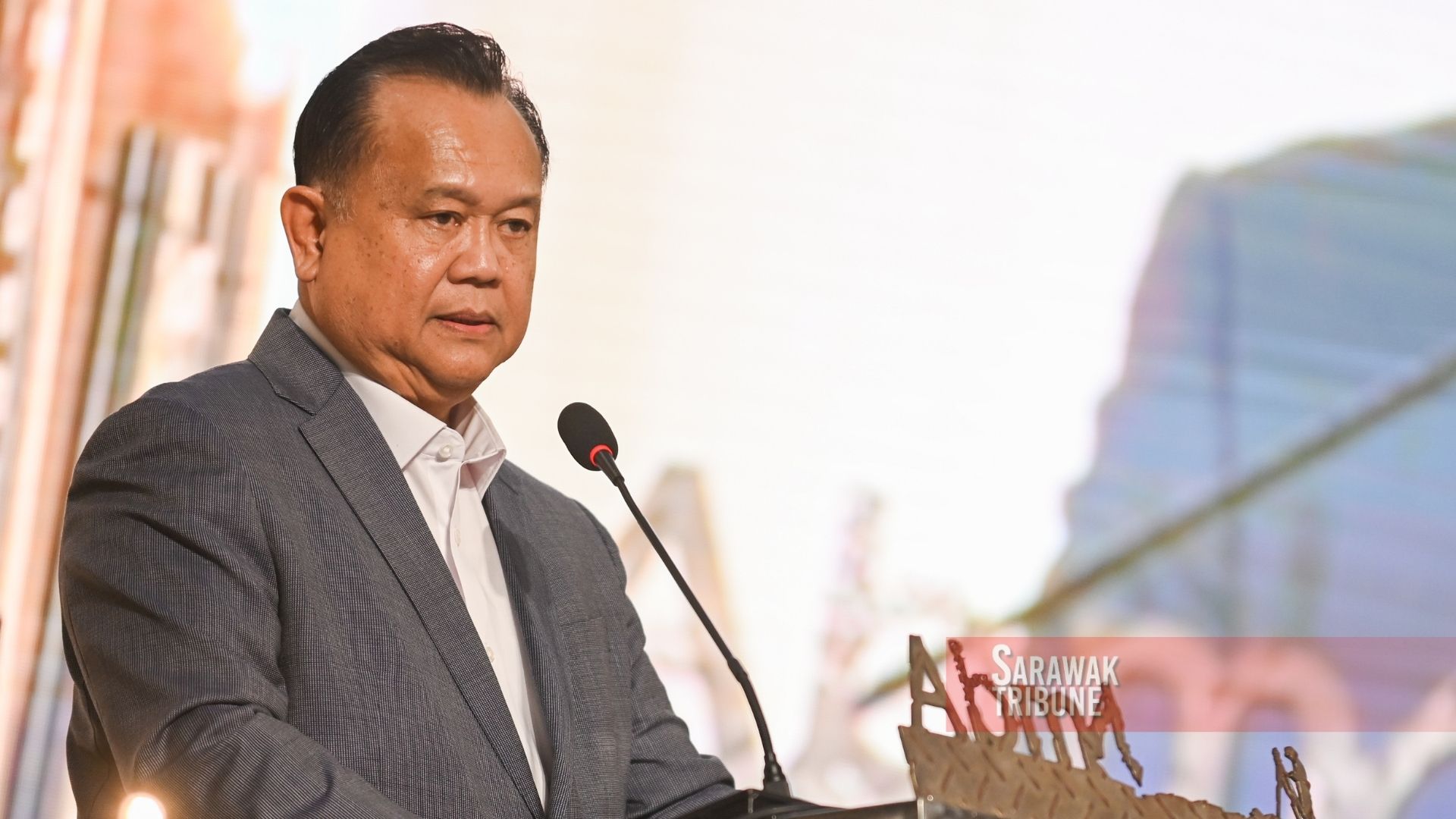
KUCHING: The Federal and Sarawak Governments are stepping up efforts respectively to build a more transparent and accountable construction industry by strengthening integrity, governance and professionalism across the sector.
Works Minister, Datuk Seri Alexander Nanta Linggi, affirmed that close cooperation is vital in strengthening a construction industry ecosystem founded on integrity, in line with efforts to deliver projects that meet safety and quality standards while providing the best value to the people.
“Integrity has now become a fundamental pillar in delivering quality, safe and sustainable projects.
“The success of a project should not be measured solely by the speed of its implementation, but also by its ability to be completed on schedule, within the allocated budget, in compliance with specifications, and carried out transparently and with accountability,” he said.
He stated this during the Sarawak Construction Industry Integrity and Excellence Day 2026 (IECONS 2026) held at Convention Centre CIDB here today.
Nanta asserted that the construction industry involves substantial investments and numerous stakeholders, making it essential that every decision is made transparently and every resource is managed responsibly to ensure good governance.
He said that within the Environmental, Social and Governance (ESG) agenda, governance serves as the foundation that supports environmental protection, social well-being and sustainable development.
Nanta, who is also the Member of Parliament for Kapit, said the Works Ministry remains committed to strengthening a culture of integrity in line with the National Anti-Corruption Strategy (NACS) 2024–2028.
“This is being achieved through the implementation of the Anti-Bribery Management System (ABMS), strategic collaboration with the Malaysian Anti-Corruption Commission (MACC), strengthening of Integrity Units, and the implementation of the No Gift Policy,” he added.
He said the Construction Industry Development Board (CIDB) also plays an important role in expanding the implementation of the ABMS among contractors and strengthening governance throughout the construction industry’s value chain.
“However, integrity is not solely the responsibility of contractors. It also involves procurement officers, consultants, suppliers, project supervisors, implementing agencies, regulatory bodies and decision-makers.
“Efforts to prevent corruption should focus not only on enforcement but also on strengthening systems that reduce opportunities and loopholes for misconduct,” he said.
He expressed hope that IECONS 2026 would reinforce industry players’ commitment to preventing corruption, abuse of power, false claims and unethical practices while strengthening cooperation between the Federal Government, the Sarawak Government, CIDB, enforcement agencies and industry stakeholders in building a more professional, high-quality and trusted construction industry.