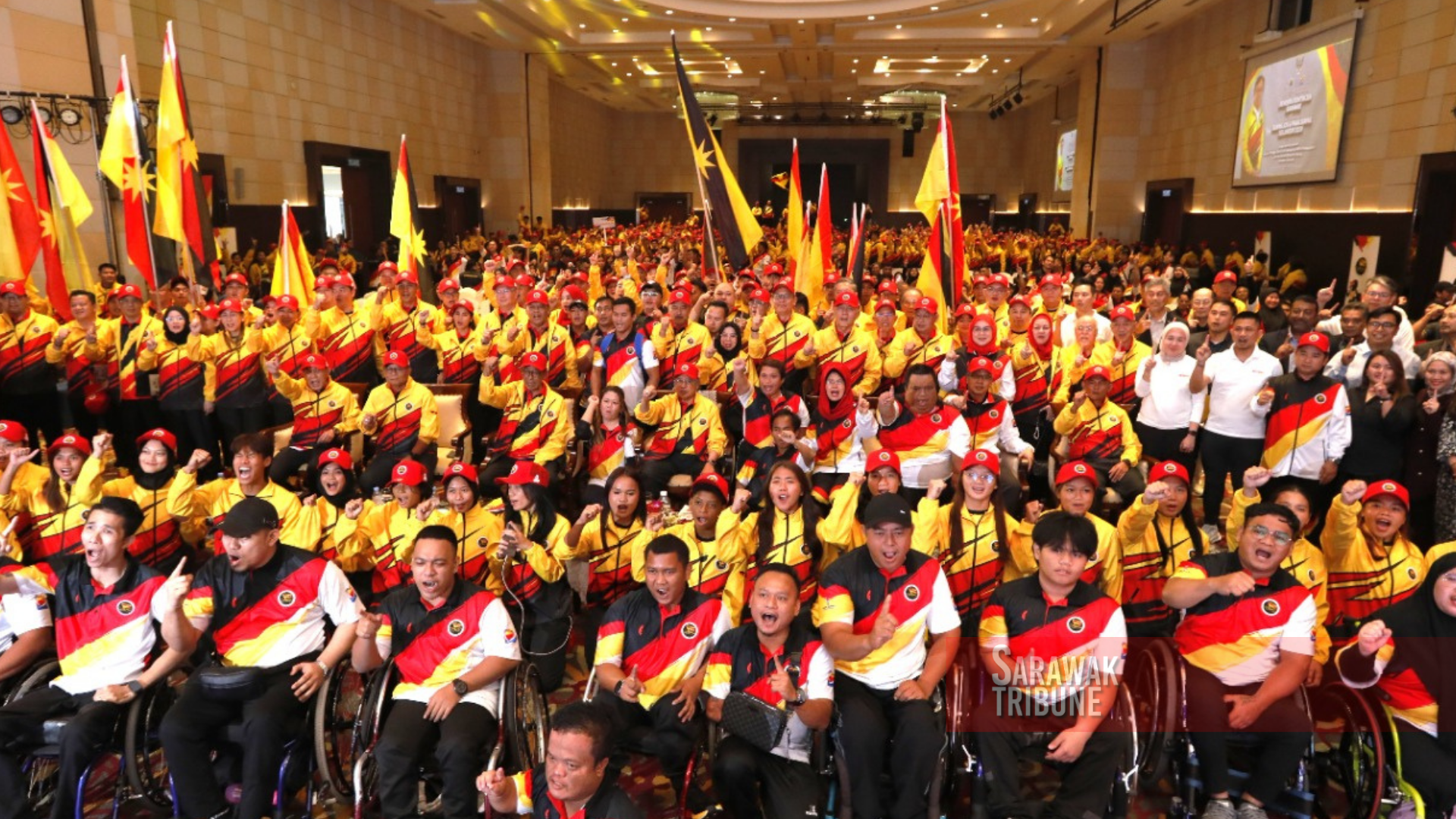
KUCHING: Sarawak must prepare for major global shifts, including climate change, technological disruption and rising inequality, as early as the next decade.
Premier Datuk Patinggi Tan Sri Abang Johari Tun Openg said the coming decade will mark a critical period as the impacts of climate change intensify, affecting weather patterns and making disasters increasingly difficult to predict.
“We are moving towards a situation where we can no longer accurately predict seasons. There are times when floods occur unexpectedly, and times when rain does not come as expected,” he said at the Gabungan Parti Sarawak (GPS) Convention 2026 at the Borneo Convention Centre Kuching (BCCK) here today.
Abang Johari said global research supports these concerns, pointing to findings by Harvard University, including studies from the Harvard T.H. Chan School of Public Health and the Salata Institute for Climate and Sustainability, which identify the 2030s as a critical threshold for severe climate impacts.
“These studies warn of worsening climate conditions driven by insufficient global action, potentially leading to extreme weather events, disruptions to food supply and large-scale displacement,” he said.
On technological change, Abang Johari described artificial intelligence (AI) as an important tool to support progress, although it cannot replace human judgment.
“We are compelled to adopt AI in our industries, but it is not the real solution. It helps us accelerate, but decisions must still come from us,” he said.
He also cautioned that unequal access to technology could widen economic gaps, both between countries and within society.
“Those with technology will see their economies grow, while those without will be left behind. The same applies within society – those with knowledge will progress, while others may fall behind, creating inequality,” he said.
To address this, he stressed the need to strengthen education and knowledge among the people before 2030 to ensure more inclusive and balanced development.
Looking ahead, Abang Johari said the future of work will increasingly involve collaboration between humans and machines, with such trends already emerging globally.
While acknowledging that such projections may evolve, he said the overall direction is clear and requires early preparation.
“By 2037, working alongside robots may become normal. These are projections made by experts studying the future of work.
“This is why we must continue to conduct research and plan ahead. GPS must prepare for the future, especially for the next generation who will lead Sarawak,” he said.
Drawing comparisons with developed nations such as Norway, Finland and Sweden, Abang Johari said despite their relatively small populations, they have achieved high levels of development.
He said building a strong foundation remains key, noting that platforms such as the GPS Convention provide an opportunity to assess the state’s achievements, economic standing and social disparities, while shaping strategies for the future.
“What is stopping Sarawak from becoming one of the most developed regions in Malaysia?
“We must ensure our strategies are right, strengthen our economy, increase state revenue, and continue delivering development, including infrastructure, for the people,” he said.